
Chiropractic and Regenerative Medicine for Injuries Guide
Integrative Chiropractic and Regenerative Medicine for Injury Recovery
An injury can affect the body in more than one way. A joint in the injured area. Ligaments and tendons may become stretched, inflamed, or weakened. A spinal disc injury may also irritate a nearby nerve.
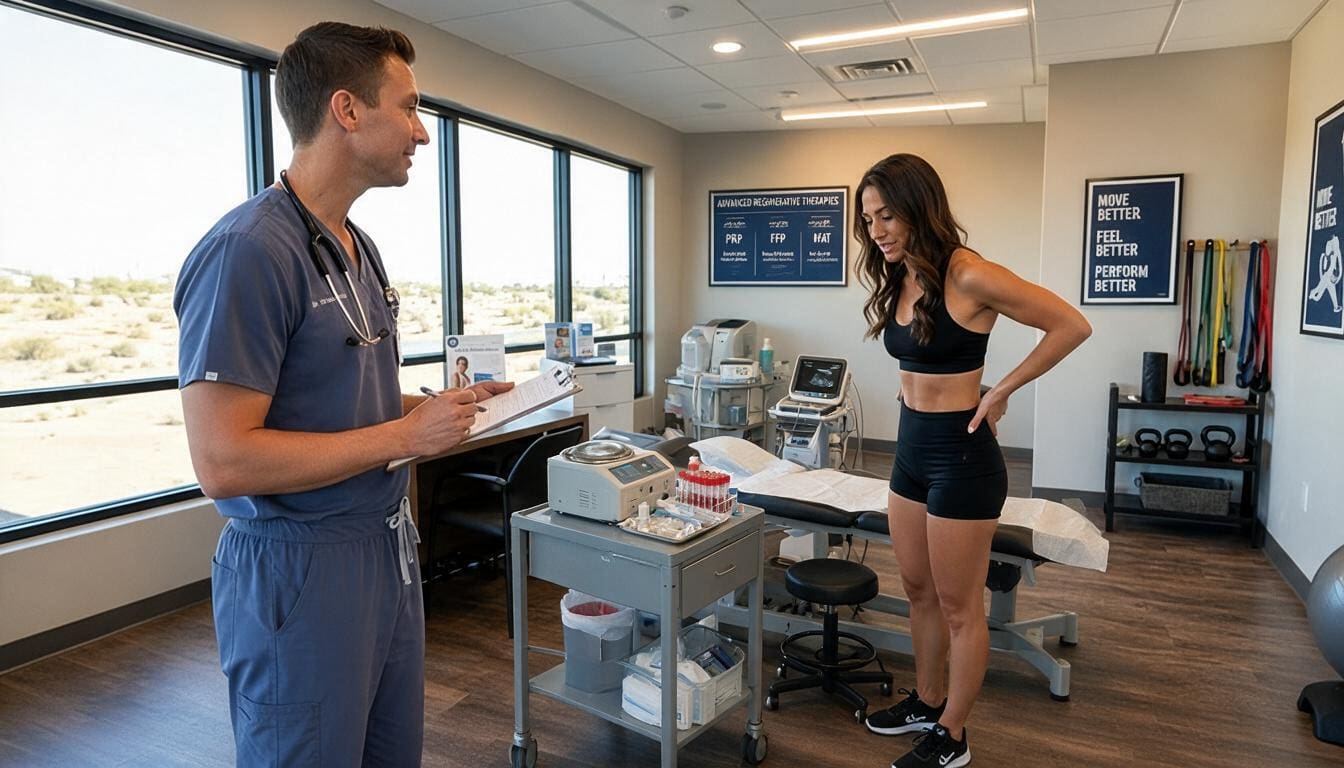
Because injuries are complex, one type of treatment may not address every part of the problem. Integrative chiropractic care and regenerative medicine offer a team-based approach. Chiropractic care focuses mainly on movement, joint function, posture, and mechanical stress. Regenerative medicine focuses on the biological environment inside injured tissues.
Together, these approaches may help patients improve movement, manage inflammation, support tissue repair, and return to daily activities more safely.
Mechanical Alignment Meets Cellular Support
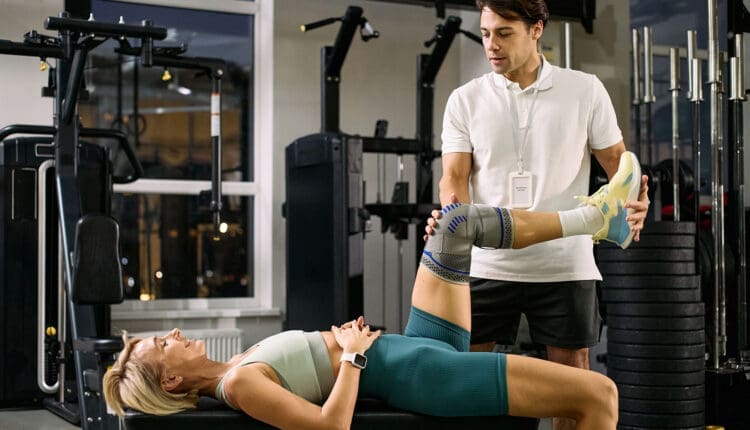
Chiropractic care uses carefully selected adjustments, mobilization, soft-tissue work, and rehabilitation exercises. The goal is to improve restricted joint motion and reduce unnecessary stress on nearby muscles, tendons, ligaments, and nerves.
Regenerative therapies take a different approach. Treatments such as platelet-rich plasma, platelet-fibrin products, and microfragmented adipose tissue use materials taken from the patient’s own body. These materials are placed near an injured structure to support the body’s healing response.
This creates two connected goals:
- Improve how the injured area moves.
- Support how the damaged tissue heals.
- Reduce stress on weak or irritated structures.
- Rebuild strength through rehabilitation.
- Help the patient return to normal function.
Teamwork
A review of chiropractic care in sports discussed the value of collaboration between chiropractors, physicians, physical therapists, athletic trainers, and other healthcare professionals. This teamwork can create a more complete injury-management plan instead of relying on only one treatment method (Lin et al., 2023). Motion Matters During Healing
When a joint does not move normally, the body often compensates. A person may lean to one side, shorten a walking step, avoid turning the neck, or place more weight on the opposite leg. These changes can place extra pressure on areas that were not originally injured.
For example, a shoulder injury may change how the upper back and neck move. A knee injury may affect the hip, pelvis, and lower back. Whiplash may cause stiffness in the neck while also creating muscle guarding across the shoulders.
Chiropractic care may help by:
- Improving restricted joint motion.
- Reducing mechanical stress.
- Supporting better posture and movement patterns.
- Helping the patient move more comfortably during rehabilitation.
- Identifying compensations that may slow recovery.
Chiropractic treatment does not directly replace torn tissue. Instead, it helps improve the mechanical environment around the injury. Regenerative medicine may then be considered when a tendon, ligament, joint, or other structure needs additional biological support.
This complementary relationship has been described as a partnership between professionals who address alignment and professionals trained to perform regenerative procedures (Leiber, 2021). ich Plasma: Concentrated Healing Signals
Platelet-rich plasma, commonly called PRP, begins with a blood draw. The blood is placed in a centrifuge, which separates and concentrates the platelets. The prepared plasma is then injected into a carefully selected injury site.
Platelets are best known for helping blood clot. However, they also release growth factors and other chemical signals involved in inflammation, cell activity, and tissue repair.
PRP may be considered for conditions involving:
- Tendon injuries.
- Ligament sprains.
- Muscle injuries.
- Mild to moderate joint degeneration.
- Certain cartilage problems.
- Some chronic soft-tissue injuries.
PRP is not a quick pain-blocking treatment. The goal is to stimulate a healing response that develops over time. Patients may still need activity changes, chiropractic care, corrective exercises, and progressive rehabilitation.
Sports medicine clinics often combine PRP with rehabilitation instead of treating it as a stand-alone solution. The movement plan helps the repaired tissue adapt to normal physical stress as healing continues (Regenerative Institute of Newport Beach, 2026; Nortex Spine & Joint Institute, n.d.). Fibrin Products: A Natural Healing Framework
Platelet-fibrin products, or PFP, are a group of blood-based preparations that may include platelet-rich fibrin. Preparation methods can differ between clinics and laboratories.
These products contain platelets along with a fibrin framework. Fibrin is a protein involved in normal clot formation and wound healing. The framework may act like a soft net that holds platelets and healing signals near the treated area.
PFP may be considered when a provider wants:
- A natural fibrin structure at the injury site.
- A slower release of platelet-related signals.
- Additional support for ligaments or tendons.
- A treatment made from the patient’s own blood.
PFP should not be described as guaranteed tissue rebuilding. Research on platelet-fibrin products continues to develop, and outcomes depend on the injury, product preparation, injection accuracy, and rehabilitation plan.
In an integrative plan, chiropractic care may improve the movement surrounding the treated structure while the platelet-fibrin product supports the local healing environment.
MFAT: Support From the Patient’s Own Fat Tissue
Microfragmented adipose tissue, known as MFAT, is prepared from a small amount of the patient’s fat tissue. The tissue is commonly collected from the abdomen or side through a small procedure. It is then cleaned and mechanically processed into tiny fragments before being placed into a damaged joint or soft-tissue area.
Adipose tissue contains structural material, blood vessels, signaling molecules, and several types of cells. MFAT is being studied for its possible ability to influence inflammation and support the local environment around damaged tissues.
It may be considered for:
- Knee osteoarthritis.
- Cartilage damage.
- More advanced joint degeneration.
- Persistent joint symptoms.
- Selected injuries that did not improve with simpler care.
MFAT should not automatically be considered stronger or better than PRP. In one randomized trial involving patients with knee osteoarthritis, both PRP and MFAT produced meaningful improvement after six months. Researchers found no important difference between the two groups (Baria et al., 2022). This finding shows why treatment should be matched to the patient. PRP is easier to collect and has been studied more widely for several musculoskeletal conditions. MFAT requires a fat-harvesting procedure and may be considered for selected joint problems after a complete medical evaluation.
Epidural Injections and Irritated Spinal Nerves
An epidural injection places medication or another selected substance into the epidural space surrounding the spinal nerves. These procedures are commonly used when a disc problem or another spinal condition irritates a nerve root.
Irritated spinal nerves may cause:
- Neck or lower-back pain.
- Sciatica.
- Pain traveling into an arm or leg.
- Numbness or tingling.
- Burning sensations.
- Muscle weakness.
A traditional epidural steroid injection uses corticosteroid medication to decrease inflammation around the nerve. Its main purpose is to calm irritation. It does not rebuild a torn ligament, tendon, or disc.
Some clinicians also use platelet-based epidural procedures. Research in this area is still developing. A 2025 meta-analysis found that epidural PRP produced pain and functional outcomes comparable to epidural steroid injections in the included studies. However, the researchers also reported major differences between the studies, meaning stronger research is still needed (Muthu et al., 2025). Irritation may allow a patient to sleep, walk, and participate in rehabilitation more comfortably. The injection should still be part of a larger plan that addresses movement, strength, posture, and the original cause of the nerve irritation.
How the Treatments Can Work Together
Integrative care does not mean giving every patient every available treatment. It means selecting the right treatment at the right stage.
A coordinated injury plan may follow this path:
Step 1: Complete Evaluation
The team reviews the patient’s symptoms, medical history, movement patterns, neurological findings, medications, imaging, and injury mechanism.
Step 2: Control Severe Irritation
The early plan may include activity changes, gentle chiropractic techniques, medical management, or a targeted injection when severe inflammation prevents normal movement.
Step 3: Restore Motion
Chiropractic adjustments, joint mobilization, soft-tissue care, and corrective exercises may help improve restricted movement.
Step 4: Support Damaged Tissue
PRP, PFP, or MFAT may be considered when a tendon, ligament, muscle, cartilage surface, or joint has not healed as expected.
Step 5: Rebuild Strength
Rehabilitation gradually places safe stress on the healing tissue. This helps the body regain strength, balance, coordination, and endurance.
Step 6: Monitor Progress
The team measures pain, motion, strength, daily function, neurological symptoms, and the patient’s ability to return to work, exercise, or normal activities.
Integrative clinics commonly use this layered approach because biological repair and mechanical function are connected. Tissue that receives regenerative treatment still needs healthy movement. A joint with improved motion may still need additional support if its ligaments or tendons remain damaged (The Osteopathic Center, n.d.; FoRM Health, 2025).
At Injury Medical Clinic PA in El Paso, Texas, Dr. Alexander Jimenez, DC, APRN, FNP-BC, CCST, CFMP, IFMCP, ATN, works with Dr. Maria Guadalupe Cardenas, MD.
Dr. Cardenas is board certified in internal medicine and has more than 40 years of medical experience. Public provider directories list her NPI as 1164426748, and clinic materials list her Texas medical license as J2933. She serves as medical director and collaborative physician for the practice. A multidisciplinary structure is common in integrative and injury-care settings. Each professional contributes within the limits of their education, licensing, and clinical role.
Dr. Jimenez’s areas of care include:
- Chiropractic assessment and treatment.
- Musculoskeletal and spinal care.
- Functional medicine.
- Personal injury care.
- Rehabilitation planning.
- Movement and postural evaluation.
- Nurse practitioner services within his licensed scope.
Dr. Cardenas provides medical direction and collaborative oversight.
Her internal medicine background can help the team consider chronic conditions, medications, cardiovascular risks, metabolic health, and other medical factors that may affect a patient’s treatment plan.
The clinic has its model as a combination of chiropractic care, medical oversight, functional medicine, rehabilitation, wellness support, and personal injury services. Observations From Dr. Alexander Jimenez
In clinical observations shared through his website and professional materials, Dr. Jimenez emphasizes that injury recovery should not focus only on the location of pain. The team also evaluates movement patterns, neurological symptoms, posture, muscle imbalances, lifestyle factors, and the way an injury affects the rest of the body.
For example, a painful knee may change the way a patient walks. That change may place stress on the hip and lower back. A neck injury may affect shoulder movement, balance, and sleep. Treating only the painful area may leave these connected problems unaddressed.
Dr. Jimenez’s clinical model combines structural care with rehabilitation and functional health support. When medically appropriate, regenerative treatments may be added to support injured tissues that are not responding fully to conservative care.
These clinical observations are not a replacement for controlled research. They help explain how published findings may be applied to individual injury patterns during patient care. he Right Treatment
PRP, PFP, MFAT, and epidural injections are not appropriate for every patient. Treatment decisions may depend on:
- The type and severity of the injury.
- The amount of tissue damage.
- The patient’s age and general health.
- Medications and bleeding risks.
- Whether a nerve is involved.
- Previous treatments.
- Imaging findings.
- The patient’s work and activity goals.
Patients should receive a clear explanation of expected benefits, limitations, alternatives, recovery time, and possible risks. No regenerative procedure can guarantee that damaged tissue will return to its original condition.
The strongest plans combine accurate diagnosis, appropriate treatment, gradual rehabilitation, and regular follow-up.
A More Complete Path Toward Recovery
Chiropractic care and regenerative medicine address different but connected parts of an injury. Chiropractic care aims to improve motion and reduce mechanical stress. PRP and platelet-fibrin products provide concentrated biological signals. MFAT may support the environment inside selected damaged joints. Epidural injections target inflammation and irritation around spinal nerves.
When these services are coordinated under proper medical and clinical oversight, patients may receive a more complete recovery plan. The goal is not simply to cover up pain. The goal is to restore movement, support healing, rebuild strength, and help the patient return to a healthier level of function.
References
Baria, M. R., Pedroza, A., Kaeding, C., Durgam, S., Duerr, R., Flanigan, D., Borchers, J., & Magnussen, R. (2022). Platelet-rich plasma versus microfragmented adipose tissue for knee osteoarthritis: A randomized controlled trial. Orthopaedic Journal of Sports Medicine, 10(9).
Carolina Nonsurgical Orthopedics. (n.d.). PRP vs. MFAT cell therapy: Which regenerative treatment is right for you?
FoRM Health. (2025). Understanding regenerative injection therapies: PRP, MFAT, and prolotherapy
Health Coach Clinic. (n.d.-a). Regenerative options for personal injury recovery
Health Coach Clinic. (n.d.-b). Regenerative sports therapy and injury healing
Jimenez, A. (n.d.-a). Dr. Alex Jimenez, DC, APRN, FNP-BC
Jimenez, A. (n.d.-b). Dr. Alex Jimenez professional profile
Jimenez, A. (2026). Integrative chiropractic and regenerative medicine in El Paso: A modern path for spine, joint, and injury recovery
Leiber, J. (2021, January 20). Integrating regenerative medicine in chiropractic practice
Lin, A. F. C., Piong, S. Z., Wan, W. M. H., Li, P., Chu, V. K., & Chu, E. C. P. (2023). Unlocking athletic potential: The integration of chiropractic care into the sports industry and its impact on the performance and health of athletes and economic growth in China and Hong Kong. Cureus, 15(4), e37157.
Muthu, S., Viswanathan, V. K., & Gangadaran, P. (2025). Is platelet-rich plasma better than steroids as an epidural drug of choice in lumbar disc disease with radiculopathy? Meta-analysis of randomized controlled trials. Experimental Biology and Medicine, 250, 10390.
Nortex Spine & Joint Institute. (n.d.). Why athletes use regenerative medicine for recovery
Regenerative Institute of Newport Beach. (2026, April 6). PRP therapy for athletes: How professional sports medicine uses regenerative treatments
The Osteopathic Center. (n.d.). Accelerating athletic recovery: The synergy of regenerative and integrative medicine
Comments are closed.