
Personal Injury Insights for Causation & Chiropractic Care
Learn how causation influences chiropractic care for personal injury and its importance in effective treatment plans.
Abstract
This educational post explains why causation is essential and must be established with reasonable medical probability in personal injury claims involving musculoskeletal injuries. Dr. Alexander Jimenez, DC, APRN, FNP-BC, CFMP, IFMCP, ATN, CCST, traces the journey from the moment of trauma through physiological responses, the mechanisms of evidence-based chiropractic care, and the value of detailed clinical records for attorneys and patients. Readers will learn what chiropractic care is, how spinal manipulative therapy and related techniques interrupt pain cycles, reduce musculoskeletal injuries and their comorbidities, and supply objective insight into mechanism, timing, and functional impact. The discussion incorporates the latest findings from researchers on neurophysiological effects, clinical practice guidelines, and safety data. It also describes the collaborative model at Injury Medical Clinic PA (also known as Mission Plaza Injury Medical Clinic) in El Paso, Texas, where Dr. Jimenez provides integrative chiropractic and nurse-practitioner care under the medical direction of Dr. Maria Guadalupe Cardenas, MD, Board Certified in Internal Medicine (NPI #1164426749, Texas MD License #J2933), who brings more than 40 years of experience as an internist. The team integrates functional medicine, rehabilitation, and non-surgical protocols to keep recovery and documentation medically coordinated and patient-centered.
Introduction: Beginning the Journey from Injury to Recovery and Clear Documentation
Imagine the ordinary day that changes in seconds. A driver stops at a light on a busy El Paso road when another vehicle strikes the rear bumper. The body moves forward and then snaps back. Hours later, neck stiffness appears, turning the head becomes difficult, and pain interrupts sleep. At the same time, an insurance claim or potential lawsuit begins. The body needs care that restores motion and calms protective responses. The legal process needs evidence that the collision more likely than not caused or substantially aggravated the condition being treated. That dual requirement is why causation sits at the center of personal injury work and why carefully delivered integrative chiropractic care matters for both recovery and the clinical record.
I am Dr. Alexander Jimenez. I have practiced in El Paso since 1991 as a Doctor of Chiropractic and later completed training as a board-certified Family Nurse Practitioner. My dual licensure lets me evaluate biomechanical disruption and broader systemic responses in the same visit. At Injury Medical Clinic PA, I work with Dr. Maria Guadalupe Cardenas, MD. Dr. Cardenas is board-certified in Internal Medicine, holds the credentials noted above, and serves as Medical Director and Collaborative Physician. This arrangement is common in well-organized integrative injury clinics: the chiropractor delivers precise hands-on assessment and treatment while the internist provides physician-level medical oversight for complex presentations, coexisting medical conditions, or decisions that require broader diagnostic judgment. Together with rehabilitation support and functional-medicine principles, the team creates plans that address the primary injury and the wider physiological consequences that can follow.
The following sections take you on a step-by-step journey. They explain what causation means for attorneys, how it is justified, what chiropractic care is and how it works at the joint, muscle, nerve, and brain levels, why these approaches reduce both the musculoskeletal injury and related comorbidities, and how the resulting record supplies useful insight for personal injury matters. The language is clear so patients, families, and colleagues can follow the reasoning. Key terms appear in bold when first emphasized and when they carry particular clinical or legal weight.
What Causation Means and Why Courts and Insurers Require It
Causation is the reasoned link between a specific event and the resulting injury or condition. In personal injury cases, plaintiffs generally must show that the incident more likely than not caused or aggravated the problem for which treatment is sought. Absolute certainty is rarely possible in medicine or biology. Courts and adjusters therefore look for reasonable medical probability—often framed as more likely than not—supported by a biologically plausible mechanism, a consistent temporal relationship, and objective findings that align with the history.
Three elements commonly strengthen the analysis. First is the mechanism of injury. Even a low-speed rear-end collision can generate rapid acceleration-deceleration forces that stretch ligaments, irritate facet joints, and produce muscle guarding in the cervical spine. Second is the temporal relationship. Symptoms that begin immediately or within 24 to 72 hours fit known patterns of soft-tissue response better than complaints that appear weeks later without an intervening explanation. Third is documentation of the pre-injury baseline. An honest account of any prior symptoms, or clear evidence that the person was asymptomatic or only minimally symptomatic before the event, helps distinguish new injury from simple progression of a preexisting condition. Preexisting conditions can still be compensable when the incident worsens them and produces new functional limits.
Chiropractic records support this analysis when they contain specific, reproducible observations rather than vague statements. A note that records “cervical flexion limited to 35 degrees with grade 2/4 bilateral paraspinal spasm at C4–C7” is more useful than a general remark that the neck is tight. Serial progress notes that track changes in pain, sleep, work tolerance, and specific activities further illustrate functional impact and response to care. In several jurisdictions, courts have recognized that a properly qualified chiropractor may offer an opinion on causation limited to musculoskeletal and nervous system conditions related to joint dysfunction, provided the chiropractor lays a proper foundation and keeps the testimony within the authorized scope of practice. Recent appellate decisions in Virginia and Michigan illustrate this principle when the opinion is tied to the chiropractor’s diagnostic role under state statutes.
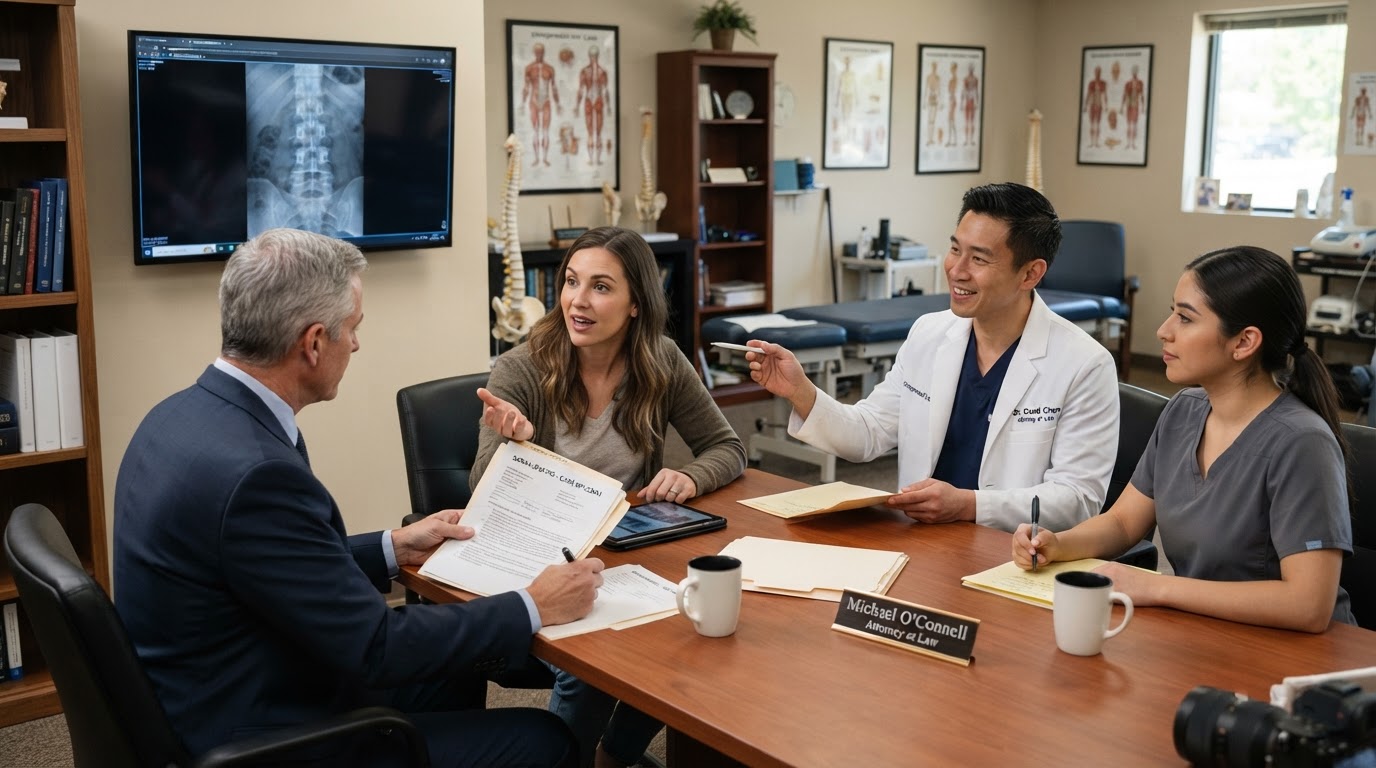
At our El Paso clinic, we treat careful documentation as part of care rather than an afterthought. The same history, examination, and serial assessments that guide treatment also create a coherent narrative that attorneys and adjusters can review. Dr. Cardenas’s medical oversight adds clinical judgment when internal-medicine issues intersect with the injury, ensuring the overall record reflects coordinated decision-making.
How Causation Is Justified Through Mechanism, Timing, and Objective Findings. Causation rests on converging lines of evidence rather than a single test. The mechanism must be capable of producing the observed tissue response. Soft-tissue injuries from motor-vehicle collisions frequently involve the cervical and lumbar regions because those segments experience the greatest relative motion during sudden acceleration or deceleration. Temporal correlation is next. Inflammatory mediators rise quickly after tissue strain; muscle guarding and restricted joint motion often appear within hours. Objective examination findings—reduced range of motion, palpable spasm, positive orthopedic tests, or measurable functional limits—then corroborate the history. When clinically indicated, imaging may show findings consistent with the mechanism, but many soft-tissue injuries do not produce dramatic radiographic changes; clinical correlation remains essential.
Researchers studying injury biomechanics emphasize that force, direction, and individual tissue tolerance interact. A collision that looks minor on the police report can still exceed the threshold for ligamentous or capsular strain in a given person. Clinical practice guidelines and observational studies of spinal pain further support the idea that early restoration of motion can limit the transition from acute inflammation to longer-term sensitization. When these elements are documented clearly, the causal chain becomes clearer for both clinical decision-making and legal review.
What Chiropractic Care Is and the Central Role of Spinal Manipulative Therapy
Chiropractic care is a licensed health profession focused on diagnosing, treating, and preventing neuromusculoskeletal disorders, with particular emphasis on the spine and its influence on nervous-system function. The central clinical tool is the spinal adjustment, also called spinal manipulative therapy (SMT). An adjustment is a precise, controlled force applied to a joint that has restricted motion or altered mechanical behavior. The force is typically high-velocity and low-amplitude, delivered by hand or instrument, and directed at the specific segment identified on examination.
The immediate mechanical effect is restoring joint play and reducing abnormal mechanical stress on surrounding tissues. Ligaments, joint capsules, and small deep muscles that have become restricted receive a rapid stretch. This stretch activates mechanoreceptors and proprioceptors—sensors that report position and movement to the spinal cord and brain. The resulting afferent barrage modulates pain processing at the dorsal horn of the spinal cord through a gating mechanism: large-diameter sensory fibers can inhibit the transmission of nociceptive (pain) signals. Over repeated sessions, these inputs appear to influence longer-term neuroplastic changes.
Neurophysiology research groups have documented measurable alterations after chiropractic care. Studies have reported shifts in brainwave activity, altered cortical processing in somatosensory evoked potentials, increased muscle force production, improved joint position sense, and reduced pain unpleasantness. Biomarker work has shown, in some trials, higher blood levels of brain-derived neurotrophic factor (BDNF), a protein that supports neuronal growth and plasticity, along with lower levels of certain pro-inflammatory cytokines, such as tumor necrosis factor-alpha. These shifts suggest modulation of neuroplastic, inflammatory, and stress pathways beyond simple joint mechanics. While effect sizes are often modest and further replication is needed, the findings align with clinical observations that patients frequently report improved sleep, mood, and energy as spinal function and protective muscle guarding begin to normalize.
Clinical practice guidelines consistently support SMT as part of multimodal care for low back pain, whether acute, subacute, or chronic. Many guidelines also favor its use for neck pain and certain headache types when combined with exercise and education. Serious adverse events are rare; transient local soreness is more common. Appropriate screening for contraindications—such as significant trauma with suspected fracture, vascular risk factors, or progressive neurological deficit—remains essential. In an integrative setting like ours, Dr. Cardenas’s medical direction reinforces that screening.
Physiological Underpinnings of Spinal Manipulative Therapy and Related Techniques
The cascade begins with the mechanical stimulus. High-velocity low-amplitude thrusts stimulate muscle-spindle afferents and Golgi tendon organs in paraspinal muscles, producing a brief high-frequency discharge. This afferent barrage reaches the dorsal horn and can alter excitability of second-order neurons that process nociceptive input. Concurrently, the rapid stretch can reduce local muscle hypertonicity through reflex pathways. At the segmental level, these changes help interrupt the cycle in which restricted joint motion leads to further muscle guarding, which in turn maintains the restriction.
Supraspinal effects are also described. Functional imaging and electrophysiological studies have shown changes in connectivity within pain-related networks and in motor cortical excitability after SMT. Descending inhibitory pathways, involving noradrenergic and serotonergic systems, appear to contribute to the hypoalgesic effect. Some work has linked these changes to reduced temporal summation of pain, a marker of central sensitization. The net result is often a temporary increase in pain thresholds and improved motor control, allowing patients to move more freely and resume activity.
Related techniques used in integrative chiropractic practice—soft-tissue mobilization, instrument-assisted methods, and therapeutic exercise—complement the adjustment. Soft-tissue work addresses myofascial trigger points and fascial restrictions that can perpetuate pain even after joint motion improves. Exercise restores strength, endurance, and motor control to maintain gains from the adjustment. Functional-medicine principles also address sleep, nutrition, and inflammatory load, which can influence recovery rate. Each element targets a specific part of the physiological cascade rather than simply masking symptoms.
How Chiropractic Care Reduces Musculoskeletal Injuries and Their Comorbidities
When trauma or repetitive stress restricts joint motion, overlapping processes unfold. Muscle guarding increases to protect the area, further limiting motion and creating ischemic pain. Proprioceptive input becomes distorted, so the brain receives inaccurate information about body position; this can perpetuate poor motor control and compensatory patterns in adjacent regions. Inflammatory mediators rise locally and, in some patients, systemically. Pain and the inability to find a comfortable position disrupt sleep. Reduced activity follows, which can contribute to deconditioning, weight gain, elevated blood pressure, and mood changes. These comorbidities transform an acute musculoskeletal injury into a longer-term health burden.
Chiropractic adjustments interrupt this cycle at multiple points. Restored joint motion reduces mechanical irritation of nociceptors and decreases the need for protective muscle spasm. The proprioceptive input that accompanies the adjustment helps recalibrate the central nervous system’s sensorimotor maps, improving motor control and reducing the likelihood of secondary strain in neighboring joints. Modulation of dorsal-horn excitability and descending inhibitory pathways lowers pain intensity and unpleasantness. As pain decreases and movement returns, patients sleep better and gradually resume activity. Increased movement supports circulation, lymphatic drainage, and metabolic health, while reduced inflammatory signaling may ease systemic effects.
Observational data indicate that patients who receive chiropractic care for spine-related pain have lower odds of receiving opioid prescriptions in some cohorts, particularly when care begins early. Clinical practice guidelines from multiple organizations recommend non-pharmacologic approaches, including SMT combined with exercise, as first-line options for many presentations of low back and neck pain. Cost analyses have shown lower overall healthcare expenditures in certain Medicare populations when chiropractic manipulative treatment is used for chronic low back pain episodes compared with conventional medical care alone. These patterns support the role of early, evidence-based chiropractic care in limiting both the primary injury and the cascade of secondary health consequences.
Insights Chiropractic Care Provides for Personal Injury Cases
The same careful evaluation that guides treatment supplies the elements attorneys need. The history records the mechanism of injury and correlates it with examination findings. The history establishes the temporal relationship by noting the onset of symptoms relative to the event. Objective measures—range-of-motion degrees, orthopedic-test results, functional scales, and serial progress notes—document the extent of impairment and the response to care. When a preexisting condition exists, the record can distinguish baseline status from post-injury worsening. In jurisdictions that permit it, a treating chiropractor who has performed a thorough evaluation may offer an opinion on causation limited to conditions within scope.
Gaps in treatment, non-compliance, or unexplained delays can weaken the causal link; consistent attendance and progressive improvement strengthen it. Detailed notes also help distinguish necessary care from prolonged or unsupported treatment. At our clinic, the clinical director’s dual licensure and Dr. Cardenas’s medical oversight allow the record to reflect both musculoskeletal findings and relevant medical comorbidities in a coordinated way. This reduces the risk that an adjuster or opposing expert will characterize the care as isolated or medically unsupported.
Integrative Non-Surgical Care and the Collaborative Role of Dr. Maria Guadalupe Cardenas
Integrative chiropractic care fits naturally into non-surgical treatment pathways because it addresses biomechanical dysfunction while coordinating with medical evaluation, rehabilitation, and lifestyle factors. At Injury Medical Clinic P, the model is deliberately multidisciplinary. Dr. Jimenez provides chiropractic assessment and treatment together with nurse-practitioner-level evaluation. Dr. Maria Guadalupe Cardenas, MD, Board Certified in Internal Medicine, serves as Medical Director and Collaborative Physician. With more than 40 years of experience as an internist, she supplies physician-level medical direction for complex cases, coexisting internal medicine conditions, and overall clinical governance. This arrangement is common in integrative or injury-care clinics where a chiropractor works alongside an MD who provides medical oversight.
The team integrates chiropractic care with functional-medicine assessments, rehabilitation protocols, nutritional support, and, when appropriate, other non-surgical modalities. Functional-medicine principles examine how sleep disruption, inflammatory load, metabolic factors, or prior health status may influence recovery. Rehabilitation focuses on restoring strength, endurance, and motor control so that gains from adjustments are durable. The goal remains genuine physical recovery, not documentation alone. When surgery or additional specialist care is indicated, the collaborative structure facilitates timely referral while maintaining continuity.
Clinical observations from the practice, drawn from more than three decades of treating motor-vehicle, workplace, and sports injuries in El Paso, consistently show that early restoration of joint motion, reduction of muscle guarding, and progressive functional loading reduce the likelihood that an acute soft-tissue injury will become a chronic pain syndrome. Patients who receive coordinated care often report concurrent improvements in sleep and daily activity tolerance, which further supports recovery and supplies additional objective data for the clinical record.
References
Trager, R. J., et al. (2024). Chiropractic and spinal manipulation: A review of research trends, evidence gaps, and guideline recommendations. Journal of Clinical Medicine, 13(19), 5668. https://doi.org/10.3390/jcm13195668
Gevers-Montoro, C., et al. (2021). Neurophysiological mechanisms of chiropractic spinal manipulation for spine pain. European Journal of Pain, 25(7), 1421–1437. https://doi.org/10.1002/ejp.1773
Additional supporting sources on clinical practice guidelines, observational cost analyses, and appellate decisions regarding chiropractic causation testimony are available in the published literature cited throughout this post.
SEO Tags
causation personal injury, chiropractic care causation, spinal manipulative therapy, musculoskeletal injuries comorbidities, integrative chiropractic El Paso, Dr Alexander Jimenez, Dr Maria Cardenas MD, non-surgical injury treatment, personal injury documentation, evidence-based chiropractic, whiplash recovery, functional medicine injury care, reasonable medical probability, joint dysfunction, neurophysiological effects of adjustment
Comments are closed.