
Causation Insights For Muscle Pain Using Chiropractic Care

Discover the link between muscle pain and chiropractic care through causation for improved wellness and pain management.
Abstract
This educational post explores the critical role of causation in personal injury courtroom cases involving muscle pain, explaining what causation is, how medical and legal standards support it, and why it is essential to successful claims. It explains how chiropractic care works alongside establishing causation, defines chiropractic care, and examines its evidence-based mechanisms for reducing muscle pain and related comorbidities such as inflammation, restricted mobility, and secondary joint or nerve irritation. The post also explains how chiropractic care provides clinical insight into personal injury through detailed documentation, functional assessment, and longitudinal recovery tracking. Drawing on clinical observations from Dr. Alexander Jimenez, DC, APRN, FNP-BC, CFMP, IFMCP, ATN, CCST, at Injury Medical Clinic PA (also known as Mission Plaza Injury Medical Clinic) in El Paso, Texas, and the collaborative medical direction of Dr. Maria Guadalupe Cardenas, MD (Board Certified in Internal Medicine, NPI #1164426749, Texas MD License #J2933), with over 40 years of experience as an internist serving as Medical Director and Collaborative Physician, the article describes an integrative multidisciplinary model. This approach combines chiropractic care, medical oversight, functional medicine, rehabilitation, and related non-surgical services to support recovery while generating the objective and clinical evidence needed for personal injury proceedings. The book incorporates the latest findings from leading researchers and reflects modern evidence-based methods, including randomized controlled trials, systematic reviews, and biomarker studies. The journey moves from the legal foundations of causation through the physiological underpinnings of muscle pain and chiropractic interventions to practical clinical integration, giving readers a clear, comprehensive understanding of how these elements connect in real-world injury care.
Understanding Causation in Personal Injury Cases Involving Muscle Pain
In any personal injury claim, the injured person must prove several elements to recover compensation. Causation is among the most contested elements. Causation is the legal and medical link demonstrating that the defendant’s negligent or wrongful act caused the specific injuries claimed, including muscle pain. Without this link, even clear negligence may not result in recovery for the claimed damages.
Causation has two primary components. The first is actual cause, often called the “but-for” test. This asks whether the injury would have occurred but for the defendant’s conduct. In a rear-end collision, for example, the question is whether the plaintiff would have developed the observed muscle strain, spasm, or myofascial pain without the impact forces transmitted through the vehicle. The second component is proximate cause, or legal cause. This limits liability to harms that are reasonably foreseeable consequences of the conduct and that have a sufficiently close connection. Courts exclude remote or highly attenuated chains of events.
For muscle pain, often classified as a soft-tissue injury, causation can be challenging because these injuries often lack the dramatic radiographic findings of fractures. Insurers and defense counsel may argue that pain is subjective, pre-existing, or degenerative. Courts and medical experts therefore require a reasoned opinion that the incident more likely than not caused or materially contributed to the muscle pain, either as a new injury or as an aggravation of a prior condition. The standard is typically a preponderance of the evidence, or more likely than not, rather than scientific certainty.
Multiple sources support causation. Temporality is fundamental: symptoms appear or worsen promptly after the event. Consistent history across providers strengthens the narrative. Physical examination findings such as palpable muscle spasm, restricted range of motion, trigger points, or protective guarding provide objective clinical signs. When appropriate, advanced imaging may show soft-tissue edema, muscle strain patterns, or related disc or joint changes. Functional testing and outcome measures document the impact on daily activities. Pre-injury records help distinguish new or aggravated injury from baseline status. Medical experts apply principles analogous to those outlined by Bradford Hill and adapted in the American Medical Association Guides, considering strength of association, biological plausibility, coherence with known injury mechanisms, and alternative explanations.
Why Causation Is Required in the Courtroom for Muscle Pain Claims
Causation is required because damages must flow from the defendant’s conduct. The plaintiff bears the burden of proof. In muscle pain cases, defense strategies commonly include claims of pre-existing degeneration, delayed symptom onset, gaps in treatment, or that pain is purely subjective. Successful claims overcome these arguments with contemporaneous records, consistent examinations, and expert opinions that the traumatic forces could have produced the observed soft-tissue injury and that, on the balance of probabilities, they did.
In practice, early and thorough evaluation creates the evidentiary foundation. Delayed care can create an inference of non-relatedness. Detailed documentation of mechanism of injury, initial symptoms, objective findings, and response to care allows experts to opine on causation to a reasonable degree of medical probability. For muscle pain, this includes describing the biomechanical forces (acceleration-deceleration, shear, or compression) that overload muscle fibers, produce microtears, trigger inflammatory cascades, and result in protective spasm and pain.
What Is Chiropractic Care
Chiropractic care is a health profession focused on the diagnosis, treatment, and prevention of disorders of the neuromusculoskeletal system, with emphasis on the spine and related soft tissues. Doctors of Chiropractic are trained to evaluate joint mechanics, muscle function, posture, and neurological integrity. Core interventions include spinal manipulative therapy (high-velocity, low-amplitude thrusts or mobilizations), soft-tissue techniques, therapeutic exercise, patient education, and lifestyle guidance. Modern chiropractic care is frequently integrated with other modalities and delivered within evidence-informed, multimodal plans.
In personal injury and muscle pain, chiropractic care addresses mechanical dysfunction that perpetuates pain. After trauma, joints may lose normal motion, muscles may develop hypertonicity or trigger points, and fascial restrictions may form. These changes alter load distribution, irritate nociceptors, and contribute to ongoing muscle pain.
How Chiropractic Care Reduces Muscle Pain and Its Comorbidities
Contemporary research supports the multifactorial physiological mechanisms by which chiropractic care reduces muscle pain. Spinal manipulative therapy and related manual techniques influence both peripheral tissues and central nervous system processing of pain.
At the tissue level, restoration of joint motion reduces abnormal mechanical stress on muscles and ligaments. When a vertebral segment or extremity joint is restricted, surrounding muscles increase tone to protect the area, causing ischemia, metabolite accumulation, and nociceptor sensitization. Restoring motion can interrupt this cycle, improve local circulation, and allow more normal muscle recruitment. Soft-tissue techniques, including myofascial release and trigger-point therapy, address hyperirritable bands within muscle. Pressure or stretch applied to these points can reduce local spasm, improve tissue extensibility, and decrease referred pain patterns.
Neurophysiological effects are equally important. Manual therapy can modulate nociceptive input via the gate-control mechanism and descending inhibitory pathways. Afferent signals from joint and muscle receptors influence spinal cord processing and supraspinal centers involved in pain perception. Research has shown changes in pain thresholds, reduced muscle guarding, and improved sensorimotor integration following manipulative therapy. Recent pragmatic trials and biomarker studies indicate that sustained chiropractic care can influence stress-related markers, neurotrophic factors such as brain-derived neurotrophic factor, and certain inflammatory cytokines, supporting effects on neuroplasticity and systemic inflammation.
Comorbidities commonly accompanying muscle pain after injury include restricted mobility, secondary joint irritation, sleep disruption, deconditioning, and elevated systemic inflammation. By improving segmental mobility and reducing protective spasm, chiropractic care facilitates earlier return to movement. Movement itself promotes circulation, reduces stiffness, and supports tissue remodeling. Systematic reviews show that multimodal approaches combining manipulation with exercise and education improve both pain and function. A 2026 Cochrane update of spinal manipulative therapy for chronic low back pain, synthesizing data from dozens of trials, reported small to medium benefits in pain and function compared with sham or no treatment, with a favorable safety profile limited mainly to transient soreness. Network meta-analyses of musculoskeletal manipulations for neck pain similarly identify multimodal manual approaches as effective for reducing intensity and disability.
Clinicians address inflammatory comorbidities both locally and systemically. Reduced mechanical irritation decreases ongoing release of pro-inflammatory mediators from overloaded tissues. Clinical observations and emerging biomarker data suggest that structured care modulates cytokines such as interleukin-6 and tumor necrosis factor-alpha. Improved sleep and reduced pain-related stress further support resolution of inflammatory states.
How Chiropractic Care Provides Insight into Personal Injury
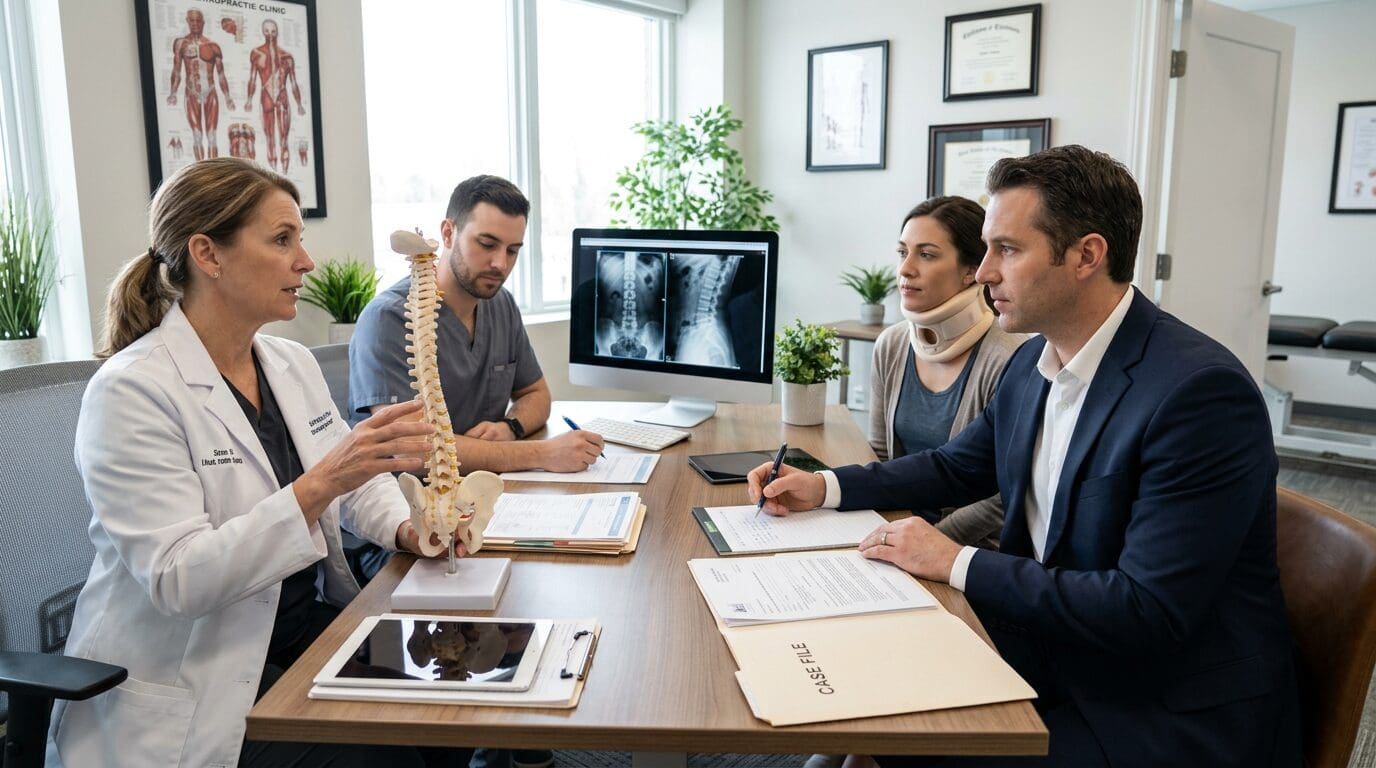
Chiropractic care generates continuous clinical data that illuminates the nature, extent, and trajectory of injury-related muscle pain. Initial examinations document the mechanism, immediate symptoms, and objective findings such as restricted range of motion, muscle hypertonicity, and postural changes. Subsequent visits track measurable changes in these parameters, response to specific interventions, and functional capacity. This longitudinal record helps differentiate acute traumatic muscle pain from chronic or unrelated conditions.
In personal injury contexts, such documentation supports causation opinions by demonstrating temporality, consistency, and biological plausibility. When symptoms and findings improve with targeted care addressing the incident’s biomechanical consequences, this response supports the inference that the incident was a material cause. Conversely, failure to recover as expected or the emergence of new findings prompts further evaluation and refinement of the diagnosis.
Integrative Chiropractic Care Within Non-Surgical Treatments
Integrative chiropractic care fits naturally within the spectrum of non-surgical treatments for muscle pain. Guidelines increasingly endorse non-pharmacological approaches, including manual therapy, exercise, and education, as first-line or core options for many musculoskeletal conditions. Chiropractic interventions are frequently combined with physical rehabilitation, nutritional support to modulate inflammation, and medical management when indicated.
At Injury Medical Clinic PA in El Paso, this integration is realized through collaboration between Dr. Alexander Jimenez and Dr. Maria Guadalupe Cardenas. Dr. Cardenas, an internist with more than four decades of experience, serves as Medical Director and Collaborative Physician. She provides medical oversight, evaluates systemic contributors to pain and recovery (such as metabolic, inflammatory, or cardiovascular factors), and coordinates any necessary pharmacologic or diagnostic medical care. Dr. Jimenez, a Doctor of Chiropractic and board-certified Family Nurse Practitioner, delivers hands-on chiropractic evaluation and treatment while also addressing broader functional and medical aspects within his nursing scope.
The team’s model combines structural correction through chiropractic adjustments and soft-tissue work with rehabilitation exercises to restore strength and motor control, functional medicine approaches to address nutrition, inflammation, and lifestyle factors that influence tissue healing, and medical direction to ensure comprehensive safety and co-management of any comorbid medical conditions. This multidisciplinary setup is common in integrative injury clinics and allows simultaneous attention to the mechanical drivers of muscle pain and the systemic context that affects recovery. Clinical observations at the practice emphasize early, detailed documentation, measurable functional goals, and coordinated care plans that support both patient recovery and the evidentiary needs of personal injury claims.
Physiological Underpinnings and Clinical Reasoning
Trauma produces muscle pain through direct fiber damage, inflammatory cascades, and secondary protective responses. High forces can cause microscopic myofibrillar tears, release damage-associated molecular patterns, and activate resident immune cells. Resulting edema and chemical mediators sensitize peripheral nociceptors. Muscle spindles and Golgi tendon organs alter firing patterns, contributing to spasm and altered movement. Central sensitization may amplify signals if the peripheral input persists.
Chiropractic techniques target these mechanisms. Joint manipulation restores arthrokinematics, reducing abnormal afferent barrage from restricted segments. Soft-tissue work decreases local ischemia and trigger-point activity. Therapeutic exercise re-educates motor patterns and builds capacity to prevent deconditioning. Each element is used because isolated symptom suppression without mechanical and functional restoration often leads to recurrent or chronic pain. The reasoning is that correcting the biomechanical environment that sustains nociceptive input, while supporting the body’s repair processes, produces more durable improvement than passive modalities alone.
Latest Evidence-Based Findings
Recent research continues to refine understanding of chiropractic and manual interventions for muscle pain and related spinal conditions. Systematic reviews and meta-analyses confirm short-term benefits for pain and function, with effects most pronounced when care is multimodal. Biomarker studies indicate modulation of neurotrophic and inflammatory markers, offering mechanistic support beyond purely biomechanical explanations. Safety data across large numbers of trials show low rates of serious adverse events. These findings align with clinical observations that carefully applied chiropractic care, integrated with medical oversight and rehabilitation, can meaningfully reduce muscle pain, improve function, and generate the clinical data needed to establish causation in personal injury settings.
This educational post has traced the path from the legal requirement of causation through the physiological realities of muscle pain to the practical contributions of integrative chiropractic care. Readers seeking care or further information may consult resources associated with Dr. Alexander Jimenez at personalinjurydoctorgroup.com and his professional profiles.
References
- de Zoete, A., et al. (2026). Spinal manipulative therapy for adults with chronic low back pain. Cochrane Database of Systematic Reviews. https://www.cochranelibrary.com
- Nolo. (2024). Proving causation in a personal injury case. https://www.nolo.com/legal-encyclopedia/what-is-causation-in-a-personal-injury-case.html
- Wallace Pierce Law. (2025). Can I include minor soft tissue injuries and muscle pain in my personal injury claim? https://www.wallacepierce.com
- Additional sources drawn from contemporary clinical guidelines, AMA impairment guidance, and peer-reviewed biomarker and network meta-analysis literature on manual therapy.
SEO tags: causation personal injury muscle pain, chiropractic care muscle pain reduction, integrative chiropractic El Paso, Dr Alexander Jimenez DC APRN, soft tissue injury causation, non-surgical treatment muscle pain, Dr Maria Cardenas MD collaborative care, personal injury documentation chiropractic, evidence-based chiropractic research, muscle pain comorbidities treatment
Comments are closed.