
Alternative Causation in Litigation: Two Accidents, One Claim

Two Accidents, One Injury Claim: Why Alternative Causation Matters in Texas Litigation
A single personal injury event can already create a complicated medical story. When the same patient experiences a second crash, fall, work incident, or other injury before the first claim is resolved, causation becomes harder. Attorneys must ask: Which event caused which injury, aggravation, treatment, limitations, and expenses?
That question is part of proving a reliable medical-legal narrative. Texas law requires a plaintiff to connect the defendant’s conduct to the event, and the event to the compensable injuries claimed. When the record contains another plausible cause, treating and testifying experts should address it with clinical reasoning rather than assumption.
For Texas injury attorneys and record reviewers, JLG Trucking, LLC v. Garza (2015) remains a lesson in alternative causation.
Why JLG Trucking Still Matters
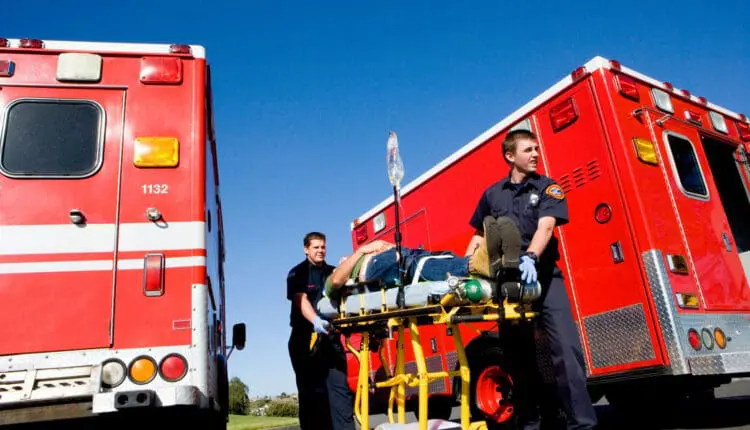
In JLG Trucking, the plaintiff was involved in two motor vehicle collisions approximately three months apart. She alleged that the first crash caused her cervical disc injuries. The defense argued that her condition was degenerative and also sought to introduce the second collision as an alternative cause.
The trial court excluded evidence of the second accident because the defense had not designated an expert to say that the later crash caused the injuries. The Texas Supreme Court reversed, holding that the second collision was relevant to whether the first collision caused the plaintiff’s damages. Because the plaintiff retained the burden of proving causation, evidence of a plausible alternative cause could challenge that theory without requiring the defense to prove a separate injury claim.
The second collision was not presented in a vacuum. Medical records showed neck pain after the later crash, emergency immobilization, and renewed treatment. The plaintiff’s physician had not reviewed those emergency records before giving a causation opinion. That factual foundation made the event relevant to cross-examination and the reliability of the opinion.
A Plausible Alternative Cause Is Not the Same as Speculation
JLG Trucking does not mean that every prior or later event becomes a legitimate alternative cause. The Court distinguished cases where an alleged alternative event had little or no meaningful connection to the claimed injuries.
That difference matters in record review. A reasonable alternative explanation usually has identifiable support: timing, anatomy, symptoms, mechanism, objective findings, treatment, or a documented change in function. Unsupported speculation simply points to another event without showing why it could realistically explain the condition at issue.
For example, a second rear-end crash followed by new neck pain, arm numbness, reduced cervical motion, and an MRI obtained soon afterward presents a materially different question from an unrelated minor incident with no neck complaints, no treatment, and no change in function.
The legal team should therefore resist two extremes. Plaintiffs should not ignore a second injury event merely because it complicates the claim. Defendants should not convert every unrelated activity, degenerative finding, or remote complaint into a supposed alternative cause. Strong causation analysis is evidence-driven.
Contemporaneous Medical Records Create the Timeline
Multiple-event cases are often won or lost in the chronology. Records created close in time to each event can establish the patient’s baseline before the first accident, the immediate post-accident condition, the course of recovery, the status immediately before a second event, and the changes documented afterward.
Useful records may include emergency department notes, chiropractic examinations, primary care records, diagnostic imaging, neurologic findings, pain diagrams, range-of-motion measurements, work restrictions, therapy notes, medication changes, and specialist referrals.
A clean timeline can answer questions that memory alone cannot. Was the patient’s low back pain improving before the second collision? Did radicular symptoms appear only afterward? Was weakness documented before either accident? Did the patient return to work and then deteriorate after a new event? Were the same anatomical regions involved in both incidents?
Jimenez (2026) case study clearly shows why a carefully measured pre-second-event clinical baseline matters. The patient had improved substantially before another crash produced broader pain and new neurological warning signs. Separate before-and-after documentation helped identify what was residual, what worsened, and what appeared new.
The Path to Healing *PERSONAL INJURY* | El Paso, TX
Mechanism of Injury Must Match the Clinical Pattern
Medical-legal causation becomes stronger when trauma mechanics, anatomy, and clinical findings tell the same story. A rear-end collision may create acceleration-deceleration forces through the cervical spine. A side impact can introduce rotation and lateral bending. A fall may load the hip, wrist, shoulder, or lumbar spine differently. Workplace lifting may create another pattern.
Mechanism does not prove injury by itself. It provides a biomechanical framework that must be compared with symptom onset, examination findings, imaging, neurologic changes, and functional loss.
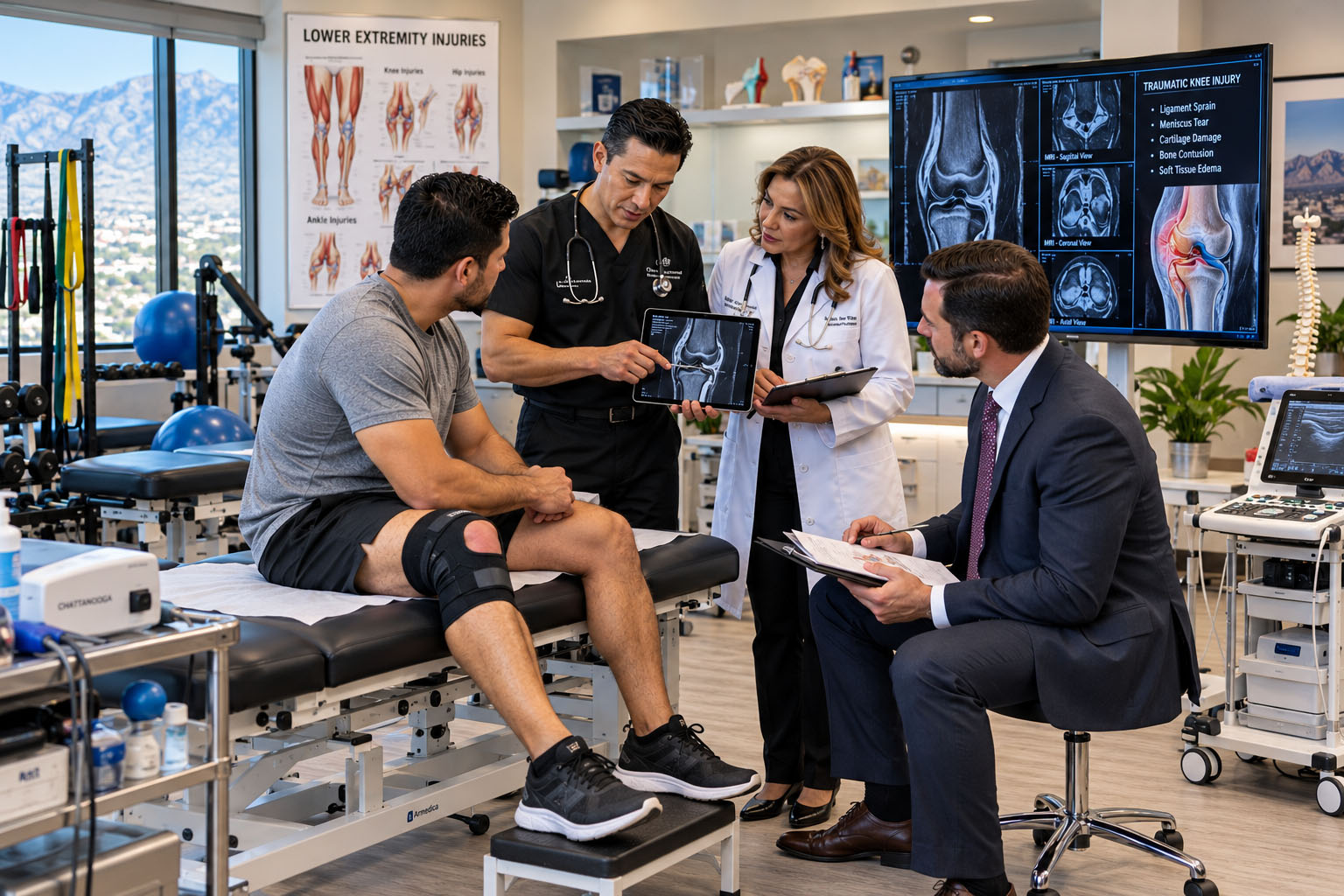
This is where objective documentation can be especially useful. Digital diagnostic imaging, orthopedic testing, neurologic examination, functional testing, range-of-motion measurements, strength testing, and repeated re-examinations can show whether the patient’s presentation is consistent over time. No single MRI, X-ray, test, or pain score automatically proves legal causation. The strength comes from converging data.
Expert Testimony Should Address the Competing Explanation
When the medical relationship is outside ordinary juror experience, expert testimony is generally necessary to establish causation. In a two-accident case, the strongest expert does more than say, “Accident one caused the injury.” The expert explains why.
That explanation should identify the records reviewed, describe the mechanism, compare pre-event and post-event findings, discuss objective evidence, and address plausible competing causes. If degeneration existed before the crash, the expert should distinguish pre-existing anatomy from a supported symptomatic aggravation. If a second collision occurred, the expert should explain whether it caused a new injury, aggravated the first, or does not materially account for the claimed condition.
Cross-examination becomes much more effective when an opinion ignores records that could alter the causal analysis. JLG Trucking shows that a physician’s failure to review key records from a second accident can become central to the opinion’s credibility.
Documentation Should Be Clinical, Not Advocacy
Personal injury records are strongest when they document patient care rather than manufacture litigation language. Structured electronic notes should consistently capture mechanism, symptom onset, prior history, objective findings, diagnoses, functional restrictions, treatment response, referrals, changes in condition, and subsequent events.
That approach protects beneficence and autonomy. The patient receives care based on the clinical picture, including new risks after a second event, plus a clear explanation of what clinicians know, what remains uncertain, and why additional testing or referral may be recommended.
It also supports non-maleficence. When new neurologic deficits, red flags, or changed symptoms appear, clinicians should not simply continue the same treatment plan. Re-evaluation, imaging, medical consultation, or referral may be safer than assuming the new complaints stem from the initial injury.
For attorneys, clear records can make insurance review, expert analysis, deposition preparation, and Letters of Protection easier to evaluate. The record should remain accurate enough to withstand scrutiny, including Colossus-style claims review, without becoming an advocacy document.
An Integrated El Paso Model for Complex Injury Cases
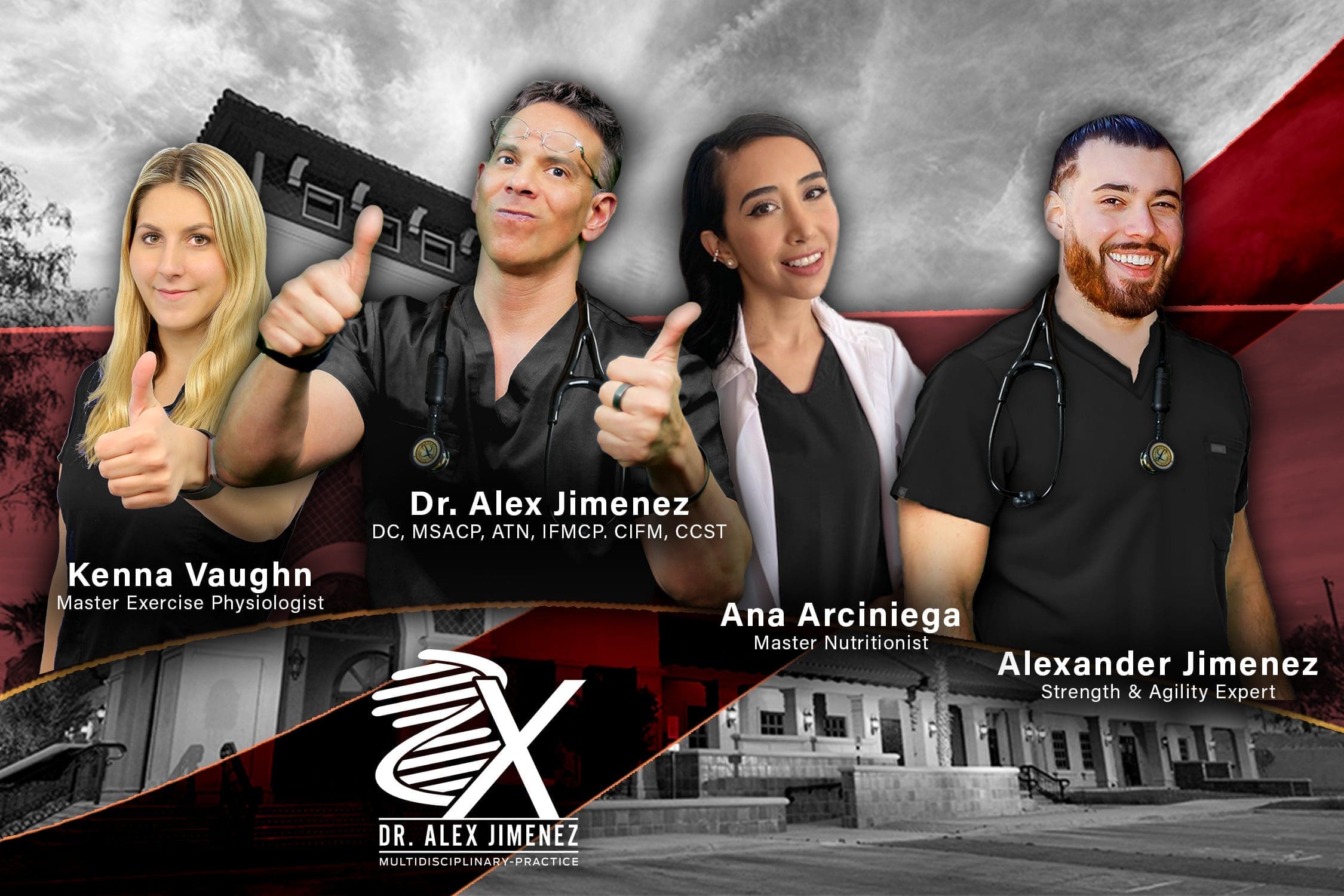
Dr. Alex Jimenez’s Injury Medical Chiropractic and Functional Medicine Clinic uses a multidisciplinary model for cases in which musculoskeletal injury, medical concerns, rehabilitation, and documentation overlap. He is a Doctor of Chiropractic, an Advanced Practice Registered Nurse, and a board-certified Family Nurse Practitioner. Dr. Maria Guadalupe Cardenas, MD, a board-certified internal medicine physician, serves as Medical Director and Collaborative Physician. The structure brings chiropractic evaluation, medical screening, diagnostics, rehabilitation, functional medicine, acupuncture or electroacupuncture when appropriate, and specialist coordination into one clinical framework.
For soft-tissue injury cases, that integration can help the team recognize when a sprain-strain presentation becomes more complex because of neurologic change, comorbidity, medication needs, or a subsequent accident. The clinic presents this under-one-roof approach as a distinctive El Paso model. An “only clinic in El Paso” claim, however, requires independent market-wide verification before publication.
Practical Lessons for Texas Litigation Teams
When two accidents appear in one injury claim, build the causation analysis before the deposition, mediation, or trial. Key questions include:
- What was documented before each event?
- Which symptoms or objective findings were new, unchanged, improving, or worsening?
- Does each proposed cause fit the anatomy and mechanism?
- Did the expert review the records from both events?
- Are degenerative findings being confused with symptomatic injury?
- Is the alternative explanation supported by facts, or is it merely possible in theory?
- Does the medical opinion explain why one event is more likely responsible for the claimed condition?
The lesson of JLG Trucking is not that a second accident automatically defeats a first-accident claim. Courts, attorneys, and experts cannot evaluate causation fairly by pretending a plausible competing event didn’t happen. A credible claim acknowledges the full medical history and then explains the evidence.
- For plaintiffs, that can mean showing that the first collision caused a documented injury before the second event, or that the second accident caused a separate aggravation.
- For defendants, it means identifying evidence, not speculating.
- For clinicians, it means measuring, documenting, comparing, and explaining.
When the chronology is clean, and the reasoning is transparent, alternative causation becomes manageable. The case becomes a careful analysis of which event caused which medically supported consequences.
References
JLG Trucking, LLC v. Garza, 466 S.W.3d 157 (Tex. 2015). https://www.txcourts.gov/media/943999/130978.pdf
Jimenez, A. (2026). Two collisions, one recovery: Whiplash and low back injury managed as an integrated chiropractic and medical case. Dr. Alex Jimenez Chiropractic.
Jimenez, A. (n.d.-a). El Paso multidisciplinary injury care solutions for you. Dr. Alex Jimenez Chiropractic.
Jimenez, A. (n.d.-b). Medical legal causation opinions for attorneys explained. Dr. Alex Jimenez Chiropractic.
Jimenez, A. (n.d.-c). Personal injury doctor. Dr. Alex Jimenez Chiropractic.
Comments are closed.