



Temporomandibular Joint Disorder, or TMJ, is a common condition that affects the jaw. It can be excruciating, and many people are turning to methods other than medication or surgery to relieve that pain. While lifestyle changes such as diet may help, chiropractic care has been cited as a viable treatment for TMJ pain.
At first, this may seem counter-intuitive simply because it is widely believed that chiropractors only treat the spine and neck. This commonly held belief is not entirely accurate. Chiropractors treat all joints, including the spine and neck. A chiropractor may treat ankles, wrists, knees, and, yes, even the jaw. Sometimes the neck and spine can be contributing factors, and they can be treated with chiropractic care.
What Is Temporomandibular Joint Disorder?
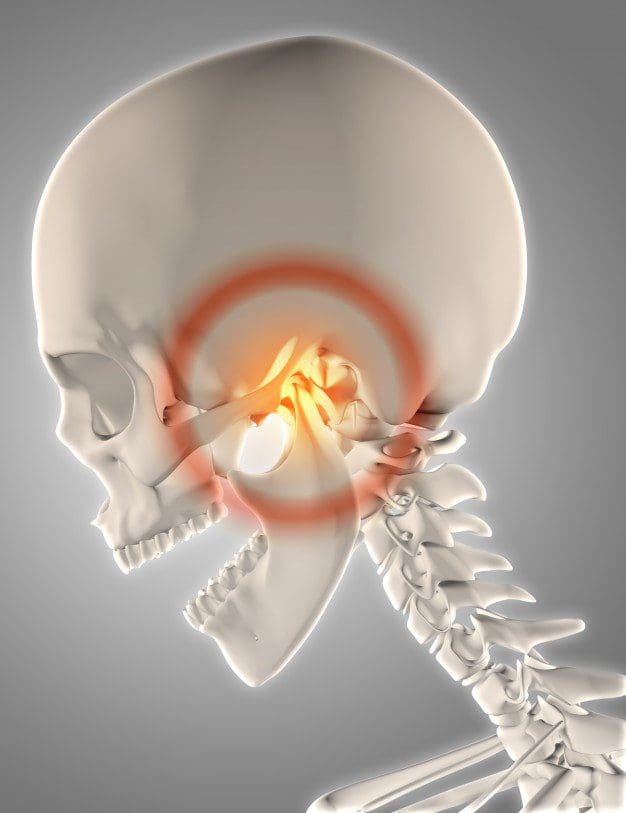 The joint that connects your jaw to your skull and allows you to open and close your mouth is the temporomandibular joint. When you have problems with the muscles or joints in that area, it is called TMJ, or more accurately, temporomandibular disorders, or TMD.
 This disorder is characterized by pain and stiffness on one or both sides of the jaw. The jaw may also lock or get stuck in either a closed or open position. Patients may also notice a popping, clicking, or grating sound in the jaw when chewing, yawning, or closing or opening their mouth. They may also have trouble chewing and even experience swelling.
Doctors don’t know what causes TMJ. It seems to be linked to trauma to the neck, such as with whiplash, but it also can be caused by:
- Arthritis in the jaw
- Grinding the teeth
- Stress that causes clenching of the jaw
- Movement of the disc, or soft cushion, that lies between the socket and ball of the jaw
Diagnosis & Treatment For Temporomandibular Joint Disorder
Many conditions can mimic the symptoms of TMD. After taking a medical history, your doctor will check the joints in the jaw for popping, clicking, or grating sounds. He will also assess the patient’s pain or tenderness level and check for any stiffness. During the exam, the doctor will evaluate the job and its ability to function correctly. X-rays may also be a part of the examination.
If the doctor can pinpoint the probable cause of the TMJ, he may prescribe specific treatments or make recommendations that will help. Medication is one option, mainly stress or anti-anxiety medication, to help the patient relax. A night guard or splint is another option, and it helps to put the patient’s teeth in the correct position. A splint is worn all the time, and a nightguard is worn only at night. Dental work is another option, and for more severe cases, surgery.
 Chiropractic Care For Temporomandibular Joint Disorder
 Chiropractic Care For Temporomandibular Joint Disorder
Chiropractic for TMJ is not only expected but very effective. The chiropractor may perform neck or spine adjustments as well as adjustments to the jaw. This means that the patient may experience pressure on their skull, jaw, upper spine, or neck as the chiropractor treat the condition. There are also soft tissue treatments that the chiropractor may perform during therapy for TMJ.
The chiropractor will often recommend lifestyle and diet changes to patients, which offers the patient the opportunity to treat the whole body instead of just one area. They may apply cold packs or heat packs to the area, recommend supplements, and teach the exercises designed to lessen the pain and encourage healing. Chiropractic is a safe, effective, and non-invasive treatment for TMJ.
So if you or a loved one have been diagnosed with TMD and/or is experiencing TMJ pain, give us a call. Our Doctor of Chiropractic is here to help!

Comments are closed.