

Occipital Neuritis Integrative Treatment Options for You
Understanding Occipital Neuritis and Advanced Integrative Treatment Options
Abstract
Occipital neuritis, a condition characterized by intense, piercing headaches originating at the base of the skull, can be debilitating. This post explores the complexities of occipital neuritis, from its underlying causes to its diagnosis and management. As Dr. Alex Jimenez, I will guide you through an in-depth discussion of the anatomical and physiological factors that contribute to this painful condition. We will explore the latest evidence-based treatment methods, including targeted occipital nerve blocks, and showcase how our multidisciplinary approach at Injury Medical Clinic effectively integrates these advanced procedures.
This educational journey will also highlight the crucial role of collaborative care, where my expertise in chiropractic and functional medicine is complemented by the medical oversight of our Medical Director, Dr. Maria Guadalupe Cardenas, MD, to provide comprehensive and personalized patient care. We will also explore how integrative chiropractic care is fundamental to addressing the biomechanical dysfunctions that often precipitate or exacerbate occipital neuritis, supporting a holistic path to recovery.
Hello, I’m Dr. Alex Jimenez. With my extensive background in chiropractic care, functional medicine, and advanced practice nursing, I am dedicated to unraveling complex health issues and providing effective, evidence-based solutions. My credentials—DC, APRN, FNP-BC, CFMP, IFMCP, ATN, and CCST—reflect a deep commitment to lifelong learning and integrating multiple disciplines to achieve the best possible outcomes for my patients.
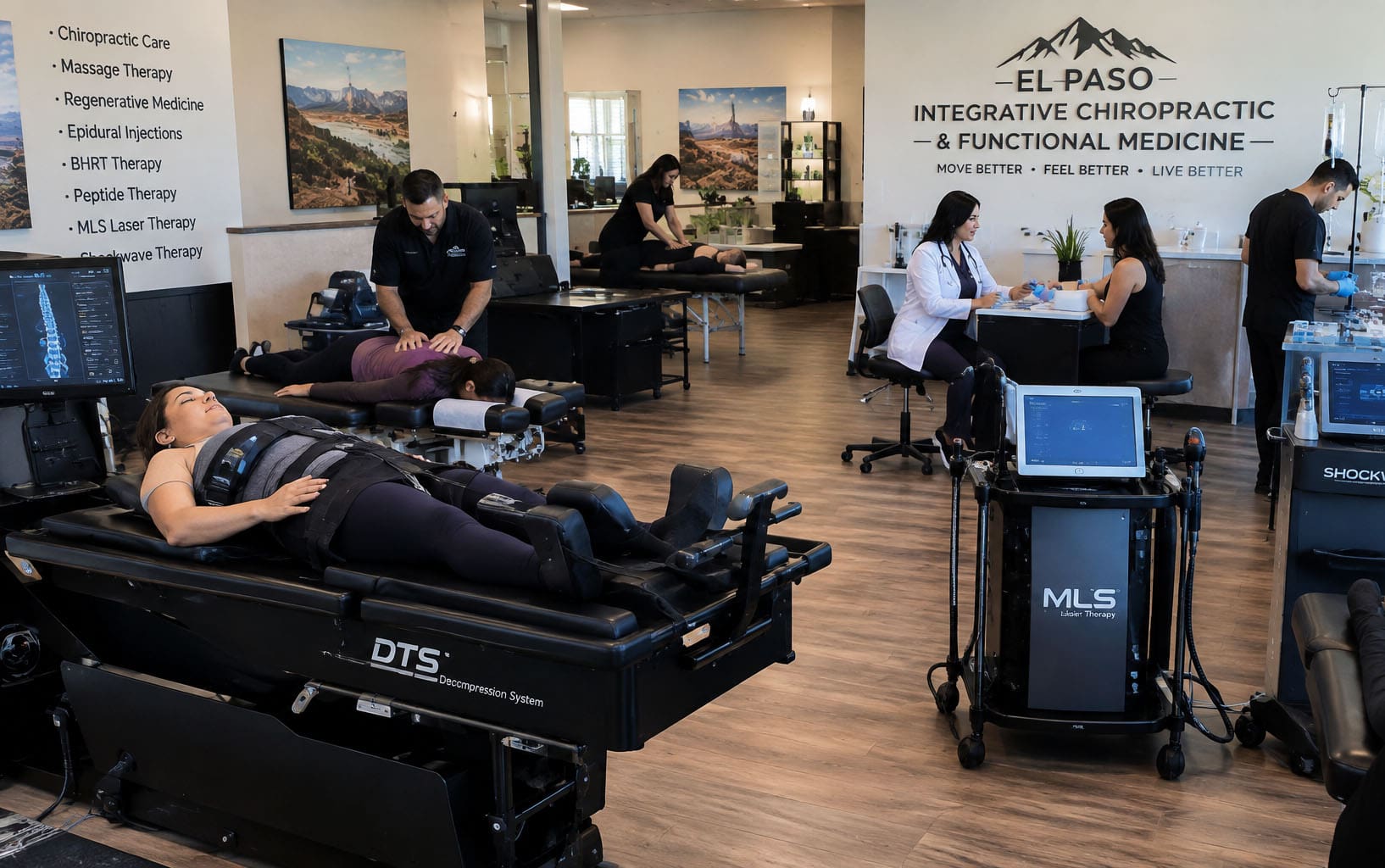
At our practice, Injury Medical Clinic PA, located in El Paso, Texas, we have cultivated a unique and powerful healthcare model. We operate as a multidisciplinary team where a chiropractor (myself) and a medical doctor work closely together. Our distinguished Medical Director and Collaborative Physician, Dr. Maria Guadalupe Cardenas, MD, leads this integrative approach. Dr. Cardenas is Board Certified in Internal Medicine and brings over four decades of invaluable experience to our clinic. Her NPI number is 1164426749, and her Texas MD License is #J2933. Her role is pivotal; she provides the essential medical direction and oversight that allows us to offer a broad spectrum of care, from advanced medical procedures to functional medicine and rehabilitative therapies.
This synergy between medical and chiropractic expertise is the cornerstone of our philosophy. It allows us to treat the whole person, not just the symptoms. Whether a patient comes to us after a personal injury, with a chronic pain condition, or seeking to optimize their health, our integrated team—combining internal medicine, chiropractic adjustments, functional neurology, and rehabilitation—works together to create a personalized, comprehensive treatment plan. Today, I want to guide you through a common yet frequently misunderstood condition we treat: occipital neuritis.
Deconstructing Occipital Neuritis: A Source of Intense Head Pain
Occipital neuritis, often used interchangeably with occipital neuralgia, is a neurological condition that causes chronic pain in the upper neck, the back of the head, and behind the eyes. This pain stems from irritation or inflammation of the occipital nerves, a pair of nerves that emerge from the spinal cord in the upper neck and travel through the muscles at the back of the head to the scalp.
To truly understand this condition, let’s look at the anatomy:
- The Greater Occipital Nerve: This is the primary nerve involved, originating from the C2 spinal nerve root. It travels up through deep neck muscles, pierces the semispinalis capitis and trapezius muscles near their attachment points at the base of the skull (the occiput), and then provides sensation to a large portion of the back and top of the scalp.
- The Lesser Occipital Nerve: Originating from the C2 and C3 nerve roots, this nerve supplies sensation to the skin behind the ear and on the side of the head.
When these nerves become compressed, inflamed, or injured, they can trigger intense, debilitating pain. Patients often describe it as a sharp, jabbing, or electric shock-like sensation. The pain typically starts at the base of the skull and can radiate upwards to the scalp, and sometimes even to the forehead and behind the eye on the affected side (Sjaastad & Bakketeig, 2008).
Identifying the Triggers: What Causes Occipital Neuritis?
Various factors can irritate the occipital nerves. In many cases, it is idiopathic, meaning no specific cause is known. However, there are several known contributors:
- Trauma: A direct blow to the back of the head, such as from a car accident (whiplash) or a fall, can injure the occipital nerves.
- Chronic Muscle Tension: Persistent tightness in the neck and suboccipital muscles (the small muscles at the base of the skull) can physically compress the nerves as they pass through. This is a common cause, and chiropractic care can be essential.
- Cervical Spine Issues: Degenerative changes in the upper cervical spine, such as osteoarthritis or herniated discs at the C2-C3 level, can impinge on the nerve roots from which the occipital nerves originate.
- Medical Conditions: Certain systemic diseases, such as gout, diabetes, and vasculitis, can cause nerve inflammation throughout the body, including the occipital nerves.
- Tumors or Cysts: In rare cases, a growth in the upper neck region can press on the nerves.
Clinically, I often observe that poor posture, particularly forward head posture from prolonged computer use or looking down at mobile devices, is a major contributing factor. This posture places immense strain on the suboccipital and upper trapezius muscles, leading to chronic tension and, eventually, nerve compression.
The Diagnostic Process: Pinpointing the Pain
Diagnosing occipital neuritis involves a thorough clinical evaluation. The journey begins with a detailed patient history, where I listen carefully to the description of the pain—its quality, location, radiation pattern, and triggers. This is followed by a physical examination.
One key diagnostic sign I look for is Tinel’s sign over the occipital nerve. This involves gently tapping along the nerve’s path at the base of the skull. If this tapping reproduces sharp, electric-like pain, it strongly indicates nerve irritation (Choi & Jeon, 2016).
As part of my examination, I carefully palpate the suboccipital region to identify specific points of extreme tenderness. These trigger points often correspond directly to the areas where the nerve is most irritated or compressed. In the case I’m sharing today, I identified two such tender points on my patient.
An Advanced Treatment: The Occipital Nerve Block
When conservative treatments like physical therapy or oral medications fail to provide adequate relief, or when the pain is acute and severe, an occipital nerve block is an excellent and highly effective treatment option. We perform this procedure right here in our clinic under the medical direction of Dr. Cardenas.
An occipital nerve block serves two purposes: diagnostic and therapeutic.
- Diagnostic: If injecting a local anesthetic around the nerve provides immediate pain relief, it confirms that the occipital nerve is indeed the source of the pain.
- Therapeutic: The injection contains a mixture of a long-acting anesthetic and a corticosteroid. The anesthetic provides rapid, short-term relief, while the corticosteroid reduces inflammation around the nerve, offering longer-lasting pain relief that can last weeks or even months.
Let me walk you through the procedure I recently performed for a patient suffering from severe occipital neuritis.
Step 1: Precise Landmark Identification
The success of a nerve block hinges on precision. First, I located the exact points of maximum tenderness. I asked the patient, “Is that hurting right there?” to which they confirmed, “That’s it.” Because this area is within the hairline, using a standard surgical marker can be messy and imprecise. Instead, I use a simple but effective technique: I press the tip of a retractable ballpoint pen (with the ink retracted) firmly onto the skin. This creates a small, temporary indentation that I can easily see and feel. I then place a small ink mark just below the indentation for reference. I repeated this process for the second tender spot the patient identified.
Step 2: Aseptic Preparation
With the target sites marked, the next crucial step is to prepare the skin to prevent infection. I thoroughly cleaned both areas with alcohol swabs. In a hospital setting for a more invasive procedure, a Betadine prep would be standard. However, for a subcutaneous injection in the hairline, Betadine can be impractical and messy. A thorough cleaning with alcohol is sufficient to ensure an aseptic technique for this type of minimally invasive procedure.
Step 3: The Injection Cocktail
For this procedure, I prepared a syringe with a mixture of lidocaine and a corticosteroid.
- Lidocaine: A fast-acting local anesthetic. Its purpose is to numb the area almost instantly, providing the patient with immediate relief and confirming that we have targeted the correct nerve.
- Corticosteroid: This is the anti-inflammatory component. It works over the next few days to calm the inflammation surrounding the nerve, providing sustained pain relief.
I used a fine-gauge needle (a 25-gauge, 1-inch needle) to minimize discomfort during the injection. I planned to use half of the syringe’s contents for each of the two identified trigger points. Normally, I would use a topical anesthetic spray (freeze spray) to numb the skin before the injection, but in the hairline, the spray can run down the neck and into the patient’s eyes, making it unsuitable. So, I proceeded after explaining to the patient that they would feel a small “stick.”
Step 4: Performing the Injection
With the patient’s consent, I proceeded. I located the first indentation and said, “One, two, three,” as I inserted the needle. The patient understandably reacted with an “Ouch,” which is a normal response to the initial needle prick.
My goal was to place the needle tip right at the occiput (the base of the skull), where the nerve is most vulnerable to compression. Before injecting, I performed an essential safety assessment called aspiration. This involves pulling back slightly on the syringe’s plunger to ensure the needle tip is not inside a blood vessel. If blood were to enter the syringe, it would mean the injection would go directly into the bloodstream, which we want to avoid. The aspiration was negative—no blood was drawn.
Confident in the needle’s placement, I slowly injected half of the medication, bathing the irritated nerve in the anesthetic and corticosteroid solution. I then repeated the exact same process for the second marked spot, again confirming negative aspiration before injecting the remaining half of the medication.
Immediate Feedback and Post-Injection Care
Immediately after the injections, I gently massaged the areas. This helps the medication disperse throughout the subcutaneous tissue and surround the nerve more effectively.
The true test came next. I applied firm pressure to the first injection site and asked, “Does that hurt right there?” The patient responded, “Pressure.” When I asked if it was painful, they said, “Somewhat… It feels better.” This was an excellent initial sign. The lidocaine was already working.
I then pressed on the second spot and asked, “Is that painful?” The patient’s response was even more encouraging: “No, it feels better.” They confirmed that while they still felt a little residual tenderness, the sharp pain they had experienced just moments before had significantly reduced. They clearly stated it was much better than when they came into the room. This immediate positive feedback confirmed a successful nerve block.
The Role of Integrative Chiropractic Care in Long-Term Success
While the occipital nerve block provides powerful, targeted relief from inflammation and pain, it is often not a standalone cure. It is a tool to break the cycle of pain and inflammation. The real key to long-term success lies in addressing the root cause of the nerve irritation. This is where our integrative model, particularly chiropractic care, plays a fundamental role.
Once the acute pain is managed by the nerve block, we can effectively implement chiropractic protocols to correct the underlying biomechanical issues:
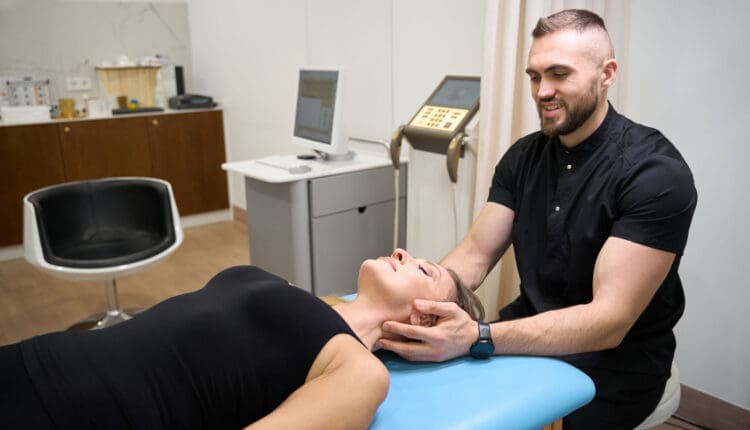
- Cervical Spine Adjustments: I perform precise, gentle adjustments to the upper cervical vertebrae (C1 and C2). Misalignments in this area can directly impinge on the C2 nerve root and contribute to occipital nerve irritation. Restoring proper alignment relieves this pressure and improves overall neurological function.
- Soft Tissue Mobilization: I use techniques like Active Release Technique (ART) or Graston Technique to break down adhesions and scar tissue in the suboccipital, trapezius, and other neck muscles. Chronic tension creates fibrotic tissue that can entrap the occipital nerves. Releasing this tension is critical for preventing recurrence.
- Postural Rehabilitation: We teach patients specific exercises to strengthen weak neck flexor muscles and stretch tight posterior neck muscles. Correcting forward head posture is paramount to reducing the chronic strain that leads to muscle tension and nerve compression.
- Functional Medicine: We may also investigate if systemic inflammation is a contributing factor. Through targeted lab testing, we can identify nutritional deficiencies, food sensitivities, or metabolic imbalances that may be promoting a pro-inflammatory state in the body. Addressing these with dietary changes and targeted supplementation can help reduce the likelihood of future inflammatory episodes (Vojdani et al., 2014).
This comprehensive approach is what sets our clinic apart from the rest. By combining the immediate, potent relief of a medically supervised procedure like an occipital nerve block with the foundational, corrective power of chiropractic care and functional medicine, we offer our patients a path not just to temporary relief, but to lasting recovery. Our collaborative team, led by Dr. Cardenas and me, ensures every patient receives a holistic, robust treatment plan tailored to their unique needs.
References
- Choi, I., & Jeon, S. R. (2016). Neuralgias of the head and neck. The Korean Journal of Pain, 29(4), 217–223. https://doi.org/10.3344/kjp.2016.29.4.217
- Sjaastad, O., & Bakketeig, L. S. (2008). The B-syndromes. V. The cervicogenic headache. Pathogenesis. Functional Neurology, 23(1), 27–31.
- Vojdani, A., O’Bryan, T., & Kellermann, G. H. (2014). The immunology of gluten sensitivity beyond celiac disease. Nutrients, 6(5), 1952–1969. https://doi.org/10.3390/nu6051952
Comments are closed.