
PRP Therapy Benefits for Plantar Fasciitis & The Achilles Tendon
Discover effective pain relief with PRP therapy for plantar fasciitis and Achilles tendon problems. Enhance your healing journey.
Educational Post: A New Protocol for Chronic Heel Pain and Plantar Fasciitis
Hello, I’m Dr. Alex Jimenez. Welcome to our educational platform. As a Doctor of Chiropractic (DC) with advanced credentials including Advanced Practice Registered Nurse (APRN), Board-Certified Family Nurse Practitioner (FNP-BC), Certified Functional Medicine Practitioner (CFMP, IFMCP), and certifications in anti-aging and regenerative medicine (ATN) and cranial-cervical spinal trauma (CCST), my lifelong commitment has been to explore and integrate the most effective, evidence-based treatments for my patients.
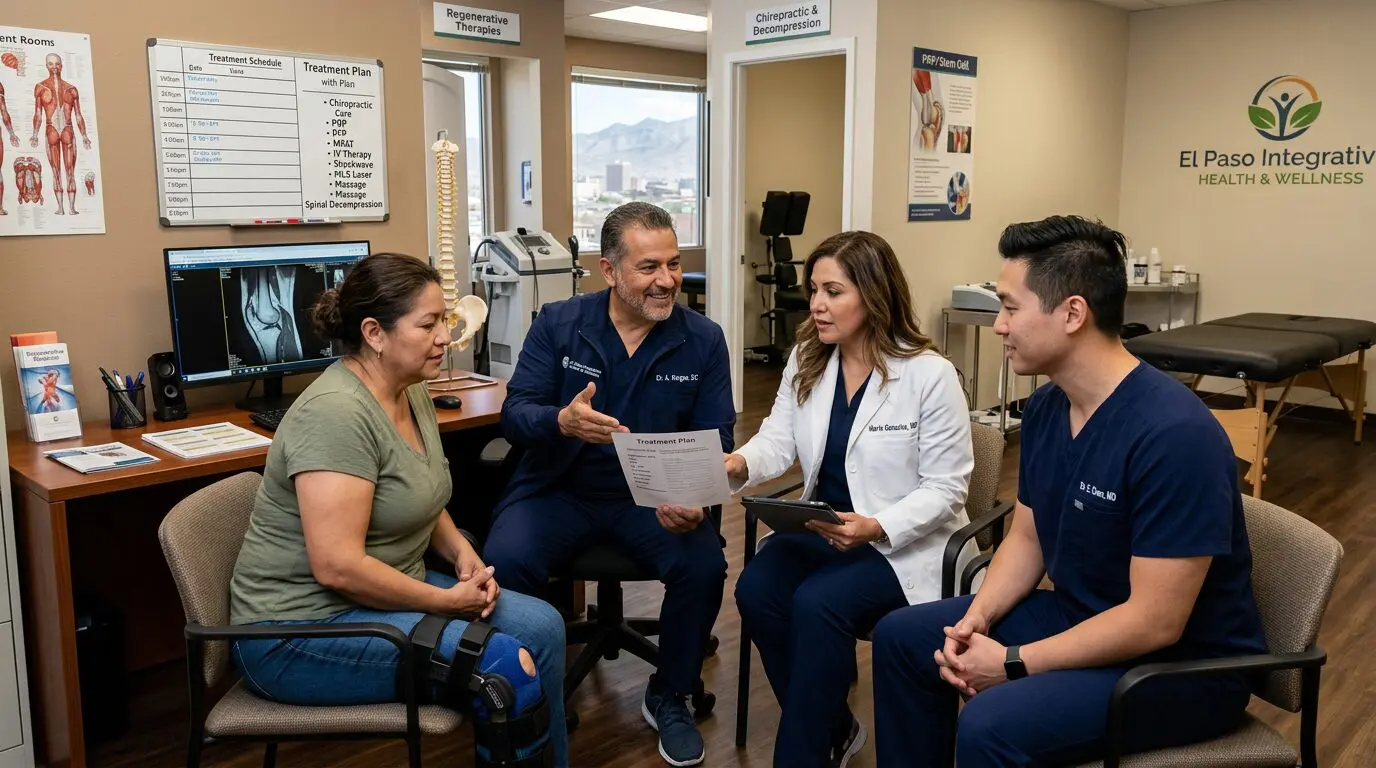
At our practice, Injury Medical Clinic PA in El Paso, Texas, we believe in a multidisciplinary approach to health and wellness. This philosophy is embodied in our collaboration with Dr. Maria Guadalupe Cardenas, a highly respected internist with over 40 years of experience. As our Medical Director and Collaborative Physician, Dr. Cardenas provides essential medical oversight, ensuring our patients receive comprehensive, integrated care that bridges the gap between traditional medicine, chiropractic, functional medicine, rehabilitation, and personal injury management. This collaborative model is fundamental to our mission: to provide a holistic and scientifically grounded path to recovery and optimal health.
Today, I want to share a revolutionary approach to a condition that plagues millions: plantar fasciitis. For years, the standard of care involved painful injections directly into the bottom of the foot, often with limited and temporary results. This post details a paradigm-shifting protocol that I’ve refined over years of clinical practice, inspired by collaborations with leading researchers and orthopedic surgeons. We will move beyond simply treating the symptom—the heel pain—and target the root cause: chronic tension and dysfunction in the Achilles tendon and gastrocnemius-soleus complex. This journey will take us through the intricate anatomy of the lower leg and foot, the physiological processes behind chronic heel pain, and the precise, evidence-based regenerative injection techniques that can offer lasting relief. We will explore how this innovative treatment, combined with integrative chiropractic care and functional medicine principles, provides a comprehensive solution for healing and restoring function.
Abstract: A Paradigm Shift in Treating Chronic Heel Pain
Plantar fasciitis is often misdiagnosed and mistreated as a localized inflammation of the plantar fascia. However, extensive clinical observation and emerging research indicate that in most chronic cases, the root cause is not in the foot itself but in the biomechanical dysfunction of the posterior chain, specifically the Achilles tendon and the gastrocnemius-soleus complex. This educational post, from the perspective of Dr. Alex Jimenez, DC, APRN, FNP-BC, explores a groundbreaking treatment protocol that redirects focus from the plantar fascia to these upstream structures. We will delve into the pathophysiology of tendinosis versus tendinitis, explaining why chronic heel pain is more accurately a degenerative process rather than an inflammatory one. The post provides a detailed, step-by-step guide to a regenerative injection technique targeting the Achilles tendon and its insertion point, a method developed in collaboration with orthopedic surgeons and supported by clinical trials. We discuss the rationale behind using biologics like Platelet-Rich Plasma (PRP) and prolotherapy, comparing their mechanisms and efficacy.
Furthermore, we highlight the role of integrative chiropractic care, emphasizing how spinal and pelvic alignment, gait analysis, and myofascial release techniques are crucial for addressing the underlying biomechanical imbalances that contribute to the condition. The collaboration with Dr. Maria Cardenas, MD, our Medical Director, ensures that this advanced protocol is administered with the highest standards of medical safety and oversight. This comprehensive approach, which combines advanced regenerative medicine with foundational chiropractic and functional medicine principles, offers a more effective, logical, and patient-centric solution to resolve chronic heel pain finally.
Rethinking Plantar Fasciitis: Why Your Heel Pain Might Not Be Coming From Your Heel
For decades, patients suffering from stabbing heel pain, especially with their first steps in the morning, have been given the diagnosis of plantar fasciitis. The conventional wisdom pointed to inflammation of the plantar fascia, a thick band of tissue running across the bottom of the foot. Consequently, the standard treatment involved interventions aimed directly at this area: anti-inflammatory medications, corticosteroid injections, and sometimes even surgery to release the fascia.
However, after years in clinical practice and observing countless patients who failed to find lasting relief with these methods, a critical question arose in my mind and in the minds of my forward-thinking colleagues: What if we are treating the victim and not the culprit? This question propelled me, along with leading orthopedic surgeons and researchers, on a journey to find a better way. The answer we discovered represents a fundamental shift in understanding and treating chronic heel pain.
The pain you feel in your heel is real, but it is often the final cry for help from a tissue that is being relentlessly abused by forces originating further up the leg. The true problem, in the vast majority of chronic cases, is not an inflammatory condition in the foot but a degenerative process in the Achilles tendon and the muscles of your calf, primarily the gastrocnemius and soleus muscles.
The Biomechanical Chain Reaction: How Your Calf Affects Your Foot
To understand this concept, we must think of the lower body as an interconnected kinetic chain.
- The Posterior Chain: The gastrocnemius and soleus muscles in your calf merge to form the powerful Achilles tendon. This tendon inserts onto the calcaneus, or heel bone.
- The Tensional Link: The plantar fascia also originates from the same heel bone and fans out toward the toes.
- The Windlass Mechanism: The Achilles tendon and the plantar fascia work together in a beautifully designed system known as the windlass mechanism. When you push off the ground to walk or run, the tightening of the Achilles tendon lifts the heel, and the plantar fascia tightens to support the arch of your foot, creating a rigid lever for propulsion.
Now, imagine what happens when the calf muscles and the Achilles tendon become chronically tight and dysfunctional. This tightness exerts a constant, unyielding pull on the heel bone. Because the plantar fascia is anchored to that same bone, it is subjected to a relentless tug-of-war.
Think of it like a rope tied to a post. If you continuously pull on that rope, day and night, the point where it attaches to the post will eventually fray and weaken. The plantar fascia is that rope. The chronic tension from the tight Achilles is the constant pulling.
This explains the hallmark symptom of plantar fasciitis: excruciating pain with the first steps in the morning.
- Overnight Contraction: When you sleep, your feet naturally relax into a position called plantar flexion (toes pointed down). In this position, the already-tight calf muscles and Achilles tendon shorten even further. The plantar fascia, in response, also settles into this shortened, relaxed state.
- The Morning Stretch-and-Tear: When you wake up and place your foot on the floor, your body weight abruptly forces your foot into dorsiflexion (toes pointed up). This action violently stretches the cold, contracted plantar fascia. The tissue, which has been under chronic strain and has developed micro-tears, is not prepared for this sudden tensile load. The result is a series of new micro-tears, which cause that sharp, stabbing pain.
Each step you take is a repetition of this trauma. The pain may lessen as you walk around and the tissue warms up, but the underlying damage is cumulative. Over time, this cycle of micro-tearing leads to a degenerative state, not an inflammatory one.
Tendinitis vs. Tendinosis: A Crucial Distinction
Understanding the difference between tendinitis and tendinosis is absolutely critical to grasping why traditional treatments fail and why our new approach succeeds.
- Tendinitis: The suffix “- itis ” implies inflammation. This is an acute condition, usually caused by a sudden injury or overload, where the body sends inflammatory cells to the site to initiate healing. You see the classic signs: swelling, redness, heat, and pain. Corticosteroids, which are powerful anti-inflammatories, can be effective in this acute phase.
- Tendinosis: The suffix “-osis” implies degeneration or deterioration. This is a chronic condition that develops over months or years. When a tendon is subjected to repetitive stress without adequate time to heal, the body’s repair process breaks down. Instead of healthy, organized collagen fibers, the tendon becomes filled with a disorganized, poor-quality cellular matrix. There are very few, if any, inflammatory cells present. The tissue is weakened, scarred, and painful due to cellular breakdown, not active inflammation.
Chronic heel pain is almost always a case of Achilles tendinosis and plantar fasciosis. The tissue is damaged and degenerating. Injecting a corticosteroid into degenerative, non-inflammatory tissue is not only illogical but can be harmful. Steroids can inhibit collagen synthesis and further weaken the already compromised tissue, increasing the risk of rupture. This explains why many patients experience temporary relief from a steroid shot, only to have the pain return with a vengeance, often worse than before.
Our protocol is based on this fundamental understanding: To heal the plantar fascia, we must first address the chronic tendinosis in the Achilles tendon and the hypertonicity of the gastrocnemius-soleus complex. We need to stop the constant pulling that is causing the damage. We must stimulate a true healing response in the degenerative tissue, not just suppress a non-existent inflammation.
The Innovative Protocol: Targeting the Source, Not the Symptom
This treatment protocol was born from a collaboration with a visionary orthopedic surgeon, Dr. Roman, several years ago. We were both frustrated with the dismal outcomes of conventional plantar fasciitis treatments. He had just attempted a complex fat pad replacement surgery on a patient whose heel pad had atrophied from repeated steroid injections—a condition known as fat pad syndrome. The surgery was unsuccessful, and he was at his wit’s end.
That evening, fueled by a shared passion for finding a better solution (and perhaps a couple of Moscow Mules), we mapped out a new strategy on a few bar napkins. The logic was simple and irrefutable: if the Achilles tendon is the problem, let’s treat the Achilles tendon. We must stop sticking needles into the incredibly sensitive, poorly vascularized tissue on the bottom of the foot and instead target the source of the tension.
Dr. Roman, an orthopedic surgeon and faculty member at the University of Nevada Medical School, formalized this protocol. He began with a published N-of-one study (a detailed case study on a single patient), which showed remarkable success. This was followed by larger clinical trials that validated the efficacy of the technique. Over the past eight years, both in his practice and mine, we have seen this protocol work with what I can only describe as “crazy good” success.
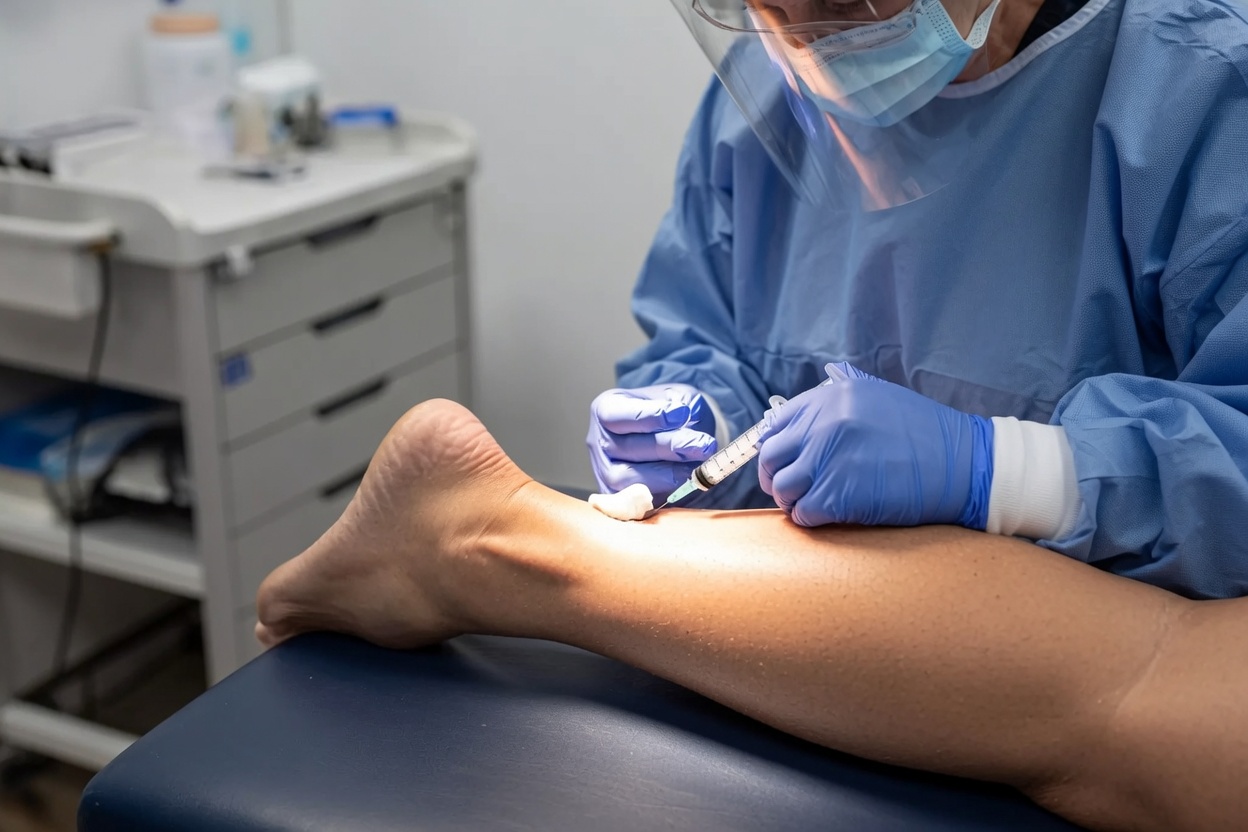
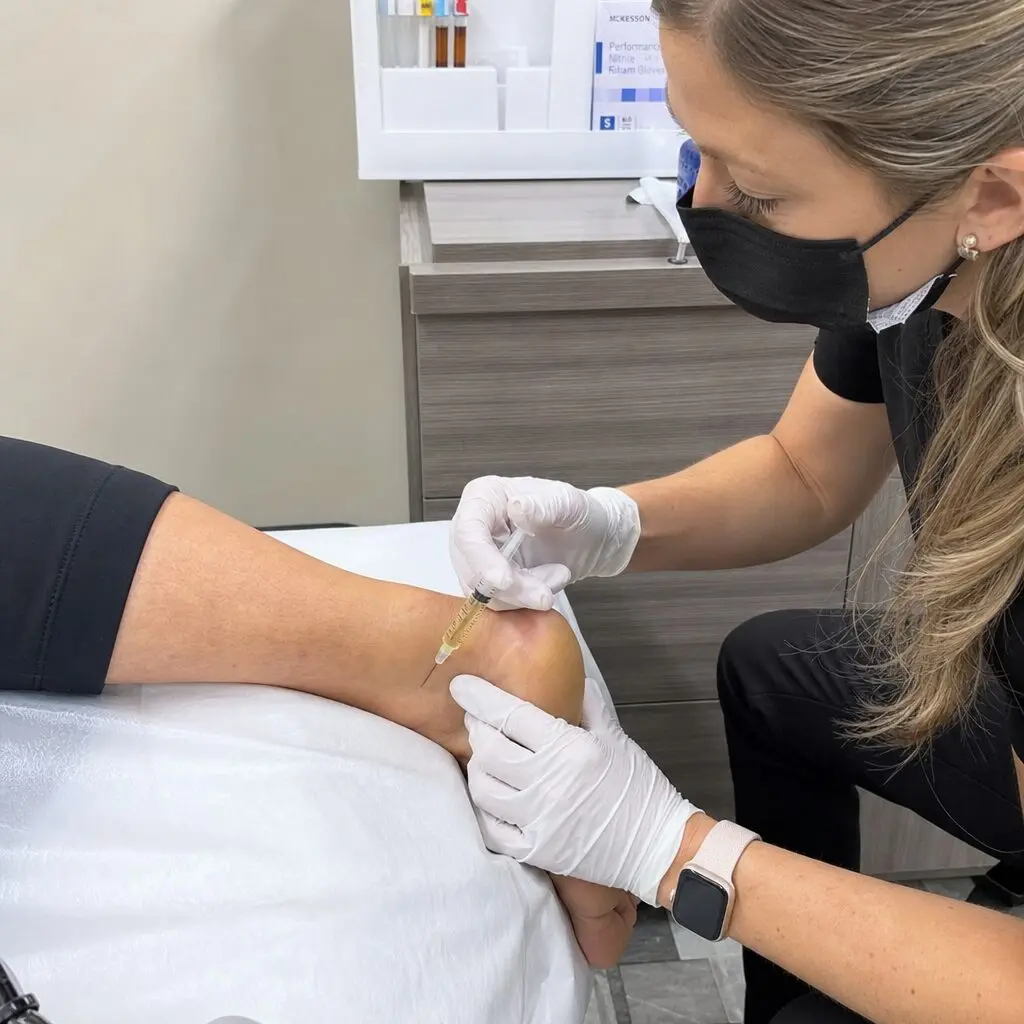
The procedure involves regenerative injections into two key areas of the Achilles tendon. The goal is to break down the scarred, degenerative tissue of the tendinosis and stimulate a natural, robust healing cascade.
Step 1: The Achilles Tendon Mid-Substance Injection
The first and most crucial part of the injection targets the mid-substance of the Achilles tendon, specifically at its bifurcation point. This is where the tendon begins to divide subtly and where degenerative changes are often most pronounced.
Locating the Injection Point:
- Patient Positioning: The patient lies prone (face down) on the treatment table with their feet hanging off the edge. This position allows the foot to relax completely.
- Palpation: I place the patient’s foot against my leg to provide gentle dorsiflexion, which makes the Achilles tendon taut and easy to identify.
- Finding the Bifurcation: I run my finger along the Achilles tendon from the heel. As I move superiorly (up the leg), I can feel a distinct point where the tendon seems to split or widen. This is the bifurcation of the Achilles tendon from the gas. Bifurcation and soleus contributions to the tendon. It feels like a small fork or groove in the tendon. This is our target. In most people, it’s a few inches above the heel bone.
The Injection Technique:
This is a precision technique that requires a deep understanding of the anatomy to be both safe and effective.
- Needle and Syringe: We typically use a 1.5-inch needle, though a 1-inch needle can suffice. This length is critical for reaching the proper depth. The syringe contains the regenerative solution—in our clinical training and for this demonstration, we used a simple saline solution, but in practice, this would be Platelet-Rich Plasma (PRP) or a prolotherapy solution.
- Bevel Up: The bevel (the slanted tip of the needle) is always pointed up. This allows for smoother entry through the tissue planes.
- The Entry: The needle is inserted at the identified bifurcation point. The initial entry breaks through the skin and subcutaneous tissue.
- The “Drop and Lean”: This is the key maneuver.
- The needle is advanced perpendicularly about halfway in (approximately half an inch). This places the tip just superficial to the tendon.
- Next, the angle of the needle is dropped, so it becomes more parallel to the tendon itself.
- The needle is then advanced further, “leaning” it into the substance of the tendon.
- Feeling the Tissue Change: As the needle enters the tendon, there is a palpable change in resistance. Healthy tissue feels firm but pliable. A tendon with tendinosis feels gritty, tough, and sometimes even “crunchy.” This tactile feedback is invaluable and confirms that the needle is in the correct location—within the pathologic tissue. An experienced practitioner can feel this change distinctly.
- The Injection: Once I’m confident the needle is within the degenerative portion of the tendon, I inject a small volume of the regenerative solution (e.g., 1-1.5 cc of PRP). The injection is not a bolus (a single large deposit) but is often fanned out slightly to pepper the solution throughout the diseased area. This process, known as fenestration, involves multiple small punctures with the needle tip to mechanically break up scar tissue and introduce the biologic agent that will signal the body to begin repairs.
The purpose of this injection is twofold:
- Mechanical Disruption (Fenestration): The needle itself acts as a surgical tool, breaking down the disorganized collagen and scar tissue of the tendinosis.
- Biochemical Stimulation: The injected solution (PRP or prolotherapy) initiates a powerful healing response, recruiting stem cells and growth factors to the area to build new, healthy tendon tissue.
Step 2: The Calcaneal Insertion Point Injections
The second part of the protocol addresses the area where the Achilles tendon attaches to the heel bone (calcaneus). This insertion point, known as an enthesis, is a common site of degeneration and pain (enthesopathy).
Locating the Injection Points:
- Palpation: With the foot relaxed, I palpate the very bottom of the Achilles tendon where it fans out and inserts onto the back of the heel bone.
- Identifying Tenderness: I apply pressure to both the medial (inner) and lateral (outer) sides of this insertion. Almost invariably, patients will report significantly more tenderness on one sideTendernessmonly the medial side. This point of maximum tenderness is our target; it’s like a “ropey” or thick band of tissue right on the bone.
The Injection Technique:
- Angle of Approach: The needle is inserted at a slight angle, aimed directly toward the point of maximum tenderness on the bone. The needle is advanced until it gently contacts the bone. This confirms the correct depth. We are not injecting into the bone but rather onto its surface (the periosteum), where the tendon fibers anchor.
- Aspiration: A Critical Safety Step: Before injecting, it is absolutely mandatory to aspirate. This means pulling back on the syringe’s plunger for a few seconds.
- Why Aspirate? We are injecting near a network of blood vessels. If blood flows back into the syringe (a “flash”), it means the needle tip is inside a vessel.
- What Happens if You Inject into a Vessel? The solutions we use, particularly those containing local anesthetics like lidocaine (often mixed with prolotherapy), can be toxic if injected directly into the bloodstream. An intravenous injection of lidocaine can cause serious systemic effects, including cardiac arrhythmias, seizures, and respiratory depression—a medical emergency.
- The Corrective Action: If a flash of blood appears, I immediately withdraw the needle, apply pressure, and find a new injection site. I never inject if I see a flash.
- The Injection: After aspirating and confirming no blood return, a small amount of the regenerative solution (e.g., 0.5 cc) is injected onto the periosteum at the tender point. If both medial and lateral sides are tender, each spot receives a small injection.
This part of the treatment targets the enthesopathy directly, stimulating healing at the critical anchor point of the tendon. By treating both the mid-substance and the insertion, we are addressing the entire dysfunctional unit of the Achilles tendon.
PRP vs. Prolotherapy: Choosing the Right Regenerative Tool
The “solution” we inject is the key to stimulating the body’s healing cascade. In my practice, the two primary tools are Platelet-Rich Plasma (PRP) and Prolotherapy.
Platelet-Rich Plasma (PRP)
- What is it? PRP is a concentration of platelets derived from the patient’s own blood. We draw a small amount of blood, spin it in a centrifuge to separate the components, and harvest the platelet-rich layer.
- How does it work? Platelets are the body’s first responders to injury. They are packed with hundreds of powerful growth factors and cytokines—signaling proteins that orchestrate the entire healing process. When we inject concentrated PRP into the degenerative tendon, we are essentially creating a “super-charged” healing environment. These growth factors call in stem cells, promote the formation of new blood vessels (angiogenesis), and stimulate fibroblasts to produce new, healthy Type I collagen—the strong, organized building block of a healthy tendon.
- Why it’s my preference for this protocol: PRP is highly efficient. Because it delivers such a potent concentration of the body’s own healing machinery directly to the site of injury, it often produces significant results much faster than prolotherapy. For a stubborn, chronic condition like Achilles tendinosis, PRP provides the robust stimulus needed to “reboot” the stalled healing process. Many patients see a dramatic improvement after just one or two treatments. My favorite place to inject PRP is exactly at the point of maximum tenderness, as this is where the pathology is most concentrated.
Prolotherapy (Proliferative Therapy)
- What is it? Prolotherapy involves injecting a mild irritant solution, most commonly a dextrose (sugar) solution, often mixed with a local anesthetic like lidocaine.
- How does it work? The body perceives the dextrose solution as a foreign substance, which triggers a mild, controlled inflammatory response. This is a crucial point: unlike the chronic, non-functional state of tendinosis, this is a new, acute, and productive inflammatory response. This controlled inflammation is the first step in the natural healing cascade (inflammation -> proliferation -> remodeling). It effectively tricks the body into thinking there’s a new injury, thereby restarting the healing process that had previously shut down.
- The Prolotherapy Treatment Course: Prolotherapy is a fantastic and cost-effective tool, but it works more gradually than PRP. It’s like gently nudging the body to heal, whereas PRP is a more forceful command. A typical prolotherapy course for this condition would involve weekly injections for about four weeks, followed by bi-weekly injections for another few sessions. It takes about six treatments on average to see significant, lasting improvement. The body needs time to build new tissue layer by layer.
Combining PRP and Prolotherapy: In some complex cases, I may use a combination approach. I might use PRP for the initial, most significant injection into the heart of the tendinosis to provide a powerful kick-start, and then use prolotherapy for subsequent treatments to continue supporting and guiding the remodeling of the tissue.
The Role of Integrative Chiropractic Care: Restoring the Foundation
Regenerative injections are a powerful tool for healing damaged tissue, but they are only one piece of the puzzle. If we don’t address the underlying biomechanical faults that caused the Achilles tendinosis in the first place, the problem is likely to return. This is where integrative chiropractic care becomes essential for long-term success.
At Injury Medical Clinic PA, my approach is never just about the injection. It’s about looking at the patient as a whole system. The tightness in your calf didn’t appear in a vacuum. It is often a compensation for dysfunction elsewhere in the kinetic chain.
Spinal and Pelvic Alignment
- The Foundation: Your pelvis and lumbar spine are the foundation of your entire posture and gait. A misalignment in the sacroiliac (SI) joints or a subluxation in the lumbar vertebrae can cause a chain reaction down the leg.
- Functional Leg Length Discrepancy: For example, a rotated pelvis can create a functional leg length discrepancy, where one leg behaves as if it’s shorter than the other. The body then has to compensate. This can lead to an altered gait, causing one foot to pronate more than the other, or one calf to work harder than the other. Over time, this asymmetrical loading pattern can overload one Achilles tendon, leading to tendinosis.
- Chiropractic Adjustments: Using precise chiropractic adjustments, I work to restore proper alignment to the pelvis and spine. This is the first step in leveling the foundation and ensuring that forces are distributed evenly through both legs during movement. This removes the upstream driver of the downstream problem.
Gait Analysis and Orthotics
- Observing the Pattern: I carefully observe how a patient walks. Do they overpronate (foot rolls inward)? Do they supinate (foot rolls outward)? Is there a lack of push-off on one side? These gait abnormalities provide crucial clues about the forces acting on the foot and ankle.
- Foot Structure: We also assess the structure of the foot itself. A flat foot (pes planus) or an excessively high arch (pes cavus) can predispose an individual to plantar fasciitis and Achilles issues.
- Custom Orthotics: When necessary, we use custom-molded orthotics. Unlike over-the-counter inserts, these are designed specifically for the patient’s foot to correct their unique biomechanical imbalances. An orthotic can help control overpronation, support a collapsing arch, or provide cushioning, thereby reducing the abnormal stresses on the plantar fascia and Achilles tendon with every step.
Myofascial and Soft Tissue Work
- Releasing the Calf: The injection helps to heal the tendon, but we also need to address the chronic tightness in the gastrocnemius and soleus muscles. I use a variety of manual therapy techniques to release this tension:
-
- Active Release Technique (ART): This technique combines patient movement with directed pressure to break up adhesions within the muscles and between the muscles and fascia.
- Graston Technique: This involves using specialized stainless steel instruments to detect and break down scar tissue and fascial restrictions.
- Deep Tissue Massage: This helps to improve circulation, release trigger points, and lengthen the muscle fibers.
- Treating the Entire Chain: Myofascial work is not limited to the calf. I will often work on the hamstrings, glutes, and even the lumbar paraspinal muscles, as tightness in any of these areas can contribute to the overall dysfunctional pattern.
Post-Procedure Care and Rehabilitation: The Path to Full Recovery
The treatment doesn’t end when the patient leaves the office. The post-procedure phase is critical for allowing the newly stimulated healing process to take hold and for re-training the body to move retraining
- The First 72 Hours: The Walking Boot: Immediately following the procedure, I place the patient in a walking boot (CAM boot) for three days.
- Why the Boot? The boot serves two purposes. First, it immobilizes the ankle slightly, protecting the tendon from excessive strain while the initial, most intense phase of the healing cascade begins. Second, and perhaps more importantly, it forces a slight change in gait, which helps to offload the newly treated Achilles tendon and plantar fascia.
- Beginning Gentle Stretching: After the three days in the boot, the patient can begin a gentle stretching protocol. The key is to stretch the calf muscles, not the plantar fascia. The classic “runner’s stretch” against a wall is perfect. This stretching is no longer a source of micro-trauma; it is now therapeutic. By lengthening the calf muscles that we have begun to heal, we are reducing the chronic tensile load on the Achilles tendon and, by extension, the plantar fascia. This gives the fascia a chance to heal on its own finally.
- Strengthening and Proprioception: As healing progresses, we introduce exercises to strengthen the muscles of the lower leg and foot. We also incorporate proprioceptive exercises (e.g., balancing on one foot), which retrain the nerves to support ankle position and movement better. This is vital for preventing re-injury.
- The Functional Medicine Perspective: At our clinic, we also look at the patient’s internal environment. Systemic inflammation, nutritional deficiencies (e.g., magnesium, Vitamin D), and poor blood sugar control can all impair the body’s ability to heal. As a Certified Functional Medicine Practitioner, I may recommend dietary changes, targeted supplementation, or lifestyle modifications to optimize the patient’s physiology for recovery. This is a core part of our integrated model, overseen by the medical expertise of Dr. Cardenas.
A Clinical Case: The Proof in Practice
I recall a patient, a 45-year-old marathon runner, who came to me in despair. He had suffered from bilateral plantar fasciitis for over two years. He had tried everything: steroid shots (which gave him temporary relief followed by worse pain), physical therapy, night splints, expensive orthotics, and had even stopped running, the activity he loved most. His morning pain was an 8 out of 10, and he felt a constant, dull ache throughout the day.
On examination, his plantar fascia was exquisitely tender, but the real story was in his calves. His gastrocnemius muscles were like rocks, and palpation of his Achilles tendons revealed the classic gritty, ropey texture of severe tendinosis. He was a perfect candidate for our protocol.
We performed the procedure using PRP on both Achilles tendons. He wore the boot for three days and then began the gentle stretching protocol. At his two-week follow-up, he reported a 50% reduction in his morning pain. After his second PRP treatment a month later, his morning pain was nearly gone. We integrated chiropractic adjustments to correct a pelvic tilt and used Graston technique to release the residual tightness in his calves.
Within three months, he was back to jogging short distances, completely pain-free. Six months after his first treatment, he completed a half-marathon. He didn’t just get relief from his symptoms; he was given back a part of his life. This is the power of treating the root cause.
Conclusion: A New Hope for Heel Pain Sufferers
The journey from agonizing heel pain to lasting recovery requires a shift in perspective. We must move away from the outdated and often ineffective model of chasing the pain in the bottom of the foot. By understanding the biomechanics of the lower leg and the true nature of chronic tendinosis, we can target the root of the problem: the dysfunctional Achilles tendon and calf muscles.
This innovative protocol, which combines precise, evidence-based regenerative injections with comprehensive, integrative chiropractic and functional medicine care, offers a logical and profoundly effective solution. Under the collaborative medical direction of Dr. Maria Cardenas, we ensure that these advanced treatments are delivered with the utmost safety and clinical excellence.
If you have been struggling with chronic heel pain, told that you have “plantar fasciitis,” and have found no lasting relief, there is new hope. The answer may not lie where you feel the pain, but in the structures upstream that control it. By addressing the true source of the problem, we can finally break the cycle of pain and degeneration and set you on the path to true healing and restored function.
References
- Ahmad, J., & Jones, K. N. (2020). Tarsal Tunnel Syndrome. StatPearls. StatPearls Publishing. [Link to resource, e.g., PubMed]
- DeLee, J. C., Drez, D., Jr., & Miller, M. D. (Eds.). (2017). DeLee, Drez, & Miller’s Orthopedic Sports Medicine: Principles and Practice (5th ed.). Elsevier.
- Docheva, D., Müller, S. A., Majewski, M., & Evans, C. H. (2015). Biologics for tendon repair. Advanced Drug Delivery Reviews, 84, 222–239. https://doi.org/10.1016/j.addr.2014.11.015
- Filardo, G., Di Matteo, B., Kon, E., Merli, G., & Marcacci, M. (2018). Platelet-rich plasma in tendon-related disorders: results and indications. Knee Surgery, Sports Traumatology, Arthroscopy, 26(7), 1984–1999. https://doi.org/10.1007/s00167-016-4261-4
- Finnoff, J. T., Hall, M. M., & Adams, E. (2011). American Medical Society for Sports Medicine (AMSSM) position statement: interventional musculoskeletal ultrasound in sports medicine. Clinical Journal of Sport Medicine, 21(5), 389–397. https://doi.org/10.1097/JSM.0b013e318228325a
- Hauser, R. A., Lackner, J. B., Steilen-Matias, D., & Harris, D. K. (2016). A systematic review of dextrose prolotherapy for chronic musculoskeletal pain. Clinical Medicine Insights: Arthritis and Musculoskeletal Disorders, 9, 139–159. https://doi.org/10.4137/CMAMD.S39518
- Kaux, J. F., Forthomme, B., Goff, C. L., Crielaard, J. M., & Croisier, J. L. (2016). Current opinions on tendinopathy. Journal of Sports Science & Medicine, 15(2), 193–205. [Link to resource, e.g., PubMed]
- Khan, K. M., Cook, J. L., Bonar, F., Harcourt, P., & Astrom, M. (1999). Histopathology of common tendinopathies: update and implications for clinical management. Sports Medicine, 27(6), 393–408. https://doi.org/10.2165/00007256-199927060-00004
- Liddle, A. D., & Pandit, H. (2014). Achilles tendinopathy. Orthopedics and Trauma, 28(3), 169-175. https://doi.org/10.1016/j.mporth.2014.04.004
- Luyten, F. P., De Dell’Accio, F., & De Bari, C. (2009). Skeletal tissue engineering: opportunities and challenges. Best Practice & Research Clinical Rheumatology, 23(3), 341-350. https://doi.org/10.1016/j.berh.2009.03.003
- Maffulli, N., Khan, K. M., & Puddu, G. (1998). Overuse tendon conditions: time to change a confusing terminology. Arthroscopy, 14(8), 840–843. https://doi.org/10.1016/s0749-8063(98)70021-3
- Martin, R. L., Davenport, T. E., Reischl, S. F., McPoil, T. G., Matheson, J. W., Wukich, D. K., & McDonough, C. M. (2014). Heel pain—plantar fasciitis: revision 2014. Journal of Orthopaedic & Sports Physical Therapy, 44(11), A1–A33. https://doi.org/10.2519/jospt.2014.0303
- Neufeld, S. K., & Cerrato, R. (2008). Plantar fasciitis: evaluation and treatment. Journal of the American Academy of Orthopedic Surgeons, 16(6), 338–346. https://doi.org/10.5435/00124635-200806000-00006
- Scott, A., Huisman, E., & Khan, K. (2011). Conservative treatment of chronic Achilles tendinopathy. CMAJ: Canadian Medical Association Journal, 183(10), 1159–1165. https://doi.org/10.1503/cmaj.101039
- Thomas, J. L., Christensen, J. C., Kravitz, S. R., Mendicino, R. W., Schuberth, J. M., Vanore, J. V., … & Zelen, C. M. (2010). The diagnosis and treatment of heel pain: a clinical practice guideline-revision 2010. The Journal of Foot and Ankle Surgery, 49(3), S1-S19. https://doi.org/10.1053/j.jfas.2010.01.001
SEO Tags: Plantar Fasciitis, Heel Pain, Achilles Tendinosis, Regenerative Medicine, PRP Therapy, Prolotherapy, Chiropractic Care, Dr. Alex Jimenez, Dr. Maria Cardenas, El Paso TX, Integrative Medicine, Chronic Pain, Foot Pain Treatment, Tendinopathy, Biomechanics, Functional Medicine, Injury Medical Clinic, Non-Surgical Treatment, Heel Spur, Calf Tightness
Comments are closed.