
Percutaneous Tenotomy for Tendinopathy Techniques Used
Evidence-Based Percutaneous Tenotomy for Tendinopathy: An Integrative Chiropractic and Medical Approach in El Paso
Abstract
In this educational post, I present a clear, step-by-step overview of percutaneous tenotomy for chronic tendinopathy and plantar fasciopathy, including what it is, why it works, who benefits, and how we safely perform it under ultrasound guidance using FDA-cleared systems such as Tenex and TenJet. I explain the physiological rationale behind targeted debridement, how soft-tissue healing is reinitiated after failed conservative care, and why combining this approach with integrative chiropractic care, functional medicine, and rehabilitation can optimize outcomes.
I also describe our multidisciplinary model: I, Dr. Alexander Jimenez, DC, APRN, FNP-BC, CFMP, IFMCP, ATN, CCST, work closely with Dr. Maria Guadalupe Cardenas, MD (Board Certified in Internal Medicine; NPI #1164426749; Texas MD License #J2933), who serves as Medical Director and Collaborative Physician at Injury Medical Clinic PA (Mission Plaza Injury Medical Clinic) in El Paso, TX. Together, we blend medical oversight, ultrasound-guided procedures, chiropractic adjustments, neuromuscular rehabilitation, and functional medicine to address root causes and restore function.
Introduction: Why We Use Percutaneous Tenotomy for Persistent Tendon Pain
I routinely meet patients whose daily life is limited by stubborn tendon pain—tennis elbow, golfer’s elbow, jumper’s knee, Achilles tendinopathy, and plantar fasciitis—that no longer responds to rest, NSAIDs, braces, or standard therapy. When a tendon slips into chronic degeneration—what we often call tendinosis—its biology changes: collagen fibers become disorganized, neovessels and nerve ingrowth can drive pain, and the tissue loses its capacity to heal on its own.
That is where percutaneous tenotomy offers a minimally invasive, ultrasound-guided option to precisely remove diseased tendon tissue, reduce abnormal nociceptive signaling, and rekindle a true healing response. In our clinic, I integrate this procedure within a comprehensive plan that includes chiropractic care for kinetic chain dysfunctions, targeted rehabilitation, and functional medicine strategies that support collagen synthesis, reduce systemic inflammation, and address metabolic drivers of poor tissue repair.
What Is Percutaneous Tenotomy?
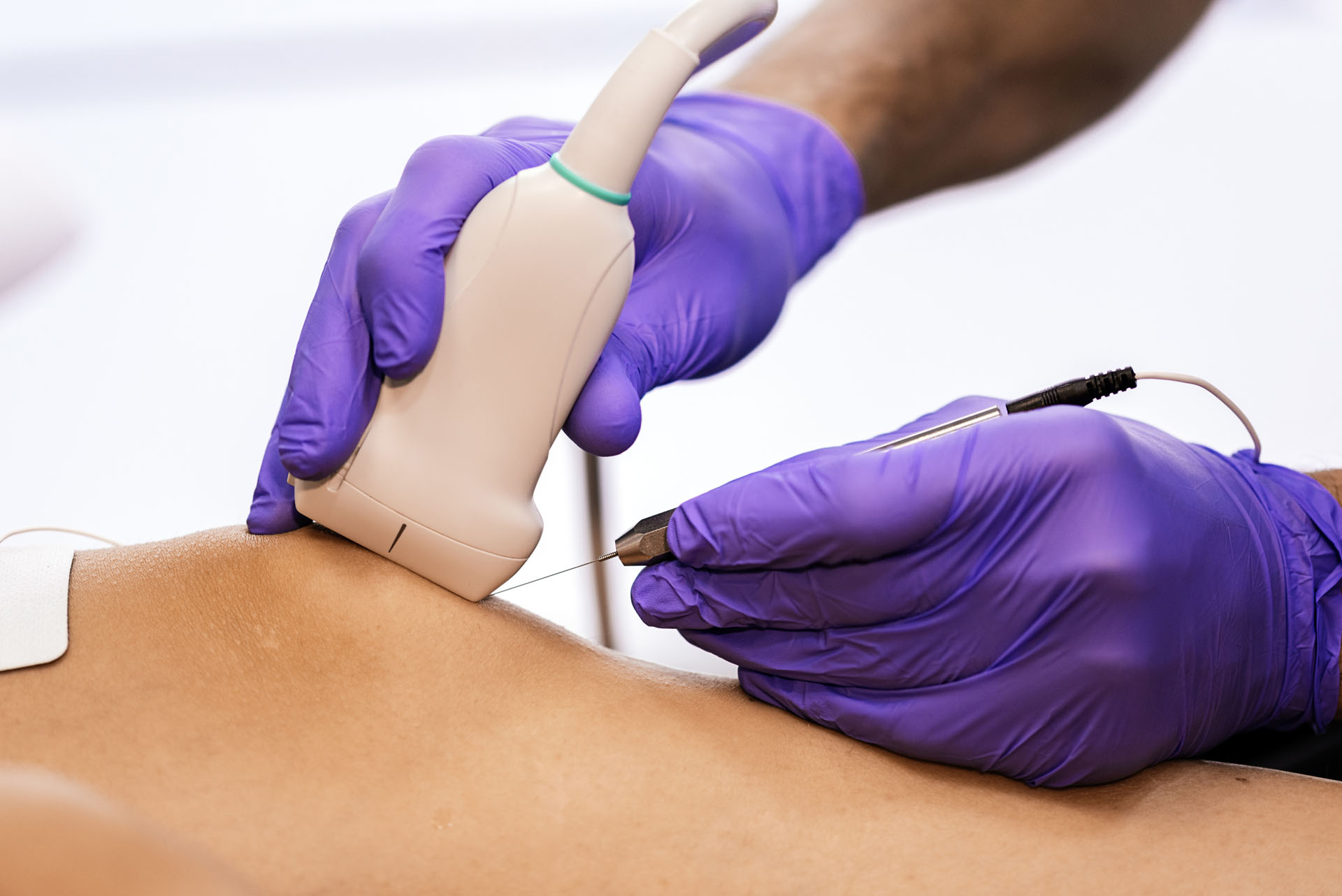
Percutaneous tenotomy is a focused, image-guided procedure that mechanically debrides degenerative tendon or fascial tissue through a tiny skin puncture, performed under sterile technique. Two leading, FDA-cleared modalities are in use:
- Tenex (ultrasonic emulsification with aspiration)
- TenJet (high-velocity pressurized saline with suction)
Both are performed under real-time ultrasound to localize the pathologic tissue and to guide the instrument safely.
Key indications include:
- Elbow tendinopathy: extensor carpi radialis brevis (ECRB, tennis elbow) and flexor–pronator tendinopathy
- Knee tendinopathy: patellar tendinopathy (jumper’s knee)
- Ankle/foot tendinopathy: Achilles tendinopathy
- Plantar fasciopathy: chronic plantar fasciitis
These conditions share a common degenerative substrate characterized by disorganized collagen, neovascularization, microtears, and neurogenic inflammation. When conservative care fails, precisely removing the nonviable matrix can reset the local biology and permit orderly collagen remodeling.
How Tenex Works: Ultrasonic Emulsification and Aspiration
Tenex uses an 18-gauge, double-lumen needle with an ultrasonic tip. When activated via foot pedal:
- The tip vibrates at ultrasonic frequencies, providing micro-mechanical energy that selectively disrupts degenerated tendon matrix.
- Simultaneously, vacuum suction aspirates fragmented debris through the second lumen, reducing local pressure, removing catabolic tissue, and limiting dispersion.
Why this matters physiologically:
- Selective tissue removal reduces the load of denatured collagen and proteoglycan-rich, disorganized scar that cannot bear tensile loads.
- Debridement decreases nociceptive signaling by eliminating neoinnervated degenerative zones and dampening neurogenic inflammation.
- Microtrauma from the procedure incites a controlled inflammatory cascade—necessary to restart stalled healing—followed by fibroblast activation and deposition of Type III collagen that later matures to Type I with guided rehabilitation.
How TenJet Works: High-Velocity Saline and Suction
TenJet uses a pressurized, high-velocity saline jet to dissect and fragment diseased tissue, with concomitant suction to remove debris. The clinical rationale parallels Tenex:
- Focused hydromechanical debridement spares healthy fibers while clearing nonviable matrix.
- Suction reduces local inflammatory byproducts and the bioburden of degraded tissue.
- Ultrasound guidance ensures precise targeting and protects adjacent structures.
Ultrasound Guidance: Safety and Precision
Ultrasound is central to both techniques:
- We identify the hypoechoic, thickened, or heterogeneously echogenic tendon zones and focal calcifications.
- We map nearby vessels and nerves with Doppler to avoid iatrogenic injury.
- We confirm instrument position in-plane, track tip movement, and visually verify debridement.
In my practice, strict sterile technique is non-negotiable. The ultrasound probe is covered with a sterile sheath, and the field is prepared with sterile drapes. Local anesthesia improves comfort, and most procedures take 30 seconds to 2 minutes of active debridement time, though total room time is longer for setup, scanning, and post-procedure dressing.
Integrative Model: Medical Direction and Chiropractic Collaboration
At Injury Medical Clinic PA (Mission Plaza Injury Medical Clinic) in El Paso, Texas, our model blends medical oversight and chiropractic-led function restoration:
- Medical Director and Collaborative Physician: Dr. Maria Guadalupe Cardenas, MD, FACP (Board-Certified in Internal Medicine; NPI #1164426749; Texas MD License #J2933) serves as our Medical Director. With 40+ years as an internist, Dr. Cardenas evaluates systemic contributors (metabolic, endocrine, and autoimmune), guides diagnostic workups, and co-manages procedures, medications when appropriate, and risk stratification.
- Chiropractic and Functional Rehabilitation: I, Dr. Alexander Jimenez, DC, APRN, FNP-BC, CFMP, IFMCP, ATN, CCST, focus on mechanical load management, joint biomechanics, regional interdependence, and neuromuscular retraining to correct the kinetic chain abnormalities that often drive or perpetuate tendinopathy.
- Functional Medicine Integration: We assess nutrition, glycemic control, micronutrients crucial to collagen (vitamin C, copper), omega-3 status, sleep, and stress physiology to enhance tissue repair.
- Personal Injury and Multidisciplinary Care: We routinely coordinate with physical therapists, athletic trainers, and pain specialists for comprehensive care plans, especially in injury cases where documentation, timelines, and return-to-work criteria require coordinated oversight.
Why Integrating Chiropractic Care Enhances Outcomes
Tendons fail under load. If the biomechanics driving the overload aren’t addressed, the pain often returns. My clinical observations and experience across thousands of cases (see Clinical Observations) show that correcting the kinetic chain is critical:
- Proximal and distal drivers: For lateral epicondylitis, restricted thoracic mobility, scapular dyskinesis, or wrist/hand motor control deficits can shift stress to the ECRB. For Achilles tendinopathy, limited ankle dorsiflexion, hip abductor weakness, and forefoot stiffness commonly concentrate load.
- Spinal segmental dysfunction: Subclinical hypomobility at the cervical/thoracic spine can alter motor outputs and muscle tone through reflex pathways, predisposing distal tissues to repetitive microtrauma. Precise, low-amplitude chiropractic adjustments can normalize joint mechanics and improve neuromuscular coordination.
- Fascial continuity: The myofascial system transmits force across chains; manual therapies and instrument-assisted soft-tissue mobilization can reduce local densification, improve gliding, and recalibrate motor patterns.
Procedure Flow in Our Clinic: From Evaluation to Return to Sport
- Comprehensive Assessment
- Diagnostic ultrasound to characterize tendon structure, neovascularity, and calcifications; sometimes X-ray for calcific burden or MRI if red flags exist.
- Kinetic chain screen: foot-ankle-hip-spine alignment, movement quality, muscle performance, and proprioception.
- Internal medicine review: Dr. Cardenas assesses systemic factors—pre-diabetes/diabetes, thyroid dysfunction, dyslipidemia, statin exposure, autoimmune features, and medications impacting healing (e.g., fluoroquinolones, chronic steroids).
- Informed Decision-Making
- We discuss options: continued conservative care, shockwave therapy, platelet-rich plasma (PRP), percutaneous tenotomy, or combinations.
- We explain benefits, risks, and expected timelines. Most patients return to desk work quickly; athletic return depends on tissue and sport demands.
- Sterile, Ultrasound-Guided Tenotomy
- Local anesthesia and procedural planning under ultrasound.
- Tenex or TenJet selection based on lesion characteristics, calcific load, and tissue depth.
- Active debridement typically takes 30–120 seconds; apply a sterile dressing.
- Post-Procedure Protocol
- Relative rest for a few days, avoiding anti-inflammatories that could blunt the healing cascade.
- Early protected loading: isometrics, then eccentrics and heavy-slow-resistance progression guided by pain and function.
- Manual therapy and adjustments to optimize regional mechanics.
- Nutritional support for collagen synthesis: adequate protein (1.2–1.6 g/kg/day individualized), vitamin C around loading sessions, omega-3s, and correction of deficiencies (vitamin D, magnesium).
- Return to Activity and Prevention
- Gradual ramp-up with load monitoring and technique retraining.
- Footwear/orthotic evaluation when relevant; workplace ergonomics for upper-limb cases.
- Conditioning of neglected links in the chain—hip abductors, soleus, and scapular stabilizers—to reduce recurrence.
Physiological Underpinnings: Why Debridement Plus Loading Works
Chronic tendinopathy is not primarily an inflammatory disorder; it is a failed healing response with matrix disorganization. Key points:
- Collagen remodeling: Removing degenerated tissue allows fibroblasts to lay down new collagen in response to mechanotransduction. Eccentric and heavy-slow resistance exercise aligns collagen fibers along lines of stress, improving tensile strength.
- Neovessel and nerve ingrowth: Pathologic neovessels often accompany nerve ingrowth that drives pain. Debridement reduces these structures, while graded loading modulates tenocyte behavior and nociceptor sensitivity.
- Neuroimmune recalibration: Short, controlled inflammation post-debridement invites macrophage phenotypes that support resolution and repair. Avoiding early NSAIDs and integrating sleep, glycemic control, and micronutrients further optimizes the healing milieu.
When We Choose Tenex vs. TenJet
- Tenex advantages: The ultrasonic tip can be particularly precise in focal tendinosis and well-demarcated lesions, with efficient aspiration of viscous degenerative material.
- TenJet advantages: High-velocity saline may help in broader, softer degenerative regions and in some calcific presentations, with strong suction to manage debris.
The decision is individualized based on ultrasound findings, anatomy, and patient factors. Both methods require skilled ultrasound imaging and a disciplined sterile technique.
Safety, Contraindications, and Expectations
- Safety: Complications are uncommon when trained clinicians perform the procedure under ultrasound guidance. We diligently avoid vascular and neural structures and maintain strict sterility.
- Relative contraindications: Active infection, uncontrolled diabetes or coagulopathy, and inability to adhere to rehab progression.
- Expectations: Soreness for several days is typical. Progressive functional gains occur over weeks to months as the new collagen matures under guided loading. Many patients report meaningful pain reduction within 4–8 weeks, with continued gains thereafter.
How Integrative Chiropractic Care Fits After Tenotomy
- Joint alignment and mobility: Gentle, targeted spinal and extremity adjustments can restore normal arthrokinematics, reducing aberrant tendon loading during healing.
- Motor control retraining: We focus on scapular control for elbow tendinopathy, soleus strength and ankle dorsiflexion for Achilles tendinopathy, and hip-knee alignment for patellar tendinopathy.
- Soft-tissue and fascia: Instrument-assisted methods and myofascial techniques reduce adhesions and improve glide, facilitating pain-free loading.
- Load management: We use graded exposure, tempo prescriptions, and symptom-guided progressions to respect tendon mechanobiology.
Functional Medicine Supports Healing from the Inside Out
- Glycemic control: Hyperglycemia cross-links collagen and impairs tendon quality. We screen and address insulin resistance to protect the healing matrix.
- Micronutrients and protein: Adequate protein and vitamin C around training stimulate collagen synthesis; we correct vitamin D and magnesium deficiencies that affect recovery.
- Inflammation resolution: Omega-3 fatty acids and sleep optimization support pro-resolving mediators and autonomic balance, lowering nociceptor sensitization.
- Medication review: We evaluate agents that impair tendon health and collaborate with prescribing physicians when adjustments are clinically appropriate.
Personal Injury and Occupational Cases
In injury scenarios—auto, workplace, and sports—we coordinate documentation, imaging, conservative trial timelines, procedural indications, and return-to-duty plans. Our integrated team ensures the medical record supports both clinical needs and functional milestones, helping patients recover and navigate administrative requirements effectively.
Step-by-Step Snapshot: What Patients Experience
- Before: Evaluation, ultrasound imaging, and movement assessment. We set expectations and outline the rehab roadmap.
- During: Local anesthesia, a tiny skin opening, ultrasound-guided debridement via Tenex or TenJet, and immediate sterile dressing.
- After: Soreness managed with acetaminophen and ice as needed; no early NSAIDs. Within days, gentle movement resumes, followed by a structured loading program. Follow-ups review symptoms, function, and ultrasound findings when indicated.
Clinical Observations from Practice
Across my clinical work in El Paso, I’ve found that patients who pair percutaneous tenotomy with:
- Early isometrics, then progressive eccentrics/heavy-slow resistance
- Targeted chiropractic adjustments to normalize chain mechanics
- Myofascial and neuromuscular retraining for movement quality
- Nutritional and metabolic optimization
Consistently report faster pain reduction, better strength restoration, and lower recurrence rates. These patterns align with what I’ve shared publicly in my practice insights and professional updates, where we emphasize integrating biomechanics, imaging, and physiology to drive outcomes (Jimenez, n.d.-a; Jimenez, n.d.-b).
Why This Approach Belongs in Primary and Musculoskeletal Care
With modern ultrasound competency and a collaborative framework, percutaneous tenotomy expands access to definitive care for patients with chronic tendinopathy. The procedure is efficient, tissue-sparing, and pairs naturally with the conservative pillars of musculoskeletal medicine. In our setting, Dr. Cardenas’s medical oversight ensures systemic safety and careful selection, while integrative chiropractic care and rehabilitation provide the mechanical and behavioral re-education needed for long-term success.
Takeaways: The Path to Lasting Tendon Health
- Percutaneous tenotomy is a minimally invasive, ultrasound-guided debridement that restarts healing in chronic tendinopathy and plantar fasciopathy.
- Tenex uses ultrasonic emulsification and aspiration; TenJet uses high-velocity saline and suction. Both are FDA-cleared and ultrasound-guided.
- Best results come when we pair precise debridement with integrative chiropractic care, progressive loading, and functional medicine to address root causes.
- Our multidisciplinary team, led by Dr. Maria Guadalupe Cardenas, MD, and me, ensures safety, precision, and comprehensive recovery planning.
If you are dealing with persistent tendon pain that has not improved with rest and therapy, our team at Injury Medical Clinic PA (Mission Plaza Injury Medical Clinic) in El Paso is ready to help with a personalized, evidence-informed plan.
References
- Jimenez, A. (n.d.-a). Injury Medical Clinic PA – Clinical observations on musculoskeletal rehabilitation. Personal Injury Doctor Group. https://personalinjurydoctorgroup.com/
- Jimenez, A. (n.d.-b). Professional profile and integrative practice updates. LinkedIn. https://www.linkedin.com/in/dralexjimenez/
Comments are closed.