

Ultrasound-Guided Hydrodistension for Frozen Shoulder
Ultrasound-Guided Hydrodistension (Hydroplasty) for Frozen Shoulder, Integrative Chiropractic Care, and Multidisciplinary Management
In this educational post, I share a comprehensive, first-person walkthrough of ultrasound-guided hydrodistension (also known as hydroplasty) for adhesive capsulitis, commonly called frozen shoulder. Drawing on modern, evidence-based practices and the work of leading sports medicine clinicians, I explain how and why hydrodistension works, highlight the role of a suprascapular nerve block for patient comfort, and describe ultrasound-guided techniques that enhance precision and safety. I also demonstrate how integrative chiropractic care fits within a multidisciplinary model that includes medical oversight, functional medicine, and rehabilitation.
Our team at Injury Medical Clinic PA (Mission Plaza Injury Medical Clinic) in El Paso, Texas, blends the chiropractic care that I provide with the medical direction of Dr. Maria Guadalupe Cardenas, MD (Board Certified in Internal Medicine, NPI #1164426749, Texas MD License #J2933), who serves as our Medical Director and Collaborative Physician. Together, with over four decades of internal medicine expertise guiding our protocols, we deliver personalized, outcome-driven care for frozen shoulder and complex musculoskeletal issues. This post provides an easy-to-follow journey from diagnosis to recovery, explaining the physiology, the clinical reasoning behind each step, and how our integrative approach supports patient-centered outcomes.
Understanding Adhesive Capsulitis: Frozen Shoulder Pathophysiology and Patient Experience
As a clinician, I often meet patients who describe a creeping shoulder pain that gradually evolves into stiffness and functional loss. The hallmark of adhesive capsulitis is progressive restriction in both active and passive range of motion, especially external rotation, often accompanied by night pain. The shoulder feels locked, and everyday tasks—reaching, dressing, grooming—become difficult.
- Key physiology:
- The glenohumeral joint capsule becomes inflamed and thickened.
- There is fibroblastic proliferation with increased collagen deposition and capsular contracture, particularly in the rotator interval and coracohumeral ligament.
- Synovial inflammation leads to pain and protective muscle guarding.
- Over time, adhesions encroach on capsular recesses, further limiting motion.
- Phases of adhesive capsulitis:
- Painful phase: Synovitis drives pain; movement is self-limited by discomfort.
- Frozen phase: Capsular fibrosis dominates; stiffness persists even if pain eases.
- Thawing phase: Gradual restoration of motion as inflammation and fibrosis subside.
Evidence supports that targeted interventions can modulate both pain and fibrosis. Ultrasound-guided hydrodistension safely and mechanically expands the capsule, potentially disrupting adhesions and restoring capsular compliance, while multimodal care addresses pain, muscle guarding, and motor control (Chaudhary et al., 2020; Lin et al., 2018).
What Is Hydrodistension Hydroplasty
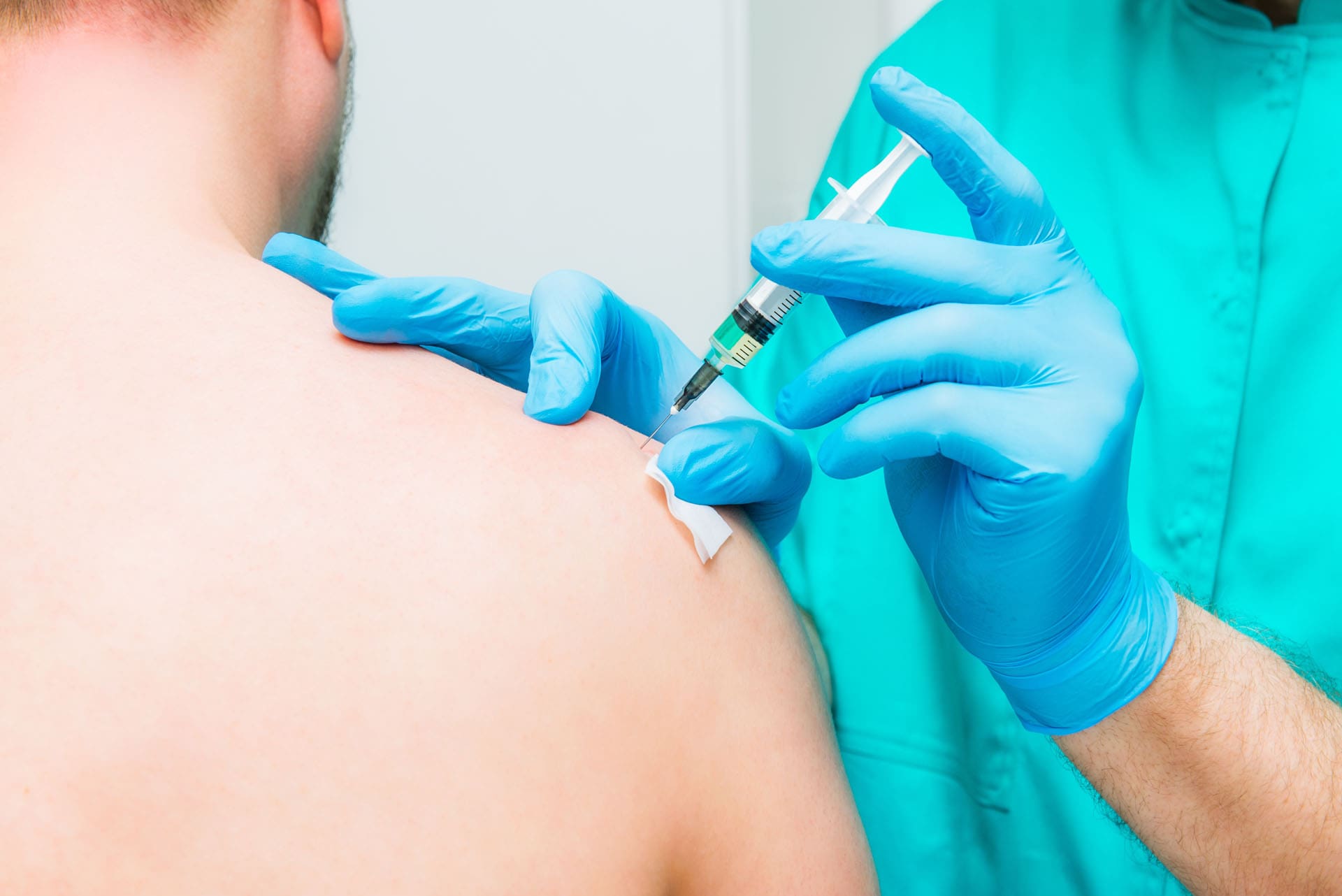
Hydrodistension (hydroplasty) is an ultrasound-guided procedure in which a precise volume of fluid—often a mixture of local anesthetic, normal saline, and a corticosteroid—is injected into the glenohumeral joint to distend the capsule. In some cases, the distension reaches a point of capsular break, observed in real time under ultrasound.
- Mechanisms of benefit:
- Mechanical: Distending the capsule increases capsular volume, countering contracture. Controlled capsular release (or micro-tearing of adhesions) can immediately improve range of motion.
- Neurophysiological: Local anesthetics reduce nociceptive input, allowing decreased muscle guarding and better participation in post-procedure mobilization.
- Anti-inflammatory: A corticosteroid reduces synovitis, decreasing pain and facilitating rehabilitation.
- Hydration and pressure effect: Saline volume helps normalize joint mechanics and may disrupt fibrinous adhesions.
A targeted suprascapular nerve block performed at the spinoglenoid notch often precedes hydrodistension. This provides short- to intermediate-term analgesia by reducing afferent pain signals from the shoulder joint, greatly improving comfort during and after the procedure and allowing immediate post-procedure therapy.
Ultrasound Guidance: Precision, Safety, and Real-Time Feedback
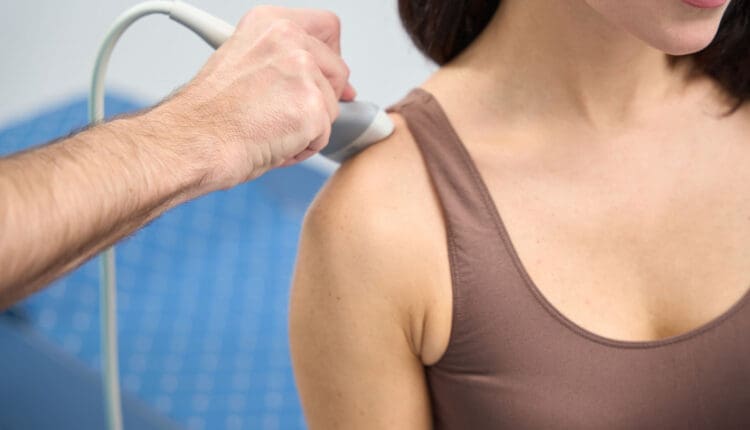
I prefer ultrasound guidance for hydrodistension because it provides continuous visualization of the posterior glenohumeral joint, capsule, and needle trajectory. Using a curvilinear probe positioned over the posterior shoulder, I identify the humeral head, glenoid, posterior capsule, and relevant musculature, including the deltoid and infraspinatus. I also visualize the spinoglenoid notch to perform the suprascapular nerve block.
- Advantages of ultrasound guidance:
- Real-time needle visualization reduces the risk of extra-articular injection.
- Precise localization of the posterior joint recess ensures the injectate distributes intra-articularly.
- Dynamic assessment: We can see the posterior capsule distend and, when applicable, observe deflation indicative of capsular release.
- Safety: We avoid neurovascular structures and confirm proper positioning before injection.
From a physiologic standpoint, seeing the capsule distend above the humeral head confirms the mechanical effect—our target therapeutic mechanism.
Step-by-Step: My Standardized Hydrodistension Workflow
Under the medical oversight of Dr. Maria Guadalupe Cardenas, MD—our Medical Director and Collaborative Physician—we employ a standardized, evidence-based protocol tailored to patient needs. Dr. Cardenas, with over 40 years of internal medicine experience, ensures medical safety, evaluates systemic contributors (such as diabetes and thyroid disease), and co-manages medication and comorbidity optimization. I provide the procedural and chiropractic integrative care within this framework.
- Preparation:
- Review imaging and clinical exam to confirm adhesive capsulitis.
- Screen for contraindications: active infection, coagulopathy, uncontrolled diabetes, or recent shoulder surgery not yet cleared for distension.
- Patient education: We explain the steps, benefits, and risks in detail to set expectations.
- Suprascapular nerve block:
- Equipment: 5 mL syringe, 1% lidocaine, 22–3.5 gauge needle.
- Approach: Ultrasound-guided injection at the spinoglenoid notch to anesthetize the suprascapular nerve, reducing procedural pain and immediate post-procedural pain.
- Posterior intra-articular numbing:
- A 25-gauge, two-inch needle is used to deposit 1–2 mL of 1% lidocaine plus 1 mL sodium bicarbonate to buffer pH and reduce injection sting.
- Main hydrodistension injectate:
- Typical composition: 10 mL 1% lidocaine, 10 mL 0.5% ropivacaine or bupivacaine, 30 mL sterile saline, and 1 mL of triamcinolone acetonide (40 mg/mL).
- Delivery: An 18-gauge, 3.5-inch needle, connected to sterile tubing, is guided into the posterior joint under ultrasound. A trained assistant may operate the syringe under my direction, allowing smooth, controlled infusion.
- Real-time monitoring:
- As the injectate flows, we observe the posterior capsule lifting away from the humeral head. If resistance drops suddenly and we see deflation after expansion, this suggests a controlled capsular break. Patients frequently report a sense of pressure followed by relief.
- Immediate mobilization:
- Following the procedure, we guide gentle, pain-limited range-of-motion work to take advantage of the new capsular volume.
Why each step matters:
- The nerve block improves tolerance and reduces guarding, enabling larger, safer distension.
- Buffering the local anesthetic reduces discomfort and enhances patient experience.
- The steroid component addresses synovitis and pain, enabling better adherence to rehab.
- Controlled volume into the joint delivers a predictable mechanical effect under direct visualization.
Integrative Chiropractic Care: Bridging Procedure and Function
Hydrodistension addresses the capsular restriction, but recovery requires coordinated rehabilitation and neuromuscular re-education. Integrative chiropractic care is central to my practice. With Dr. Cardenas providing medical oversight, our protocol integrates spinal and shoulder biomechanics, soft tissue work, and functional retraining.
- Post-procedure chiropractic and rehab focus:
- Capsular-specific stretches: Emphasis on external rotation, abduction, and flexion, respecting tissue healing timelines.
- Scapulothoracic mechanics: We correct scapular dyskinesis through serratus anterior activation, lower trap facilitation, and thoracic mobility work.
- Glenohumeral arthrokinematics: Gentle joint mobilizations (Grades I–III initially) to maintain capsular gains and reduce pain.
- Soft tissue interventions: Myofascial release for the posterior cuff, pectoralis minor, and subscapularis to reduce tonic guarding.
- Neuromuscular control: Closed-chain drills, proprioceptive cueing, and progressive loading to optimize shoulder rhythm and strength.
- Why chiropractic integration matters:
- The shoulder does not operate in isolation. Thoracic kyphosis, cervical posture, and rib mobility influence scapular positioning and glenohumeral mechanics.
- Adjustments and mobilizations of the thoracic spine and ribs can improve scapular upward rotation and posterior tilt, reducing impingement-like mechanics that can perpetuate pain and stiffness.
- Early, guided movement mitigates recurrence of adhesions, capitalizing on the window of decreased pain and increased capsular compliance after hydrodistension.
Clinical observations from my practice, echoed in my shared insights and case narratives, show that patients who combine hydrodistension with structured, integrative rehab achieve faster functional gains and maintain improvements more consistently than those relying on passive care alone.
Multidisciplinary Team Model: Medical Direction and Collaborative Care
Our clinic, Injury Medical Clinic PA (Mission Plaza Injury Medical Clinic) in El Paso, Texas, operates as a multidisciplinary hub commonly seen in integrative and injury care settings. In our model:
- Dr. Maria Guadalupe Cardenas, MD (Internal Medicine), serves as Medical Director and Collaborative Physician. Her responsibilities include:
- Medical screening and clearance for procedures.
- Management of systemic conditions that influence healing, such as diabetes and thyroid disorders.
- Pharmacologic oversight, including safe use of corticosteroids and pain control strategies.
- Coordination with primary care and specialty referrals when needed.
- I, Dr. Alexander Jimenez, DC, APRN, FNP-BC, CFMP, IFMCP, ATN, CCST, integrate:
- Ultrasound-guided procedural care in collaboration with our medical team.
- Chiropractic assessment and treatment of regional interdependence (cervical-thoracic-rib).
- Functional medicine insights to address inflammatory drivers, sleep, and nutrition.
- Rehabilitation planning with our therapists to guide progressive loading and return to function.
This integrative framework ensures that patients benefit from the precision of medical procedures, the holistic perspective of chiropractic and functional medicine, and the consistency of coordinated rehabilitation.
Functional Medicine and Systems Biology: Optimizing the Terrain for Healing
Adhesive capsulitis is more common in individuals with metabolic syndromes, diabetes, and thyroid disorders. From a functional medicine perspective, we expand our lens beyond the shoulder to the biologic terrain:
- Metabolic considerations:
- Glycemic control: Hyperglycemia can promote nonenzymatic glycation of collagen, worsening stiffness and impairing healing.
- Thyroid function: Hypothyroidism is associated with connective tissue changes and increased risk of frozen shoulder.
- Inflammation: Systemic low-grade inflammation can sensitize pain pathways and amplify peripheral nociception.
- Nutritional and lifestyle strategies:
- Anti-inflammatory nutrition emphasizing omega-3 fatty acids, polyphenols, and adequate protein for connective tissue repair.
- Sleep optimization for neuroendocrine recovery.
- Stress modulation to reduce sympathetic tone and muscle guarding.
This comprehensive approach, under Dr. Cardenas’s medical guidance, ensures we address both the local biomechanical issue and the systemic milieu that influences recovery.
Personal Injury, Occupational, and Athletic Contexts: Tailoring Care to Real-World Demands
In personal injury cases and occupational settings, adhesive capsulitis often follows repetitive microtrauma or immobilization after acute injury. Early detection and prevention are crucial:
- Return-to-work planning:
- Graduated exposure to overhead activities and lifting, aligned with tissue healing.
- Ergonomic modifications to reduce capsular stress and prevent recurrence.
- Athletic return:
- Phased loading: Isometrics to isotonic strengthening, then plyometric and sport-specific drills.
- Motor control emphasis: Scapular control under fatigue to protect the glenohumeral joint.
Our clinic’s integrated documentation and outcome tracking allow clear communication among stakeholders, ensuring a safe and efficient return to function.
Evidence-Informed Protocols: What the Research and Clinical Experience Show
Modern literature supports hydrodistension as a useful adjunct for adhesive capsulitis, particularly in the painful and early frozen phases, with benefits in pain reduction and range-of-motion gains when combined with structured rehabilitation. Ultrasound guidance increases procedural accuracy and patient safety. Corticosteroid inclusion appears to confer additional short-term pain relief, facilitating therapy. When used judiciously, suprascapular nerve blocks improve tolerance and support early mobilization.
In my clinical observations and case follow-ups shared across our educational platforms, I see consistent patterns:
- Patients who receive ultrasound-guided hydrodistension and immediate, integrative, chiropractic-led rehab tend to achieve earlier external rotation gains and faster functional recovery.
- Those with optimized metabolic health and sleep tend to sustain improvements more reliably.
- Thoracic and rib mobility interventions reduce compensatory patterns that might otherwise trigger capsular stress again.
These outcomes align with an evidence-informed, mechanistic rationale: reduce pain and inflammation, mechanically address the capsule, restore movement patterns, and support the body’s systems biology for durable recovery.
A Patient-Centered Journey: From Procedure to Performance
To make this journey clear and accessible, here is how we guide patients:
- Assessment and plan:
- Confirm the diagnosis and phase of adhesive capsulitis.
- Discuss the benefits and risks of hydrodistension.
- Set measurable goals: degrees of external rotation, ability to reach overhead, pain benchmarks.
- Procedure day:
- Perform ultrasound-guided suprascapular nerve block.
- Deliver buffered local anesthetic into the posterior joint.
- Conduct hydrodistension under real-time ultrasound visualization.
- Immediately initiate gentle, guided motion.
- Week 1–2:
- Daily home exercises focused on capsular stretching and scapular control.
- Clinic sessions for manual therapy, joint mobilizations, and progressive strengthening.
- Medical check-ins to monitor pain control and glycemic considerations if indicated.
- Week 3–6:
- Progressive loading, endurance of scapular stabilizers, and restoration of full range.
- Return-to-task and sport-specific conditioning.
- Ongoing posture and thoracic mobility work to maintain mechanics.
- Outcome tracking:
- Regular reevaluation of range, pain, and function.
- Adjustment of plan based on objective improvements and patient feedback.
Safety, Risks, and Informed Decisions
While hydrodistension is generally safe under ultrasound guidance, informed consent includes discussion of potential risks:
- Transient pain flare or synovitis.
- Vasovagal response.
- Rare complications such as infection or bleeding.
- Corticosteroid-related considerations, particularly in diabetic patients, where Dr. Cardenas provides medical guidance to adjust care accordingly.
Our protocols prioritize aseptic technique, ultrasound visualization, and individualized adjustments to volume and composition to balance efficacy with safety.
Conclusion: Integrative Excellence for Frozen Shoulder
Hydrodistension, when integrated with evidence-based chiropractic care, functional rehabilitation, and medical oversight, offers a powerful pathway for patients with adhesive capsulitis. Our collaborative model—anchored by the medical leadership of Dr. Maria Guadalupe Cardenas, MD, and the chiropractic and functional approach I provide—ensures that each patient receives precise procedural care, comprehensive rehabilitation, and systemic support. This is modern, multidisciplinary musculoskeletal medicine: targeted intervention, integrated systems thinking, and compassionate, individualized care.
If you or a loved one is navigating frozen shoulder, our team at Injury Medical Clinic PA (Mission Plaza Injury Medical Clinic) in El Paso is ready to guide you through a clear, evidence-informed plan to reclaim your mobility and quality of life.
Key Takeaways
- Hydrodistension (hydroplasty) mechanically expands the shoulder capsule to address stiffness and pain in adhesive capsulitis.
- Ultrasound guidance enhances precision, safety, and real-time confirmation of therapeutic effect.
- A suprascapular nerve block improves comfort and facilitates immediate mobilization.
- Integrative chiropractic care restores shoulder and thoracic mechanics, helping prevent recurrence.
- Medical oversight by an experienced internist aligns metabolic health, safety, and pharmacologic strategy with rehabilitation goals.
- Functional medicine and personalized rehab support durable, patient-centered outcomes.
References
- Chaudhary, D., Gupta, A., & Aggarwal, A. (2020). Efficacy of ultrasound-guided hydrodilatation in adhesive capsulitis: A systematic review and meta-analysis. Clinical Shoulder and Elbow.
- Lin, M. T., Hsu, C. C., & Lin, C. H. (2018). Comparative effectiveness of interventions for frozen shoulder: A systematic review and network meta-analysis. Archives of Physical Medicine and Rehabilitation.
- Dahan, T. H., Fortin, L., Pelletier, M., Petit, M., & Vadeboncoeur, R. (2000). Suprascapular nerve block: A safe and effective technique for the treatment of frozen shoulder. Journal of Clinical Anesthesia.
- Injury Medical Clinic PA. Dr. Alexander Jimenez – Clinical observations and case insights.
- Dr. Alexander Jimenez, DC – Professional profile and clinical narratives.
Comments are closed.