
El Paso Regenerative Chiropractic Injury Recovery Care Strategies

El Paso Regenerative Chiropractic Injury Recovery Care
Abstract
Car accidents, workplace injuries, sports injuries, and other personal injuries can damage more than muscles and joints. Trauma can trigger inflammation, disturb normal movement, irritate nerves, and change the environment surrounding injured cells. When these problems continue, pain and limited movement may last much longer than expected.
Regenerative medicine focuses on supporting the body’s natural repair response. Treatments such as platelet-rich plasma (PRP), platelet fibrin plasma (PFP), microfragmented adipose tissue (MFAT), and selected cell-based therapies use platelets, growth factors, cells, and other biological signals that may influence inflammation and tissue repair. When appropriate, medical care may also include IV therapy, nutrition, functional medicine, chiropractic treatment, and progressive rehabilitation.
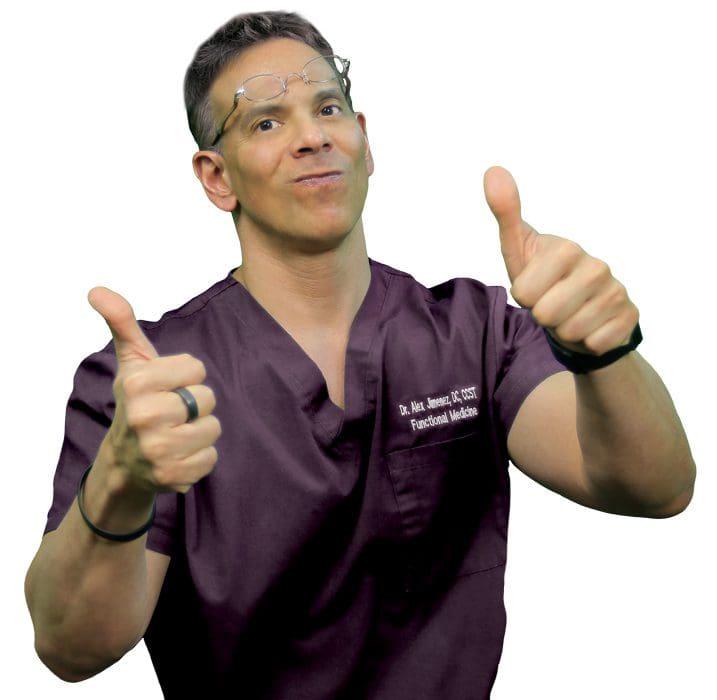
At Personal Injury Doctor Group in El Paso, Texas, the goal is to look beyond pain alone and evaluate how an injury affects the entire musculoskeletal system. Dr. Alexander Jimenez, DC, APRN, FNP-BC, CCST, CFMP, IFMCP, ATN, works within a multidisciplinary injury-care model that combines chiropractic care, personal injury treatment, functional medicine, rehabilitation, and medical collaboration. The practice focuses on conditions including auto accident injuries, work injuries, neck and back pain, sciatica, joint injuries, sports injuries, and complex musculoskeletal problems.
Personal Injuries Can Affect the Body at the Cellular Level
A personal injury may seem like a simple neck, back, shoulder, hip, or knee problem. However, the healing process is much more complex.
After tissue is injured, the body starts an inflammatory response. This response is necessary because immune cells help clean damaged tissue and begin repair. Problems can occur when inflammation remains active longer than needed.
An injury may lead to:
- Swelling around joints and soft tissues
- Muscle guarding and stiffness
- Ligament or tendon damage
- Cartilage irritation
- Nerve irritation
- Reduced joint movement
- Changes in normal walking or posture
- Weakness caused by reduced activity
- Persistent pain signaling
This is one reason Personal Injury Doctor Group emphasizes an integrated approach to recovery. The practice addresses auto accidents, workplace injuries, back and neck injuries, severe sciatica, disc problems, chronic pain, functional medicine, rehabilitation, and other complex injuries instead of looking only at one symptom.
What Is Regenerative Medicine?
Regenerative medicine uses biological materials or biological signals to support healing.
The goal is different from simply taking a medication that temporarily blocks pain. Regenerative procedures attempt to influence the environment around injured tissue so that the body’s own repair systems can work more effectively.
Researchers studying stem and stromal cells have found that many potential benefits may come from cell-to-cell signaling. Cells can release growth factors, cytokines, extracellular vesicles, and other substances that communicate with nearby cells and influence immune activity and repair processes (Jin et al., 2023).
Regenerative medicine does not mean every damaged joint, tendon, ligament, or spinal disc can be completely regenerated. The amount of benefit depends on the injury, the treatment used, the person’s health, and many other factors.
Hospital for Special Surgery notes that regenerative medicine for orthopedic problems is still developing and that treatment claims should be based on the available evidence rather than promises of complete tissue regrowth.
PRP Therapy: Using Platelets to Support Repair
Platelet-rich plasma, or PRP, is one of the most widely discussed orthobiologic treatments.
PRP begins with the patient’s own blood. Blood is drawn and placed into a centrifuge, which separates its different components. A concentrated platelet portion can then be placed into a selected injured area.
Platelets are commonly known for helping blood clot, but they also release growth factors involved in healing.
These biological signals may influence:
- Collagen production
- Cell communication
- Blood vessel development
- Tissue remodeling
- Local inflammatory activity
PRP has been studied for several musculoskeletal problems, including tendon disorders and osteoarthritis. Evidence-based regenerative medicine guidelines indicate that support for PRP varies by condition, preparation method, and injection technique (D’Souza et al., 2024).
For patients with personal injury, PRP may be considered when damaged tissues are not responding as expected to conservative care.
Possible areas may include:
- Knees
- Shoulders
- Hips
- Elbows
- Tendons
- Selected ligament injuries
The Personal Injury Doctor Group also discusses PRP as one possible component of an integrated injury-recovery strategy, rather than as a treatment that should replace examination, rehabilitation, or other necessary care.
What Is Platelet Fibrin Plasma?
Platelet fibrin plasma, or PFP, is another blood-derived regenerative preparation.
PFP combines platelets with fibrin. Fibrin is a protein involved in normal blood clotting and healing. It can create a temporary framework that holds cells and signaling molecules around an injured area.
This framework may help biological signals remain near the injured tissue while repair occurs.
Research on platelet-fibrin preparations has demonstrated biological effects in wound and tissue repair, although PFP is less standardized than traditional PRP. Preparation methods can differ between clinics and treatment systems.
PFP should therefore be selected based on the patient’s injury, examination findings, medical history, and treatment plan.
MFAT and the Healing Potential of Adipose Tissue
Another approach is microfragmented adipose tissue, or MFAT.
Adipose tissue is commonly called body fat, but it contains much more than fat cells. It also contains blood vessels, connective tissue, immune cells, signaling molecules, and cells involved in tissue maintenance.
MFAT is prepared from a patient’s own adipose tissue and processed to preserve aspects of its natural tissue structure.
MFAT has been investigated for conditions such as:
- Knee osteoarthritis
- Cartilage damage
- Joint degeneration
- Tendon problems
- Certain ligament injuries
Cell populations within adipose tissue may communicate with injured tissues by releasing signaling molecules that affect immune activity and the tissue environment.
However, regenerative medicine guidelines emphasize that evidence differs by condition and type of biologic treatment. These procedures should not be presented as guaranteed methods for rebuilding cartilage or permanently repairing every injury (D’Souza et al., 2024).
Stem Cells and Inflammatory Signaling
One reason stem and stromal cells have received so much attention is their ability to communicate with the immune system.
Mesenchymal stromal cells may release substances that influence how immune cells respond to injury. This process is sometimes called immunomodulation.
Research suggests these cells may participate in:
- Regulation of inflammatory signals
- Blood vessel formation
- Cell survival
- Tissue remodeling
- Collagen organization
- Communication between immune and repair cells
Ennis et al. (2013) described the important relationship between stem cells, inflammation, and wound healing. Jin et al. (2023) also reviewed how cell signaling appears to play an important role in regenerative medicine.
This does not mean that all treatments marketed as “stem cell therapy” are proven or FDA-approved.
Patients should be especially cautious about advertisements promising that a stem-cell product can completely rebuild a spine, reverse arthritis, or cure multiple unrelated diseases. Many cell products marketed for orthopedic conditions have not received FDA approval for those uses.
Can Regenerative Medicine Reduce Systemic Inflammation?
This question requires an important distinction.
Regenerative medicine may influence inflammatory activity around treated tissues, and some cell-based treatments have demonstrated immune-regulating effects in research.
However, a PRP injection into a knee should not automatically be described as a treatment that lowers inflammation throughout the entire body.
A more accurate way to describe regenerative therapy is that it may help modify the local biological environment surrounding an injury.
Overall inflammation may also be influenced by:
- Nutrition
- Sleep
- Physical activity
- Metabolic health
- Blood sugar control
- Obesity
- Smoking
- Stress
- Chronic disease
This is where functional medicine and general medical oversight may become important parts of an injury-recovery program.
Where IV Therapy Fits Into Recovery
IV therapy is different from PRP, PFP, and MFAT.
An intravenous infusion places fluids, nutrients, or medications directly into the bloodstream.
Depending on the patient’s needs, medically appropriate IV therapy may be used for purposes such as:
- Hydration
- Correcting certain nutrient deficiencies
- Delivering prescribed medications
- Supporting normal electrolyte balance
Some IV formulations contain nutrients involved in normal cellular processes. For example, magnesium supports nerve and muscle function, B vitamins participate in energy metabolism, and glutathione is involved in the body’s antioxidant defense.
However, IV nutrient therapy should not automatically be described as a proven regenerative treatment.
The patient’s medical history matters. Kidney disease, cardiovascular disease, medications, allergies, electrolyte disorders, and other health conditions may change whether an IV treatment is appropriate.
Chiropractic Care Addresses the Mechanical Side of Injury Recovery
Biological healing is only part of recovery from an accident.
After a car crash or other injury, patients often develop changes in the way they move.
Pain may cause someone to:
- Hold the neck stiffly
- Shift weight away from an injured leg
- Avoid bending
- Use one shoulder differently
- Walk with an altered pattern
- Tighten muscles to protect an injured joint
Over time, these compensation patterns may contribute to additional stiffness, weakness, or discomfort.
Integrative chiropractic care focuses on improving the mechanical and functional side of recovery.
Care may include:
- Chiropractic adjustments when appropriate
- Joint mobilization
- Soft-tissue treatment
- Corrective exercise
- Mobility training
- Strengthening
- Postural training
- Neuromuscular rehabilitation
- Progressive return to normal activity
Personal Injury Doctor Group specifically focuses on combining chiropractic treatment with rehabilitation and integrative approaches for accident-related injuries.
Does Chiropractic Care Reduce Neuro-Inflammatory Signaling?
Pain and inflammation involve communication between injured tissues, nerves, the spinal cord, immune cells, and the brain.
When a painful joint or tissue continues to send distress signals, the nervous system may become more sensitive.
Chiropractic care should not be described as directly “turning off systemic inflammation.” Current evidence does not support such a broad claim.
However, when used appropriately, chiropractic care may help improve mobility, reduce pain, and support function in certain musculoskeletal conditions. Improving comfortable movement can also make it easier for patients to participate in exercise and rehabilitation.
This provides a more realistic explanation of how chiropractic care may complement regenerative treatment.
The regenerative procedure addresses a biological target, while chiropractic care and rehabilitation address movement and function.
Combining Regenerative Medicine With Chiropractic Rehabilitation
A personal injury treatment plan may work best when recovery is approached from multiple directions.
Biological Support
Depending on the patient’s condition, the medical side may include:
- PRP
- PFP
- MFAT
- Selected cell-based approaches
- Physician-directed IV therapy
- Nutritional support
- Management of metabolic health
Mechanical Support
The musculoskeletal side may include:
- Chiropractic care
- Joint mobility treatment
- Spinal care
- Corrective exercises
- Strengthening
- Functional rehabilitation
- Movement retraining
Whole-Body Support
Recovery may also involve:
- Anti-inflammatory nutrition
- Adequate protein
- Hydration
- Better sleep
- Stress management
- Weight management
- Blood sugar management
A 2025 review of regenerative medicine combined with physical rehabilitation discussed the potential value of pairing biological therapies with carefully controlled mechanical loading and rehabilitation. It also stressed the need for better standardized treatment protocols and additional clinical research.
A Multidisciplinary Injury-Care Model in El Paso
Personal injuries can become complicated.
A patient may have a neck injury, headaches, shoulder pain, sciatica, and sleep problems after the same accident. Another person may develop knee pain after striking a dashboard and experience lower back stiffness.
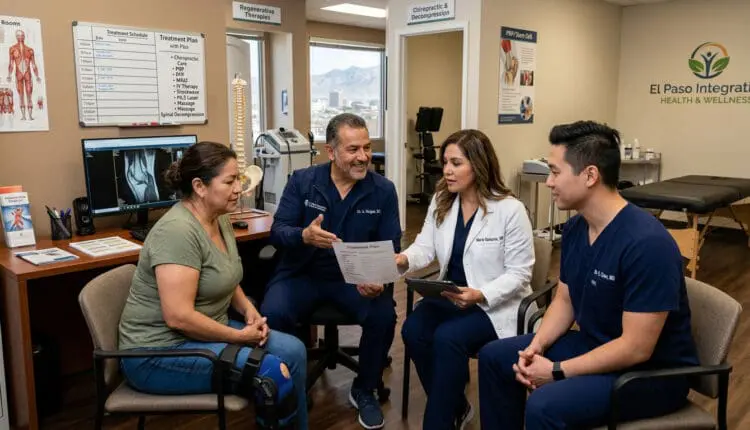
That is why Personal Injury Doctor Group uses a multidisciplinary approach.
The practice describes care involving:
- Personal injury management
- Auto accident care
- Work injury care
- Chiropractic treatment
- Functional medicine
- Rehabilitation
- Back and neck injury management
- Sciatica care
- Sports injury care
- Complex musculoskeletal injury treatment
Dr. Alexander Jimenez’s Role
Dr. Alexander Jimenez, DC, APRN, FNP-BC, CCST, CFMP, IFMCP, ATN, combines several areas of training when evaluating injury recovery.
His clinical approach includes consideration of:
- Musculoskeletal injuries
- Chiropractic care
- Functional medicine
- Personal injury treatment
- Rehabilitation
- Neuromusculoskeletal function
- Nutrition and metabolic health
- Return to normal activity
Personal Injury Doctor Group describes its clinical approach as personalized, multidisciplinary, and focused on complete injury recovery rather than merely treating a single painful area.
Medical Collaboration With Dr. Maria Guadalupe Cardenas
The multidisciplinary model also includes medical collaboration with Dr. Maria Guadalupe Cardenas, MD, an internal medicine physician who serves as a medical director and collaborative physician within Injury Medical Clinic PA.
In this type of clinical setting, medical and chiropractic professionals can address different parts of a patient’s condition.
Medical oversight can help evaluate:
- General medical health
- Medication safety
- Laboratory findings
- Chronic medical conditions
- Cardiovascular concerns
- Metabolic health
- Appropriateness of medical procedures
Chiropractic and rehabilitation care can then focus more directly on:
- Joint mobility
- Spinal function
- Muscle balance
- Strength
- Movement
- Functional recovery
A recent Personal Injury Doctor Group article also describes this multidisciplinary arrangement in the context of accident-related joint injuries.
Why This Approach Matters After a Car Accident
Car accident injuries do not always involve one damaged structure.
The sudden forces of a collision can injure muscles, ligaments, joints, tendons, spinal discs, and nerves simultaneously.
Common problems may include:
- Whiplash
- Neck pain
- Lower-back pain
- Sciatica
- Shoulder injuries
- Knee injuries
- Hip injuries
- Joint trauma
- Disc injuries
- Headaches
- Muscle strains
- Ligament sprains
Personal Injury Doctor Group focuses specifically on evaluating and treating many of these accident-related conditions in El Paso.
The goal is to identify the damaged structures, determine what is limiting recovery, and create a plan that addresses both healing and movement.
Moving From Pain Relief to Functional Recovery
Reducing pain is important, but successful personal injury care should also help a patient regain function.
A complete recovery plan may progress from:
1. Control pain and irritation
Early treatment may focus on reducing discomfort and protecting injured tissues.
2. Restore movement
Chiropractic care, mobility treatment, and rehabilitation may help gradually restore comfortable movement.
3. Support tissue healing
For selected patients, regenerative therapies may be considered to influence the biological environment surrounding damaged tissues.
4. Rebuild strength
Progressive rehabilitation helps restore muscles that became weak after injury.
5. Return to normal activity
The final goal is to help the patient safely return to work, exercise, sports, family activities, and everyday movement.
The Goal Is Better Healing, Not a Miracle Cure
Regenerative medicine is an exciting area of healthcare, but it should be presented realistically.
PRP, PFP, MFAT, and cell-based treatments do not guarantee that damaged tissue will be regenerated.
Instead, selected regenerative procedures may influence biological signaling, inflammation, and tissue repair.
Chiropractic care does something different. It may help improve musculoskeletal movement, decrease pain, and support rehabilitation.
Functional medicine adds another layer by examining nutrition, lifestyle, metabolic health, and other factors that can affect recovery.
When these approaches are properly coordinated, patients can receive care that considers the biological, mechanical, neurological, and whole-body factors involved in healing.
Personal Injury Recovery in El Paso
At Personal Injury Doctor Group, the focus is not simply on where it hurts.
The goal is to determine:
- What was injured?
- How has the injury changed movement?
- Are nerves involved?
- Is inflammation continuing?
- Is rehabilitation needed?
- Could a regenerative procedure be appropriate?
- Are health or metabolic problems slowing recovery?
- What can help the patient return to normal function?
For people recovering from car accidents, workplace injuries, sports injuries, and other musculoskeletal trauma in El Paso, this multidisciplinary approach brings together chiropractic care, medical oversight, functional medicine, rehabilitation, and select regenerative treatments into a single recovery strategy.
To learn more about injury evaluation and integrated recovery options through Personal Injury Doctor Group in El Paso, call 915-850-0900. The practice currently lists personal injury, auto accident care, work injuries, back and neck injuries, joint problems, sports injuries, sciatica, functional medicine, and multidisciplinary rehabilitation among its areas of care.
References
D’Souza, R. S., Her, Y. F., Hussain, N., et al. (2024). Evidence-based clinical practice guidelines on regenerative medicine treatment for chronic pain: A consensus report from a multispecialty working group. Journal of Pain Research, 17, 2951–3001.
Ennis, W. J., Sui, A., & Bartholomew, A. (2013). Stem cells and healing: Impact on inflammation. Advances in Wound Care, 2(7), 369–378.
Hospital for Special Surgery. (2024). 5 things to know about regenerative medicine treatments.
Jin, Y., Li, S., Yu, Q., Chen, T., & Liu, D. (2023). Application of stem cells in regeneration medicine. MedComm, 4, e291.
Personal Injury Doctor Group. (2026). Chiropractic and regenerative care for injury management.
Personal Injury Doctor Group. (2026). Chiropractic and regenerative therapies for structural support.
Personal Injury Doctor Group. (2026). Joint trauma injuries after an MVA and chiropractic care.
Personal Injury Doctor Group. (2026). Personal Injury Doctor Group: El Paso’s personal injury doctors.
Comments are closed.