



Doctor of Chiropractic, Dr. Alexander Jimenez breaks down how pinched nerves cause back and neck pain.
You hear people say it a lot:
“I have a pinched nerve, and wow, it hurts.â€
But what exactly is a pinched nerve? How does it cause back pain or neck pain? What are the symptoms of a pinched nerve—beyond pain? And most importantly, what can you do about a pinched nerve? Learn the basics of pinched nerves here.
Pinched Nerves: A Common Cause of Back &Â Neck Pain
What Is A Nerve?
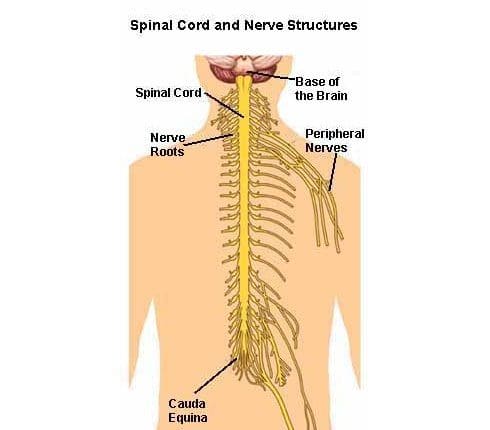
Nerves are your body’s messengers. They transport signals to and from your brain—messages like “Move this toe†or “Ouch, that cactus needle really is sharp.†You have a central nervous system, which is made up of your brain and spinal cord. You also have a peripheral nervous system, which is the system of nerves that branches off the brain and spinal cord.
What Do Nerves Look Like?

If it helps, think of nerves like a garden hose (except they aren’t green). They have an outside membrane that transports those electrical messages. Inside nerves, there’s a fluid that nourishes and replenishes the outer membrane.
You’re Getting on My Nerves

When a nerve gets pinched, the messages and the nourishing fluid don’t flow quite as well as they should (still helpful to think of a garden hose here). A pinched nerve can start sending the “Ow, pain†message to the brain, and it can also have trouble communicating clear messages, possibly leading to weakness, numbness, or tingling.
What Can Pinch a Nerve?
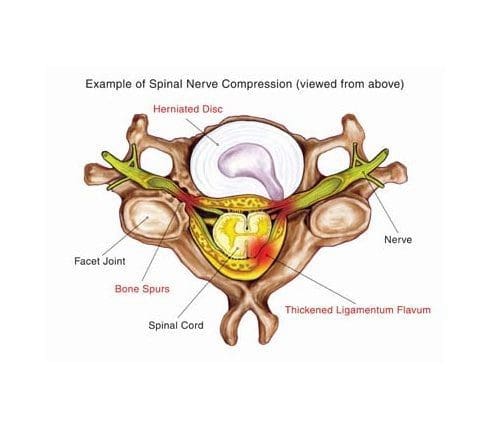
As a nerve exits the spinal canal, it can be pinched by a herniated disc or a bone spur. Bone spurs, also known as osteophytes, are bony bumps that can develop on a spinal joint over time. They can push into the spinal nerve, as you can see in this illustration (red = pain generator, of course).
What Does a Pinched Nerve Feel Like?

A pinched nerve mostly feels like pain. If you have a pinched nerve in your low back, it can cause pain to travel (or radiate, in doctor-speak) down your leg. You may also know that as sciatica. A pinched nerve in the neck can create pain that shoots down your arm. Other symptoms of pinched nerves include muscle spasms, burning, tingling, and a hot/cold sensation.
Now the Good Stuff: Pinched Nerve Treatments

Pinched nerve treatments fall into two categories: what you can do at home (self-care) and what your doctor may prescribe for you.
Pinched Nerve Self-care #1: Heat and Ice

Heat and ice can work wonders on a pinched nerve. Switch between 20 minutes of heat and 20 minutes of ice—and remember that you shouldn’t put the heat and ice packs directly on your skin.
Pinched Nerve Self-care #2: Get a Massage

The muscles around a pinched nerve can become tight, so having a professional massage therapist work the painful area can bring pain relief. You may also consider a handheld massager.
Pinched Nerve Self-care #3: Take a Walk

Let’s say it’s your low back—a pinched nerve in your low back—that’s hurting you. A nice, easy stroll is a good way to stay active and address your pain. Gone are the days of extended bed rest for back pain: doctors now are more likely to recommend you exercise and stretch to help relieve your pain.
When Should You Call a Doctor?

If you try the self-care thing and yet your pinched nerve pain persists, you should consider calling the doctor. If you’ve been in pain for more than a couple of days, schedule an appointment. You should also call the doctor if you experience a very sudden onset of weakness, or if you experience profound numbness. Losing bowel and/or bladder control is also a good reason to call the doctor.
How a Doctor Treats a Pinched Nerve

The doctor will try to diagnose the cause of your pinched nerve, and then the doctor will be able to develop a treatment plan. That plan may include prescription pain medications, physical therapy, or cortisone injections. But keep this in mind: the treatment plan will be specifically tailored for you, and it’s in your best interest to follow it closely.

Comments are closed.