
Head Injuries Limit Motion and Flexibility Solutions
How Head Injuries Limit Motion and Flexibility—and How Integrative Chiropractic Care Can Help
Key takeaways
-
Head injuries can weaken muscles, disrupt balance and coordination, and lead to stiff joints and contractures, which reduce flexibility and ease of movement (Headway; Brain Injury Canada). (Headway, n.d.; Brain Injury Canada, n.d.). Headway+1
-
Even mild brain injuries can cause subtle yet functionally important changes in walking and balance; more severe injuries may result in marked weakness or even paralysis (BIAA; Headway). (BIAA, 2025; Headway, n.d.). Brain Injury Association of America
-
Reduced activity from pain and fatigue fuels a cycle of immobility ? muscle shortening ? joint stiffness ? contractures (Physiopedia; Brain Injury Canada). (Physiopedia, n.d.; Brain Injury Canada, n.d.). Physiopedia+1
-
An integrative plan—encompassing medical oversight, neurologic/vestibular rehabilitation, exercise therapy, and chiropractic strategies such as gentle spinal adjustments and soft-tissue work—can help restore alignment, mobility, and balance (BIAA; Jimenez). (BIAA, 2025; Jimenez, 2025). Brain Injury Association of America+1
Why motion and flexibility suffer after a head injury
1) Muscle fatigue and weakness
After a head injury (including concussions), damaged brain pathways can decrease voluntary muscle activation and coordination. People often describe legs that “tire fast,” arms that feel heavy, or difficulty with fine motor tasks. Fatigue can magnify these limits, making walking or dual-tasking (walking and talking) more challenging (Headway; Brain Injury Canada). (Headway, n.d.; Brain Injury Canada, n.d.). Headway+1
2) Poor balance and coordination
Balance relies on the vestibular system, vision, and body-sense (proprioception). Injuries to these brain networks can cause dizziness, unsteadiness, or a tendency to sway or veer while walking. Even slight changes in balance strategy can be functionally significant—raising fall risk and limiting activity (BIAA; Brain Injury Canada). (BIAA, 2025; Brain Injury Canada, n.d.). Brain Injury Association of America+1
3) From immobility to contractures
When pain, weakness, or fear of falling reduces activity, muscles and connective tissues shorten. Over time, joints lose range and contractures form. Spasticity (abnormally high muscle tone) and muscle imbalance can cause a limb to be locked in a shortened position, thereby accelerating the process (Physiopedia). (Physiopedia, n.d.). Physiopedia
4) Movement disorders and walking patterns
Some patients develop movement disorders (e.g., tremor, dystonia, bradykinesia). These can coexist with upper-motor-neuron signs (such as weakness and spasticity) and further impact posture, gait, and daily function (PMC review). (Sethi et al., 2022). PMC
Bottom line: Whether symptoms are mild (slower, less steady walking) or severe (hemiparesis/hemiplegia), head injuries can make it harder to walk, move limbs, and keep balance—especially when pain and fatigue flare (Headway; BIAA). (Headway, n.d.; BIAA, 2025). Headway+1
Symptom Questionnaire:

How these problems show up day to day
-
Walking: short shuffling steps, reduced arm swing, slower speeds, and difficulty turning or stopping.
-
Standing balance: wider stance, reliance on a wall or furniture, or fear of standing in the shower.
-
Upper-limb use: trouble lifting or reaching overhead; fine motor tasks (buttons, handwriting) feel clumsy.
-
Fatigue overlay: performance drops quickly, especially in noisy or visually complex environments.
These issues are consistent with what major brain-injury organizations describe for mobility after brain injury and with research noting balance and gait changes post-TBI (Headway, BIAA, Brain Injury Canada). (Headway, n.d.; BIAA, 2025; Brain Injury Canada, n.d.). Headway+2Brain Injury Association of America+2
Why immobility leads to stiffness and loss of flexibility
When a joint remains in one position (for example, a flexed elbow) due to pain, spasticity, or weakness, the muscle-tendon unit remodels to accommodate the shortened length. Collagen fibers reorganize; the joint capsule stiffens; range shrinks. This is the biology behind contractures, and it’s why early, gentle movement and positioning matter (Physiopedia). (Physiopedia, n.d.). Physiopedia
Head and neck links: why alignment matters
The cervical spine influences head position, eye–head reflexes, and proprioceptive input. After a head injury, cervical stiffness or misalignment can aggravate headaches, dizziness, and postural sway. Addressing neck mechanics (mobility, posture, and muscle balance) is often part of restoring stable gait and upper-body control (Jimenez; Brain Injury Canada). (Jimenez, 2025; Brain Injury Canada, n.d.). El Paso, TX Doctor Of Chiropractic+1
A practical, step-by-step integrative plan
This plan complements medical care. Always involve your physician/neurologist and a licensed rehabilitation team. Severe symptoms (e.g., sudden weakness, severe headache, abnormal posturing) are emergencies.
Step 1: Medical screening and safety
-
Rule out red flags (worsening neurological signs, new severe headaches, uncontrolled seizures).
-
Coordinate imaging or vestibular assessment when indicated.
-
Manage pain with evidence-based options to enable therapy.
Step 2: Restore gentle motion early
-
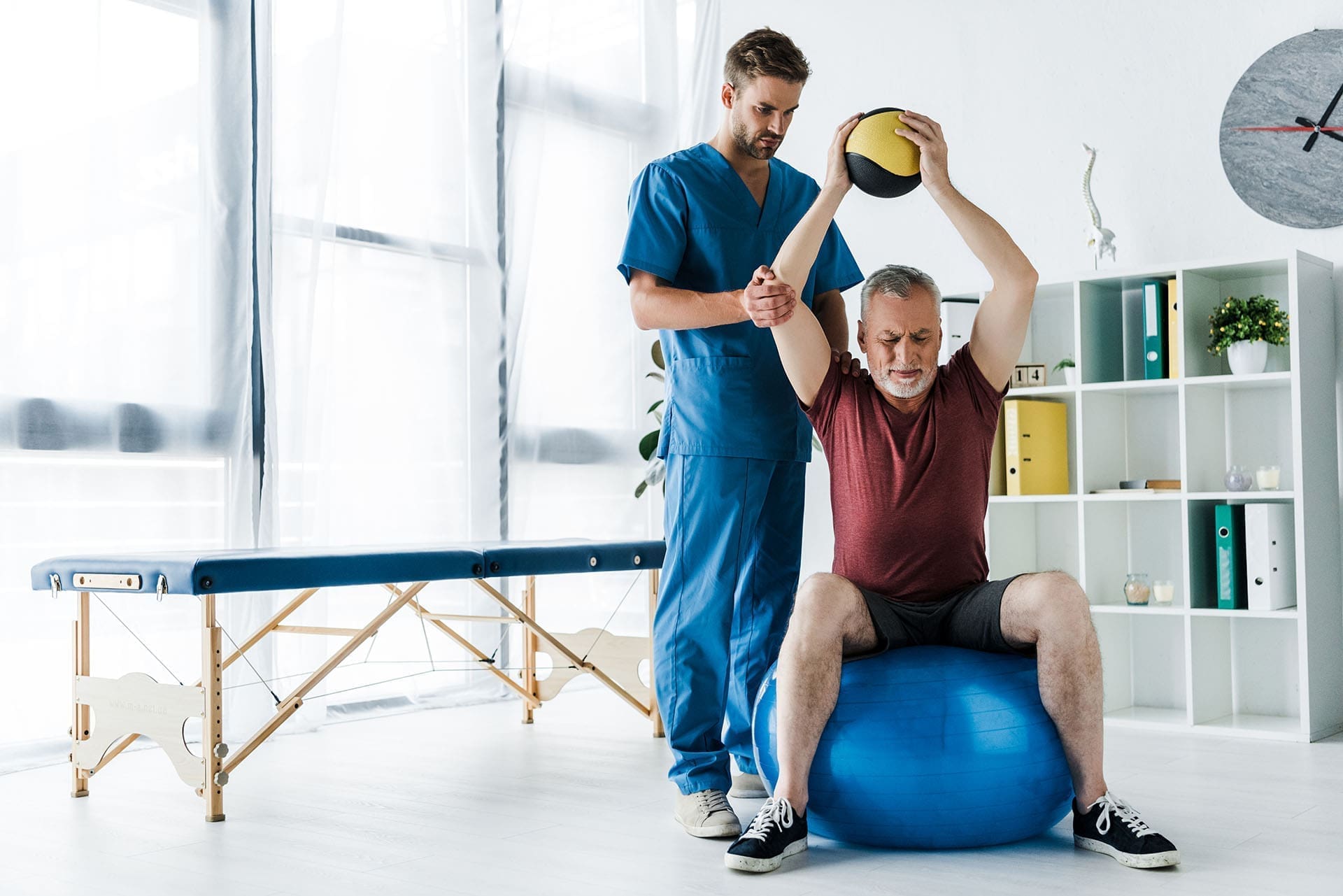
Positioning & range-of-motion: frequent, gentle stretching; avoid long periods in one posture.
-
Splinting/orthoses (as prescribed) to maintain length and support joints under gravity.
-
Task-specific practice: Small, frequent bouts are more effective than one long session.
Rationale: Regular movement and positioning help prevent contractures and maintain joint health (Physiopedia). (Physiopedia, n.d.). Physiopedia
Step 3: Balance & vestibular retraining
-
Start with a static stance (narrow stance, semi-tandem) and progress to a dynamic stance (head turns, stepping).
-
Add gaze-stabilization drills and dual-task challenges as symptoms allow.
-
Keep sessions short; stop before dizziness or headache spikes.
Why: Post-TBI balance changes—even subtle ones—can be functionally significant; targeted therapy can improve steadiness (BIAA). (BIAA, 2025). Brain Injury Association of America
Step 4: Progressive strength & endurance
-
Lower-limb strength: sit-to-stands, step-ups, hip abduction holds.
-
Upper-limb control: reach-to-grasp, light rows, wall slides, and wrist/hand dexterity work.
-
Aerobic intervals: 5–10 minutes of brisk walking or cycling, building gradually.
Why: Strength and endurance support gait quality and reduce fatigue’s impact on function (BIAA). (BIAA, 2025). Brain Injury Association of America
Step 5: Flexibility & spasticity management
-
Daily stretch of involved muscle groups (calf, hamstrings, hip flexors, forearm flexors).
-
Warm up tissues first (using heat or gentle movement), then hold gentle stretches for 30–60 seconds.
-
Consider multimodal plans (splinting, serial casting under specialist care) when needed.
Contracture prevention works best when stretching is paired with activation, positioning, and task practice (Physiopedia). (Physiopedia, n.d.). Physiopedia
Step 6: Gait training and community mobility
-
Practice step length, cadence, and arm swing; use canes/walkers if prescribed.
-
Add turns, curbs, and busy environments gradually.
Where chiropractic and integrative care fit
Integrative chiropractic teams—working with physicians, physical/vestibular therapists, and, when appropriate, chiropractic neurologists—can support recovery by:
-
Gentle spinal adjustments to improve segmental motion and head–neck alignment
-
May ease cervicogenic headache and reduce neck-driven dizziness, making balance training more tolerable. (Jimenez; Impact Medical Group). (Jimenez, 2025; Impact Medical Group, 2024). El Paso, TX Doctor Of Chiropractic+1
-
-
Soft-tissue therapy to decrease muscle guarding and trigger-point pain
-
Encourages normal movement patterns, so practice reps are smoother. (Impact Medical Group Services). (Impact Medical Group, n.d.). Impact Medical Group
-
-
Posture retraining for the head, neck, and trunk
-
Cues for neutral alignment, breathing mechanics, and scapular control can reduce sway and improve upper-limb reach. (Jimenez). (Jimenez, 2025). El Paso, TX Doctor Of Chiropractic
-
-
Coordination with vestibular/oculomotor therapy
-
Integrated programs can address gaze stabilization and sensory integration that influence gait and balance (BIAA). (BIAA, 2025). Brain Injury Association of America
-
-
Lifestyle and graded activity coaching
-
Pacing strategies to avoid boom-and-bust cycles; sleep, hydration, and symptom tracking to guide progression.
-
Clinical note (Dr. Alexander Jimenez, DC, APRN, FNP-BC): In his El Paso practice, Dr. Jimenez emphasizes cervical alignment, balance/vestibular drills, posture correction, and progressive, symptom-paced exercise to help patients reclaim steadier gait and better endurance (Jimenez site and professional profile). (Jimenez, 2025; Jimenez, LinkedIn). El Paso, TX Doctor Of Chiropractic+1
About CSF and circulation claims: Some chiropractic clinics discuss the benefits of cerebrospinal fluid (CSF) and circulation. While improved neck mobility and posture can subjectively alleviate dizziness or headache—making rehabilitation easier—these mechanisms are still being explored and should be considered adjunctive, not a substitute for medical care (clinic sources; integrate with evidence-based rehabilitation). (Pinnacle Health Chiropractic, n.d.). pinnaclehealthchiro.com
Sample week you can adapt (always tailor with your clinician)
-
Daily (10–20 minutes total):
-
Morning: neck/posture mobility (chin tucks, shoulder rolls), calf/hamstrings/hip-flexor stretches.
-
Evening: gentle full-body stretch; 5 minutes of balance practice (wall support if needed).
-
-
3–4 days/week:
-
Aerobic: 10–20 minutes of brisk walk or stationary bike (start low; add 1–2 minutes as tolerated).
-
Strength (2 sets): sit-to-stand × 8–12; step-ups × 6–10/side; band rows × 10–12; wall push-ups × 8–12.
-
-
2–3 days/week:
-
Vestibular/oculomotor (as prescribed): gaze stabilization, smooth pursuit/target tracking.
-
Coordination/dual-task: walk and count by 3s, carry light objects while stepping around cones.
-
-
Weekly check-ins:
-
Rate symptoms (0–10) before/after sessions; progress only when post-exercise symptoms settle within 24–48 hours.
-
When to seek urgent medical care
-
Sudden one-sided weakness or numbness, severe/worsening headache, repeated vomiting, seizures, confusion, or abnormal posturing (rigid decorticate/decerebrate). Call emergency services immediately. (Headway). (Headway, n.d.). Headway
Putting it together
Head injuries can lead to a broad spectrum of movement problems—from mild gait changes to paralysis—often aggravated by pain and fatigue. Reduced activity then fuels stiffness and contractures, shrinking flexibility. An integrative plan that combines medical care, physical/vestibular therapy, and chiropractic strategies (gentle adjustments, soft-tissue work, posture/balance training) helps many people restore alignment, improve coordination, and rebuild confidence in daily movement (BIAA; Jimenez; Brain Injury Canada). (BIAA, 2025; Jimenez, 2025; Brain Injury Canada, n.d.). Brain Injury Association of America+2El Paso, TX Doctor Of Chiropractic+2
References
-
Brain Injury Association of America (BIAA). (2025). Physical therapy and brain injury recovery. https://biausa.org/public-affairs/media/physical-therapy-and-brain-injury Brain Injury Association of America
-
Headway – the brain injury association. (n.d.). Physical effects of brain injury (sections on mobility, spasticity, weakness, balance, headaches). https://www.headway.org.uk/about-brain-injury/individuals/effects-of-brain-injury/physical-effects-of-brain-injury/ Headway
-
Brain Injury Canada. (n.d.). Mobility. https://braininjurycanada.ca/en/effects-brain-injury/physical/mobility/ braininjurycanada.ca
-
Sethi, K., et al. (2022). Disorders of movement due to acquired and traumatic brain injury. Current Neurology and Neuroscience Reports. PMCID: PMC9493170. https://pmc.ncbi.nlm.nih.gov/articles/PMC9493170/ PMC
-
Physiopedia. (n.d.). Contracture management for traumatic brain injury. https://www.physio-pedia.com/Contracture_Management_for_Traumatic_Brain_Injury Physiopedia
-
Pinnacle Health Chiropractic. (n.d.). Six ways chiropractic care supports healing after TBI. https://www.pinnaclehealthchiro.com/blog/six-ways-chiropractic-care-supports-healing-after-tbi pinnaclehealthchiro.com
-
Impact Medical Group. (2024, June 26). Can chiropractic care help with mild traumatic brain injuries? https://www.impactmedicalgroup.com/2024/06/26/can-chiropractic-care-help-with-mild-traumatic-brain-injuries/ Impact Medical Group
-
Impact Medical Group. (n.d.). Manual therapy & chiropractor services. https://www.impactmedicalgroup.com/services/therapy/ Impact Medical Group
-
Jimenez, A. (2025). Traumatic brain injury and posture: Signs and solutions. https://dralexjimenez.com/traumatic-brain-injury-and-posture-signs-and-solutions/ El Paso, TX Doctor Of Chiropractic
-
Jimenez, A. (2025). Rehabilitation exercises after head injuries: A practical, step-by-step guide. https://dralexjimenez.com/rehabilitation-exercises-after-head-injuries-step-by-step-plan/ El Paso, TX Doctor Of Chiropractic
-
Jimenez, A. (2025). TBI toxicity after head injuries: An integrative plan. https://dralexjimenez.com/tbi-toxicity-after-head-injuries-an-integrative-plan/ El Paso, TX Doctor Of Chiropractic
-
LinkedIn – Dr. Alexander Jimenez, DC, APRN, FNP-BC. (n.d.). Professional profile. https://www.linkedin.com/in/dralexjimenez LinkedIn
Comments are closed.