

Tech-Enhanced Injury Treatment for Faster Recovery

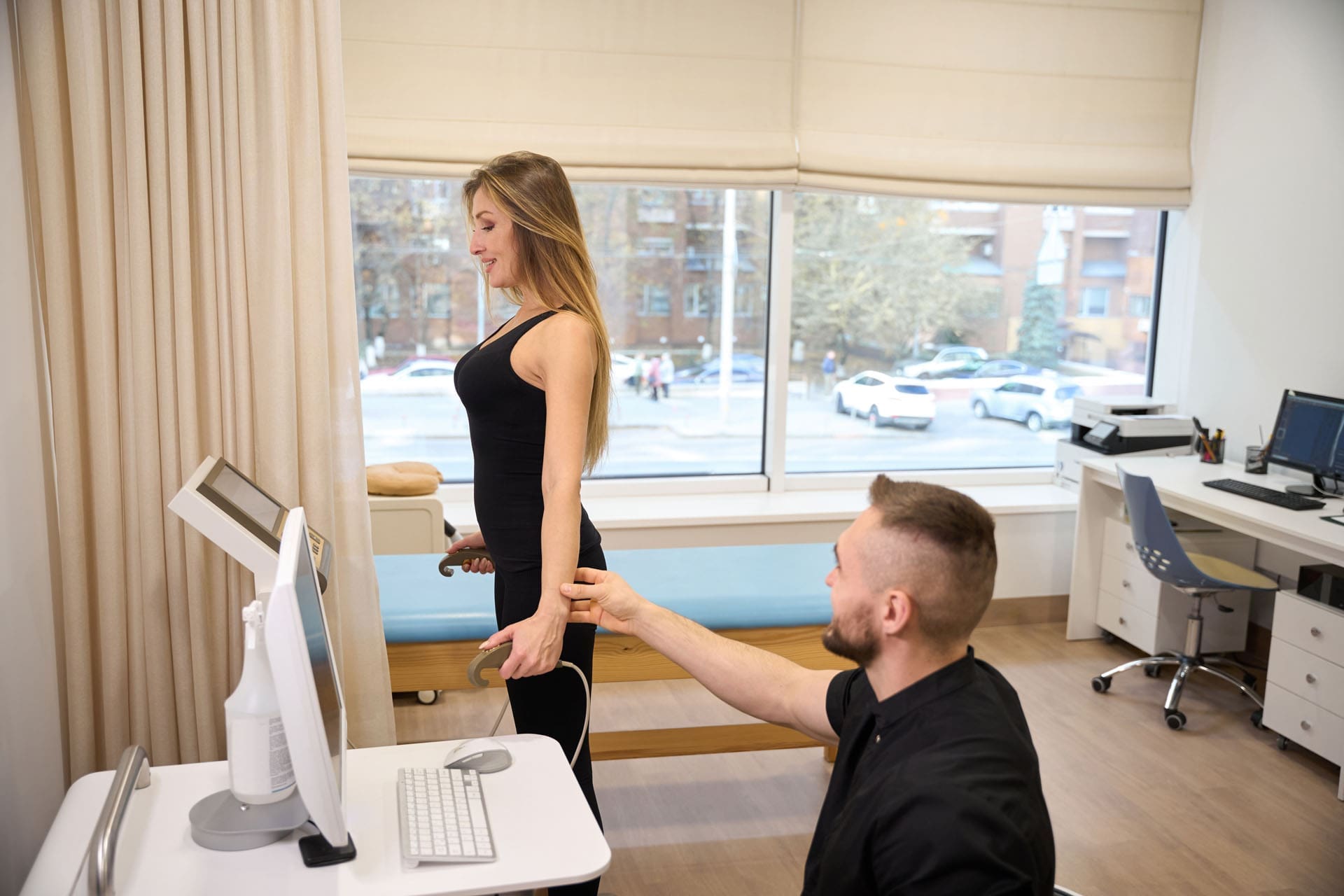
How Chiropractic Technology Is Enhancing Post-Accident Recovery at Personal Injury Doctors Group

Personal injury cases—like car accidents or work injuries—can badly disrupt posture, spine alignment, and overall health. At Personal Injury Doctors Group in El Paso, technology is bringing posture assessment and rehabilitation into a modern era. These tools help chiropractors treat you more effectively—and faster—after injury.
Why Posture Matters After Injuries
When your posture is off, your spine, muscles, and nerves can suffer. Poor alignment often leads to ongoing pain, weakness, or limited mobility—especially after trauma. That’s why accurate posture evaluation matters. By catching imbalances early, we can target them before they lead to chronic problems.
3D Body Scanning for Precision
3D body scanning gives a complete, three-dimensional picture of your posture—from your head to your hips. It helps us spot subtle misalignments and track your progress with precision. According to Visbody, this method “detects abnormalities with exceptional precision” and delivers highly detailed posture reports (personalinjurydoctorgroup.com).
Smart Apps & AI Tools—Look at Your Posture Just with Your Phone
Apps like PostureAI use your phone’s camera and artificial intelligence to evaluate your posture and suggest corrections in real time (personalinjurydoctorgroup.com). Other platforms like Posture iQ provide clear visuals and easy-to-understand feedback to help you do posture exercises correctly between visits (personalinjurydoctorgroup.com).
These technologies support your recovery outside the clinic and reinforce the work we do together.
Combining Chiropractic BioPhysics (CBP) with Digital Imaging
Chiropractic BioPhysics (CBP) is a specialized method that pairs gentle spinal adjustments with posture-driven rehabilitation. CBP uses digital X-rays and software to analyze spinal curves and design personalized treatment plans (personalinjurydoctorgroup.com). This precise imaging helps us restore the natural curves of the spine—especially critical for patients who’ve suffered whiplash or spinal trauma.
Posture Correctors & Wearable Sensors
Wearable devices—like harnesses or posture sensors—help remind you when you slouch. Some provide gentle vibration feedback and sync with apps to track posture throughout the day. Unity Chiropractic & Wellness finds these tools helpful when used under professional guidance (personalinjurydoctorgroup.com). They’re great for building better habits, but only when part of a broader treatment plan.
Surface Electromyography (sEMG): Tracking Muscle Activity
Surface EMG scans measure how your muscles activate and where tension occurs. These sensors detect overstressed or fatigued areas, helping us uncover muscle imbalances that might be causing pain (personalinjurydoctorgroup.com). sEMG is especially useful after accidents that cause nerve or muscle trauma.
Virtual Reality (VR): Immersive Rehab & Relaxation
VR isn’t just for games—chiropractors use it to help patients learn proper movement, relieve stress, and practice posture in virtual settings. This immersive experience boosts engagement and accelerates recovery by rewiring healthy posture habits (personalinjurydoctorgroup.com).
Dr. Alex Jimenez’s Use of Technology in Injury Care
As a dual-licensed chiropractor and family nurse practitioner at Personal Injury Doctors Group, Dr. Alexander Jimenez specializes in caring for people after car accidents, workplace injuries, and sports trauma. His dual credentials let him handle both medical diagnosis and legal documentation—making him a one-stop provider for injury recovery and insurance or personal injury claims.
Dr. Jimenez uses multiple technologies—3D scans, digital X-rays, sEMG, posture apps, and VR—to assess injuries thoroughly and design precise, integrative rehabilitation plans tailored to each patient’s needs. He then combines chiropractic care with massage, acupuncture, and functional nutrition to help patients regain strength, align posture, and prevent long-term problems.
Integrative Treatment: More Than Just Adjustments
A full recovery involves more than spine alignment. At Personal Injury Doctors Group, care plans may include:
- Chiropractic adjustments to restore spinal alignment
- Massage therapy to reduce muscle tension and improve circulation
- Acupuncture to support healing and reduce inflammation
- Functional nutrition and rehab exercises to rebuild strength and posture
This approach treats the whole person—not just the injury—and helps patients return to daily life confidently and naturally.
Tools Are Tools—Expert Care Still Matters
While technology brings exciting advances, these are tools—not replacements. A device can’t interpret results or adjust treatment on the fly. That’s why the expertise of a provider like Dr. Jimenez, combining medical and chiropractic knowledge, remains vital. Always work with a qualified professional to choose the right technology and treatment plan for you.
Final Thoughts: Embracing Technology to Heal Smarter
The future of personal injury care is here. At Personal Injury Doctors Group, state-of-the-art tools—from 3D scanners to VR—are enhancing posture assessment and recovery. But at the core, it’s Dr. Jimenez’s integrative, whole-person approach that truly restores health.
If you’ve sustained an injury and require a recovery that integrates cutting-edge technology with compassionate, expert care, rest assured that assistance is at your disposal. Chiropractic care enhanced by innovation can help you heal faster, live pain-free, and thrive.
References
- Alterna Health Solutions. (2024). How Posture iQ is revolutionizing chiropractic diagnostics.
- Apple App Store. (2024). PostureAI: Correct my posture.
- Faster Capital. (2024). Chiropractic virtual reality: Mind-body connection and improved outcomes.
- Insight CLA. (2024). Tracking postural health with surface EMG scans.
- Square One Health. (2024). Chiropractic BioPhysics: Advanced techniques.
- Unity Chiropractic & Wellness. (2024). Do posture sensors work? Pros, cons, and best practices.
- Visbody. (2024). Enhancing postural assessment in chiropractic care with 3D scanning.

Comments are closed.