

Monday Injury Symptom Changes: Tracking Your Recovery


Was It the Weekend—or the Injury? Why Monday Symptom Changes Need Careful Documentation
Abstract
Monday can reveal confusing symptom changes after an auto or workplace injury. A patient may have cleaned, walked farther, lifted groceries, worked in the yard, or simply slept differently over the weekend. None of those facts automatically proves why pain increased. Good injury care documents what changed, compares function with prior visits, screens for neurological warning signs, and reassesses before drawing conclusions. This article explains how Monday documentation can distinguish activity-related soreness from possible injury progression.
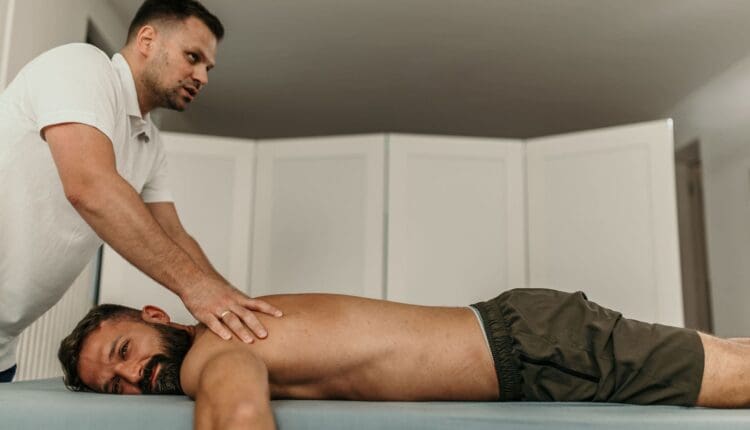
A Monday follow-up can sound simple: “My neck is worse today.” Yet that statement raises several clinical questions.
Did a data center technician kneel and carry equipment at home? Did an Amazon employee walk several miles at a family event? Or did the patient rest, sleep poorly, and still develop increasing numbness or weakness?
The correct clinical response is not to guess.
In personal injury care, symptom changes should be documented in context and compared with the previous examination. Guidelines for neck pain and traffic-related disorders emphasize reassessment and further evaluation when symptoms worsen or new symptoms appear (Côté et al., 2016). The record should show what the patient reports and how function changed.
Why Weekend Activity Belongs in the Monday History
Asking about weekend activity is not an accusation. It is part of a history.
Unaccustomed physical activity can produce delayed-onset muscle soreness, especially after unfamiliar loading. Soreness may appear after activity and temporarily reduce strength or range of motion (Wiecha et al., 2025). Weekend activity is therefore clinically relevant when Monday brings a new ache.
Useful questions include:
- What activities did you perform?
- How long were you active?
- Did you lift, carry, bend, twist, climb, kneel, or reach repeatedly?
- Did symptoms begin during activity, afterward, overnight, or the next morning?
- Did you fall, slip, experience another impact, or have a separate incident?
- Were symptoms in the same location?
- Did their intensity, quality, or distribution change?
The goal is a timeline, not a verdict. Documenting symptoms after weekend activity does not prove that the activity caused them or that the earlier injury is irrelevant.
Document Function, Not Just a Pain Number
A pain score can be useful, but “7 out of 10” says little about what the patient can do.
Functional documentation may compare:
- Sitting tolerance before changing position
- Standing and walking tolerance
- Driving tolerance
- Lifting and carrying tolerance
- Bending, squatting, reaching, pushing, or pulling
- Sleep interruptions and comfortable positions
- Work or modified-duty tolerance
- Household activities and self-care
- Headache frequency when relevant
- Numbness, tingling, weakness, balance, or coordination changes
Work demands vary: a tech worker may sit for hours, a data center technician may climb and carry hardware, and an Amazon associate may repeatedly walk, reach, lift, or scan.
The record should describe real demands rather than treating work status as a yes-or-no box.
Soreness and Injury Progression Can Overlap
No individual symptom consistently distinguishes ordinary post-activity soreness from injury progression. Location, timing, examination findings, neurological status, and function all matter.
Activity-related soreness is more plausible when symptoms follow unfamiliar exertion, feel muscular, and improve with recovery. Caution increases when pain becomes sharply different, spreads into a new area, or accompanies loss of function.
An existing injury can also fluctuate. A patient recovering from a collision may feel better Friday, increase activity Saturday, and notice more pain Sunday or Monday. The increase may reflect workload, irritated tissue, altered movement, reduced recovery, or several factors. The chart should preserve uncertainty when evidence does not support a stronger conclusion.
Sleep deserves attention. Research shows a relationship between sleep problems and musculoskeletal pain, with sleep disturbances potentially influencing pain and pain influencing sleep (Runge et al., 2024). Poor weekend sleep may therefore be relevant without explaining every symptom change.
Neurological Changes Require Specific Documentation
Neurological complaints should not be buried under “pain worse.”
Ask about:
- New or increasing numbness or tingling
- New weakness or dropping objects
- Changes in grip or hand coordination
- Pain radiating farther into an arm or leg
- New balance or gait problems
- Bowel or bladder changes
- Saddle-area numbness
- Severe or progressive neurological deficits
When severe or progressive neurological deficits are present, guidelines support further diagnostic evaluation rather than routine observation alone (Chou et al., 2007). Depending on the presentation, urgent evaluation may be appropriate.
The same principle applies after neck injury: worsening or new symptoms warrant reassessment, not automatic continuation of the same plan (Côté et al., 2016).
A Better Monday Reassessment
A structured follow-up separates facts from assumptions.
1. Rebuild the timeline
Record what happened from the last visit through Monday morning, including activity, sleep, work, medication changes, new incidents, and symptom onset.
2. Compare symptoms precisely
Document location, intensity, quality, radiation, frequency, and aggravating or relieving factors. “More pain” is less useful than “new burning into the right calf after walking 45 minutes.”
3. Recheck function
Compare sitting, standing, walking, lifting, driving, sleep, and work tolerance.
4. Repeat relevant examination measures
Depending on the injury, this may include range of motion, strength, reflexes, sensation, gait, balance, orthopedic testing, or other focused measures.
5. Decide whether the plan still fits
The plan may involve continued conservative care, modified rehabilitation, activity changes, medical testing, imaging, referral, or urgent evaluation. Imaging should follow clinical indications, especially concerning neurological findings or suspected serious conditions, rather than every pain increase (Chou et al., 2007).
Integrated Care Without Overstating Causation
At Injury Medical Clinic PA in El Paso, multidisciplinary care can combine structural and functional assessment with medical oversight. Dr. Alex Jimenez, DC, APRN, FNP-BC, CFMP, IFMCP, bridges chiropractic physical medicine, rehabilitation, advanced diagnostics, and functional medicine. Dr. Maria Guadalupe Cardenas, MD, a board-certified internal medicine physician with more than 40 years of experience, serves as Medical Director, Clinical Director, and Collaborative Physician.
Integration helps when symptoms do not fit one category: mechanical findings may need rehabilitation, while neurological or medical concerns may require broader evaluation.
Beneficence means choosing care that supports recovery. Non-maleficence means avoiding unnecessary procedures or medication exposure when safer conservative options are appropriate and not delaying needed investigation. Autonomy means explaining findings, uncertainties, choices, and warning signs so the patient can make informed decisions with their medical team.
The Record Should Tell the Clinical Story
Monday symptoms should not be forced into an either-or narrative: “the weekend did it” or “the injury did it.”
A stronger record shows chronology, activity exposure, sleep, function, examination findings, neurological status, and reasoning. It also states what remains uncertain.
For patients recovering from auto or workplace injuries, this approach supports safer treatment and cleaner medical communication. It helps avoid dismissing a meaningful change as soreness or automatically attributing every fluctuation to the original event.
After weekend symptom changes, report what you did, what function changed, when symptoms began, and any numbness, weakness, or coordination problems. Reassessment can guide the next step.
References
Chou, R., Qaseem, A., Snow, V., Casey, D., Cross, J. T., Jr., Shekelle, P., & Owens, D. K. (2007). Diagnosis and treatment of low back pain: A joint clinical practice guideline from the American College of Physicians and the American Pain Society. Annals of Internal Medicine, 147(7), 478–491.
Côté, P., Wong, J. J., Sutton, D., Shearer, H. M., Mior, S., Randhawa, K., Ameis, A., Carroll, L. J., Nordin, M., Yu, H., Lindsay, G. M., Southerst, D., Varatharajan, S., Jacobs, C., Stupar, M., Taylor-Vaisey, A., van der Velde, G., Gross, D. P., Brison, R. J., … Salhany, R. (2016). Management of neck pain and associated disorders: A clinical practice guideline from the Ontario Protocol for Traffic Injury Management (OPTIMa) Collaboration. European Spine Journal, 25(7), 2000–2022.
Runge, N., Ahmed, I., Saueressig, T., Perea, J., Labie, C., Mairesse, O., Nijs, J., Malfliet, A., Verschueren, S., Van Assche, D., de Vlam, K., Van Waeyenberg, T., Van Haute, J., & De Baets, L. (2024). The bidirectional relationship between sleep problems and chronic musculoskeletal pain: A systematic review with meta-analysis. Pain, 165(11), 2455–2467.
Wiecha, S., Cie?li?ski, I., Wi?niowski, P., Cie?li?ski, M., Pawliczek, W., Posadzki, P., Prill, R., Zaj?c, J., & P?aszewski, M. (2025). Physical therapies for delayed-onset muscle soreness: An umbrella and mapping systematic review with meta-meta-analysis. Sports Medicine, 55(5), 1183–1212.
Comments are closed.