

Chiropractic Rehabilitation for Better Living with Heart Health

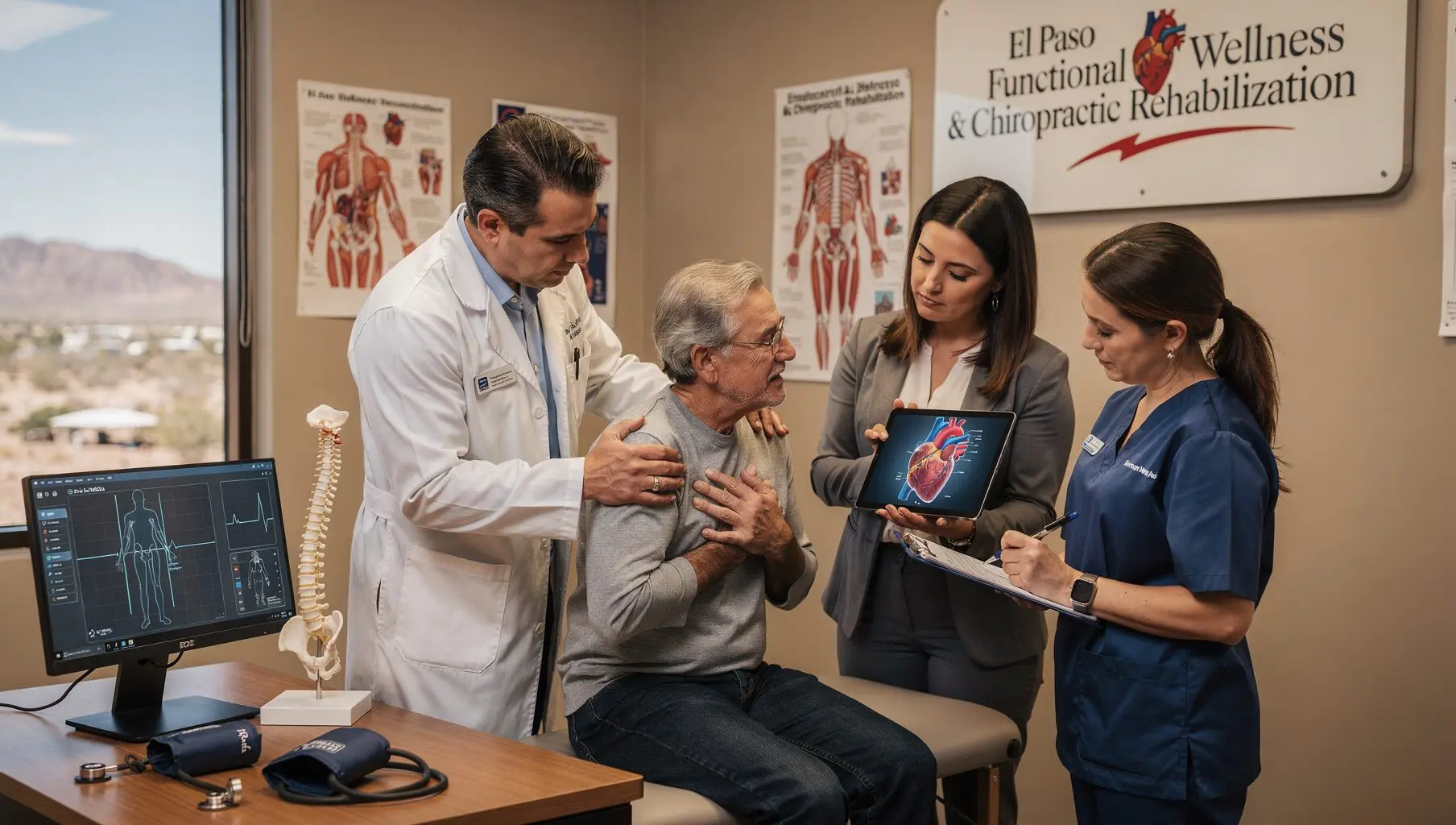
Unlock your heart’s potential through chiropractic rehabilitation to improve heart function and overall vitality.
Abstract
Heart health affects far more than the heart itself. The cardiovascular system continuously supplies oxygen and nutrients to the brain, muscles, joints, connective tissues, and other organs. When cardiovascular function declines, people may experience fatigue, reduced exercise tolerance, shortness of breath, weakness, swelling, and difficulty staying physically active. These changes can overlap with or worsen musculoskeletal problems.
Research also shows an important association between chronic musculoskeletal pain and cardiovascular disease. This does not mean that back pain causes heart disease or that chiropractic adjustments treat cardiovascular disease. Instead, the relationship can involve shared factors such as physical inactivity, obesity, diabetes, hypertension, inflammation, poor sleep, stress, aging, and reduced physical capacity.
In my clinical approach, chiropractic care supports a larger multidisciplinary plan. By addressing musculoskeletal pain, mobility, posture, movement, and physical function, appropriate chiropractic and rehabilitative care may help some medically stable patients remain active and participate more comfortably in exercise or cardiac rehabilitation. Cardiovascular disease itself requires appropriate medical evaluation and evidence-based treatment.
Why Heart Health Matters to the Whole Body
The heart is the cardiovascular system’s central pump. Every minute, it circulates blood that carries oxygen and nutrients throughout the body.
Muscles require this circulation to contract and recover. Bones and connective tissues depend on adequate nutrient delivery. The brain and peripheral nerves need continuous oxygenated blood flow. The kidneys, lungs, and other organs also work closely with the cardiovascular system to maintain fluid, electrolyte, and metabolic balance.
For this reason, cardiovascular health and physical function should not always be viewed as completely separate issues.
Healthy lifestyle patterns that include regular physical activity, healthy body weight, blood pressure and glucose control, nutritious eating patterns, and avoidance of smoking are associated with a lower lifetime risk of developing heart failure (Heidenreich et al., 2022).
The connection also works in the opposite direction. Musculoskeletal pain can make exercise difficult. A person with chronic back, hip, knee, or neck pain may gradually move less. Less activity can contribute to deconditioning and may make it harder to manage body weight, blood glucose, blood pressure, sleep, and overall cardiovascular risk.
The Heart-Musculoskeletal Connection
One of the most important lessons I emphasize in integrative care is that the body’s systems interact.
Research supports an association between chronic musculoskeletal pain and cardiovascular disease. In a systematic review and meta-analysis involving 20 studies, Oliveira et al. (2020) found that people reporting chronic musculoskeletal pain were more likely to report cardiovascular disease than people without chronic musculoskeletal pain.
This finding describes an association. It does not prove that musculoskeletal pain directly causes cardiovascular disease.
Several factors may help explain why the two conditions frequently overlap:
- Reduced physical activity because movement hurts
- Obesity and increased mechanical stress on joints
- Hypertension
- Diabetes and insulin resistance
- Poor sleep
- Chronic stress
- Smoking
- Aging
- Physical deconditioning
- Inflammatory and metabolic disorders
- Reduced ability to exercise because of cardiovascular symptoms
Cardiovascular disease can also produce or contribute to pain syndromes. Ischemic pain, peripheral arterial disease, post-stroke pain, post-amputation pain, and other cardiovascular complications can become part of a patient’s chronic pain picture (Staudt et al., 2023).
Therefore, clinicians should avoid assuming that every complaint involving the chest, shoulder, upper back, leg, or generalized fatigue is purely musculoskeletal.
When Heart Problems Can Look Like Musculoskeletal Problems
This distinction can become extremely important.
Patients sometimes describe cardiovascular symptoms in ways that sound like ordinary musculoskeletal complaints. Discomfort may involve the chest, upper back, shoulder, arm, neck, or jaw.
At the same time, a patient may truly have a musculoskeletal condition along with cardiovascular risk factors.
In my clinical work, this overlap reinforces the importance of screening before treatment. New chest pressure, unexplained shortness of breath, fainting, rapidly worsening swelling, significant palpitations, sudden neurologic symptoms, or unusual exercise intolerance should not simply be treated as a spinal or muscular complaint.
These findings may require prompt medical or emergency evaluation.
Heart Failure and the Loss of Physical Capacity
Heart failure provides a clear example of how cardiovascular disease can affect the musculoskeletal system.
Heart failure is a clinical syndrome in which structural or functional abnormalities of the heart lead to symptoms and limitations. Symptoms can include shortness of breath, fatigue, reduced stamina, exercise intolerance, edema, and difficulty performing normal activities.
In the source material for this discussion, I emphasize that heart failure should be considered a syndrome rather than one single disease because different underlying mechanisms can eventually produce a similar pattern of symptoms.
When patients become less active because of cardiovascular limitations, secondary physical problems can develop.
Muscles can lose strength and endurance. Balance may decline. Walking may become more difficult. Joint stiffness may increase. Existing back or joint pain can become a greater barrier to activity.
This is one reason rehabilitation is an important part of appropriately selected heart-failure care.
Guidelines from the American Heart Association, American College of Cardiology, and Heart Failure Society of America report that exercise training can improve functional status, exercise performance, and quality of life in appropriately selected patients with heart failure. Cardiac rehabilitation combines medical evaluation with education, physical activity counseling, exercise training, dietary guidance, and psychosocial support (Heidenreich et al., 2022).
Where Chiropractic Care Fits
Chiropractic care should not be presented as a treatment for coronary artery disease, cardiomyopathy, arrhythmias, or heart failure itself.
Its potential role is different.
For appropriately screened, medically stable patients, chiropractic and rehabilitative care can focus on musculoskeletal problems that may interfere with comfortable movement and physical activity.
In my clinical setting, this may include attention to:
- Spinal and extremity mobility
- Musculoskeletal pain
- Posture
- Thoracic and rib-cage mechanics
- Gait and movement patterns
- Flexibility
- Strength and conditioning
- Breathing mechanics
- Gradual return to appropriate activity
The objective is not to “adjust the heart.” The objective is to improve the patient’s musculoskeletal environment so movement becomes safer, easier, and more comfortable when medically appropriate.
My clinical framework emphasizes thoracic and rib-cage mobility, posture, gait, respiratory patterns, pain control, and functional rehabilitation as musculoskeletal components of coordinated care.
Reducing Pain May Remove a Barrier to Healthy Movement
This is perhaps the most practical connection between chiropractic care and cardiovascular wellness.
Consider a patient whom a medical professional has advised to walk regularly but who also has significant low-back or knee pain.
The cardiovascular recommendation may be appropriate, but pain can make it difficult to follow.
In this situation, a musculoskeletal clinician may help identify mechanical limitations and develop strategies to improve mobility and activity tolerance.
The patient may then be better positioned to participate in the physical activity recommended by the medical or cardiac rehabilitation team.
This distinction matters.
Chiropractic care is supporting movement and function rather than replacing cardiovascular treatment.
The 2022 heart-failure guideline similarly emphasizes multidisciplinary management. For medically stable patients who can participate, exercise and cardiac rehabilitation can improve functional capacity, exercise tolerance, and quality of life (Heidenreich et al., 2022).
The Importance of the Thoracic Spine and Rib Cage
The thoracic spine and rib cage are especially relevant when discussing musculoskeletal function around the chest.
Normal breathing requires coordinated movement of the diaphragm, ribs, thoracic spine, abdominal wall, and accessory respiratory muscles.
When a patient has stiffness or pain involving the thoracic spine and surrounding musculature, breathing and movement may feel uncomfortable. This does not mean that thoracic manipulation treats cardiovascular disease.
Rather, carefully selected musculoskeletal treatment may address mechanical restrictions or pain that coexist with cardiovascular conditions.
In my practice observations, improving musculoskeletal contributors to discomfort can sometimes help patients move and participate more comfortably in medically approved rehabilitation. The original clinical framework specifically describes chiropractic care as supportive rather than a direct treatment for cardiomyopathy.
Chiropractic Care & Metabolism *The Hidden Link*- Video
Cardiometabolic Health Connects the Two Systems
Heart and musculoskeletal health also intersect through metabolism.
Obesity, hypertension, diabetes, insulin resistance, and physical inactivity can influence cardiovascular risk while simultaneously affecting joints, muscles, and physical function.
For example, excess body weight can increase mechanical loading on the knees, hips, feet, and spine. If joint pain then reduces physical activity, the patient may become progressively more deconditioned.
This can create a difficult cycle:
Pain leads to less movement.
Less movement contributes to deconditioning.
Deconditioning makes physical activity harder.
Reduced activity can make management of weight and metabolic risk factors more difficult.
Increasing pain and fatigue can then create additional barriers to movement.
Breaking this cycle may require collaboration among primary care, cardiology, chiropractic care, rehabilitation, nutrition professionals, and other clinicians.
Chronic Pain and Cardiovascular Comorbidities
Clinicians should also consider chronic pain within the patient’s broader health picture.
Oliveira et al. (2020) found high-quality evidence of an association between chronic musculoskeletal pain and cardiovascular disease. Other research has investigated how physical inactivity and sedentary behavior may contribute to the relationship between chronic musculoskeletal pain and cardiovascular conditions (Ryan et al., 2014).
This means clinicians should look beyond the painful body part.
A patient presenting with chronic low-back pain may also have obesity, hypertension, poor sleep, insulin resistance, diabetes, or low physical activity.
Treating only the painful lumbar area without considering those broader health factors may miss important contributors to long-term function.
Cardiomyopathy Requires Medical Management
Cardiomyopathy illustrates why the boundaries between supportive and disease-specific treatment must remain clear.
Cardiomyopathies include several disorders affecting the heart muscle, including dilated and hypertrophic cardiomyopathy as well as infiltrative diseases such as cardiac amyloidosis.
Patients may develop fatigue, shortness of breath, reduced exercise tolerance, arrhythmias, edema, or heart failure.
These conditions require medical evaluation and disease-specific management.
For heart failure with reduced ejection fraction, contemporary guideline-directed medical therapy can include renin-angiotensin system inhibition or an angiotensin receptor-neprilysin inhibitor, evidence-based beta-blockers, mineralocorticoid receptor antagonists, and SGLT2 inhibitors when clinically appropriate (Heidenreich et al., 2022).
Chiropractic care is not a substitute for these therapies.
Instead, it may fit into a coordinated plan when musculoskeletal pain or dysfunction limits daily activity or rehabilitation.
Cardiac Amyloidosis Shows Why Musculoskeletal Clues Matter
One particularly interesting example of the heart-musculoskeletal connection is transthyretin cardiac amyloidosis.
ATTR amyloidosis can be associated with musculoskeletal findings, including a history of bilateral carpal tunnel syndrome and spinal stenosis. These findings may sometimes precede recognition of cardiac disease.
This is clinically important because what initially appears to be an isolated orthopedic or musculoskeletal history may occasionally provide information relevant to a larger systemic disorder.
The source material emphasizes bilateral carpal tunnel syndrome and spinal stenosis among the clues that can occur with ATTR cardiac amyloidosis.
The lesson is not that common carpal tunnel syndrome or spinal stenosis means a patient has amyloidosis. These musculoskeletal disorders are common and usually have other explanations.
Instead, clinicians should recognize patterns, particularly when musculoskeletal findings coexist with unexplained heart failure, neuropathy, orthostatic symptoms, characteristic imaging findings, or other systemic warning signs.
Chiropractic Care Within a Multidisciplinary Model
My approach is centered on collaboration.
My professional work has long emphasized chiropractic care, musculoskeletal rehabilitation, functional medicine, nutrition, and patient education as interconnected parts of health management. My professional platforms also emphasize musculoskeletal rehabilitation and functional and integrative health education.
In the clinical model described in the supplied source, chiropractic care focuses on musculoskeletal optimization, spinal and rib-cage mobility, respiratory mechanics, and functional movement. At the same time, medical clinicians address cardiovascular diagnosis, medication management, diagnostic testing, and referrals.
This separation of responsibilities is important.
A cardiologist or other qualified medical clinician manages cardiovascular disease.
A chiropractor manages appropriate neuromusculoskeletal problems.
Rehabilitation professionals help rebuild strength, mobility, balance, and endurance.
Nutrition and lifestyle interventions address modifiable cardiometabolic factors.
When these areas overlap, provider communication becomes essential.
Clinical Observations From Dr. Alexander Jimenez
In my clinical experience, patients rarely arrive with only one isolated problem.
Someone seeking care for back pain may also have obesity, hypertension, diabetes, poor sleep, chronic stress, or significant deconditioning. Another patient recovering from cardiovascular illness may want to become active again but be limited by arthritis, spinal pain, weakness, or reduced mobility.
These situations require more than simply identifying where it hurts.
My clinical observations emphasize reducing musculoskeletal barriers to movement, improving posture and functional mobility, and coordinating care when cardiovascular disease changes what is safe or appropriate.
The supplied clinical material similarly notes that musculoskeletal and respiratory-mechanics support can improve comfort and help patients participate in rehabilitation, while emphasizing medical oversight and communication among healthcare disciplines.
These observations reflect clinical experience rather than evidence that chiropractic manipulation directly improves cardiac disease.
Additional educational material and professional updates are available through Personal Injury Doctor Group and Dr. Alexander Jimenez’s LinkedIn professional profile.
A Safer Way to Think About Chiropractic and Heart Health
A useful way to understand the relationship is this:
Chiropractic care does not replace cardiology.
It does not replace cardiovascular medications.
It does not reverse coronary artery disease.
It does not directly treat heart failure or cardiomyopathy.
Its supportive value may come from addressing appropriate musculoskeletal problems that interfere with movement, comfort, rehabilitation, and participation in a heart-healthy lifestyle.
For some patients, reducing those physical barriers can become one piece of a much larger cardiovascular wellness strategy.
Safety Comes First
Patients with cardiovascular disease need an individualized assessment before starting or substantially changing an exercise or manual-therapy program.
Special consideration may be necessary for people with:
- Unstable cardiovascular symptoms
- Uncontrolled hypertension
- Significant arrhythmias
- Advanced heart failure
- Recent cardiac procedures
- Orthostatic hypotension
- Anticoagulant therapy
- Implantable cardiac devices
- Severe edema
- Unexplained chest symptoms
- Significant shortness of breath
- Syncope or near-syncope
The original clinical framework emphasizes stopping treatment and obtaining appropriate reassessment when symptoms such as chest pain, palpitations, presyncope, increasing dyspnea, worsening edema, or neurologic changes appear.
The Goal Is Better Whole-Body Function
Heart health and musculoskeletal health are closely connected through movement, metabolism, physical capacity, lifestyle, and chronic disease.
A healthy cardiovascular system helps muscles and tissues receive the oxygen and nutrients necessary for daily activity. A functional musculoskeletal system makes it easier to walk, exercise, work, and participate in behaviors that support cardiovascular health.
When either system struggles, the other can be affected.
For this reason, an integrative approach can be valuable when it respects the boundaries of each healthcare discipline.
Medical treatment addresses cardiovascular disease.
Chiropractic and rehabilitative care can address appropriate musculoskeletal limitations.
Nutrition, sleep, stress management, weight management, and physical activity address shared risk factors.
The goal is not to claim that one treatment fixes everything. The goal is to help the patient move better, function better, understand risk factors, participate in appropriate rehabilitation, and receive the right care from the right healthcare professional.
That is the role I see for integrative chiropractic care within a broader heart-health strategy.
References
Heidenreich, P. A., Bozkurt, B., Aguilar, D., Allen, L. A., Byun, J. J., Colvin, M. M., et al. (2022). 2022 AHA/ACC/HFSA guideline for the management of heart failure: A report of the American College of Cardiology/American Heart Association Joint Committee on Clinical Practice Guidelines. Circulation, 145(18), e895-e1032. https://doi.org/10.1161/CIR.0000000000001063
Oliveira, C. B., Maher, C. G., Franco, M. R., Kamper, S. J., Williams, C. M., Silva, F. G., & Pinto, R. Z. (2020). Co-occurrence of chronic musculoskeletal pain and cardiovascular diseases: A systematic review with meta-analysis. Pain Medicine, 21(6), 1106-1121. https://doi.org/10.1093/pm/pnz217
Ryan, C. G., McDonough, S., Kirwan, J. P., Leveille, S., & Martin, D. J. (2014). An investigation of association between chronic musculoskeletal pain and cardiovascular disease in the Health Survey for England (2008). European Journal of Pain, 18(5), 740-750. https://doi.org/10.1002/j.1532-2149.2013.00405.x
Staudt, M. D., Clark, A. J., & Gordon, A. S. (2023). Chronic pain considerations in patients with cardiovascular disease. Physical Medicine and Rehabilitation Clinics of North America.
Jimenez, A. (2022). Issues that affect more than the heart. Personal Injury Doctor Group.
SEO Tags
heart health, chiropractic care, chiropractic and heart health, cardiovascular health, musculoskeletal health, heart disease and back pain, cardiovascular disease and chronic pain, chronic musculoskeletal pain, heart failure, cardiomyopathy, cardiac rehabilitation, chiropractic rehabilitation, integrative chiropractic care, cardiovascular rehabilitation, musculoskeletal rehabilitation, chronic back pain, physical activity, exercise tolerance, functional mobility, thoracic spine mobility, rib cage mobility, breathing mechanics, posture, cardiovascular comorbidities, obesity and heart health, hypertension, diabetes, insulin resistance, metabolic health, inflammation, functional medicine, integrative medicine, cardiac amyloidosis, carpal tunnel syndrome, spinal stenosis, heart failure rehabilitation, pain and cardiovascular disease, multidisciplinary care, Dr. Alexander Jimenez, Dr. Alex Jimenez, Personal Injury Doctor Group, El Paso chiropractor, El Paso Texas, chiropractic care El Paso

Comments are closed.