
Typing Limits After Collision in the Workplace
“I Can Work, But I Can’t Type for Long”: Why Functional Loss Matters After a Collision or Workplace Injury
Abstract: After a collision or workplace injury, many software engineers, remote workers, help-desk staff, and data analysts return to their desks and still cannot type, sit, or concentrate for a full shift. A 0-to-10 pain score does not capture that gap. This article explains why functional loss belongs in the medical record, which job tasks to measure, and how exam findings, functional testing, and follow-up notes create a clearer clinical picture. It also describes collaborative medical and chiropractic care at Injury Medical Clinic PA in El Paso. No legal result is promised.
A help-desk specialist in El Paso returns to work ten days after a rear-end crash. She can log in and close the first ticket. By mid-morning, her neck will not turn toward the second monitor. Her right hand cramps on the mouse. She rates pain as a four. On paper, that number looks modest. On the job, output has already fallen.
That gap is the problem. Pain intensity and work capacity are related, but they are not the same thing (Turner et al., 2004). Screen-dependent jobs look “light,” yet they still demand neck rotation, quiet shoulders, fine-motor endurance, and clean attention. When those capacities drop after a collision or workplace injury, the record must describe function, not only discomfort.
Why a Pain Score Is Not a Work Score
A numerical pain rating is useful. It is also incomplete. Two people can report the same number and live two different days. One finishes a block of code. The other lasts twenty minutes of keyboard work before form breaks down. Research on injured workers shows that a change in pain does not automatically equal a change in work ability (Turner et al., 2004). A review of road-traffic musculoskeletal injuries found that gains in pain or neck-disability scores did not always align with return-to-work results (Brakenridge et al., 2025). Pain can ease while endurance stays short.
The World Health Organization’s International Classification of Functioning, Disability, and Health separates body impairment from activity limitation and participation restriction (World Health Organization, 2001). Impairment is what has changed in the tissue or the nerve. Activity limitation is what the person can do for only a short time. Participation restriction is how that limit shows up at work and at home. A thorough chart should cover all three, not a single circle on a pain scale.
What Functional Loss Looks Like at a Screen
For software engineers, remote workers, analysts, and help-desk staff, the job is not “sitting.” It is a chain of small, repeated demands. After injury, those demands often fail first.
Typing, mouse use, and sitting
Keyboard work asks the neck to hold a forward posture and the wrists to repeat small motions. A person may type well for twelve minutes and then lose speed or control. That timed drop is a functional finding. Pointing devices load one shoulder, forearm, and thumb. Document the side, the duration, and what happens if clicking continues. Sitting still loads the lumbar discs and mid-back. Tolerance may fall from a full shift to 25 or 40 minutes. Note position changes and whether standing then triggers new symptoms.
Screens, rotation, and focus
Bright monitors and limited cervical motion can provoke base-of-skull or frontal headaches. Record onset time and whether the headache ends the work block. Dual monitors force repeated turning. Restricted rotation is a job-task barrier, so measure degrees and compare sides. Pain, poor sleep, and headache also tax attention. A data analyst who rereads the same query three times has a functional problem even if strength testing looks fair.
Sleep, lifting, and endurance
Night pain shortens deep sleep, and the next day’s typing tolerance usually falls. Office work still includes laptop bags and archive boxes, so record safe loads. The most common pattern is not “cannot work.” It is “cannot sustain work.” People return and fade after two productive hours. Endurance, not attendance, is the clinical issue.
Building an Accurate Medical Picture
Occupational-medicine guidance asks clinicians to compare current function with the person’s pre-injury baseline and to record how the condition changes work capacity (Klees et al., 2026). That comparison should be written in clear, dated language.
Baseline examination
A useful first visit captures more than “neck pain after MVA.” It should include the mechanism of injury, prior function, current tolerances in minutes, measured range of motion, strength, sensation, reflex testing, and explained provocative tests. The patient remains the source of the daily story. The exam remains the source of objective signs. Both belong in the chart.
Neurological findings
Screen-heavy work depends on clean nerve signaling to the hands. Record numbness, tingling, grip fade, or reflex changes even when intermittent. Intermittent findings still matter if they appear during the exact tasks the job requires.
Validated tools help organize that story. The Neck Disability Index asks about pain, reading, headaches, concentration, work, driving, and sleep (Vernon & Mior, 1991). The Disabilities of the Arm, Shoulder and Hand questionnaire treats the upper limb as one working unit when mouse and keyboard tasks fail (Hudak et al., 1996). Scores do not replace the exam. They provide a repeatable snapshot.
Functional testing
When the question is work capacity, testing should look like work: timed typing, sustained sitting, rotation to a second screen, grip measures, and job-relevant lifts. Stop rules protect the patient. The note should state what was attempted, what was completed, why a task ended, and whether effort appeared consistent. The purpose is clinical clarity, not a courtroom script.
Follow-up documentation
One visit is a photograph. Recovery is a film. Each follow-up should repeat the same markers: minutes of typing, minutes of sitting, headache onset, sleep hours, and workday length. Improvement, plateau, or decline all have meaning when the method stays the same.
This approach supports beneficence: the record exists so care can target the real limit. It supports non-maleficence by favoring measured, non-invasive options over rushed surgery or heavy medication when conservative care may still help. It supports autonomy: the patient sees the same numbers the clinicians see and can decide, with their existing medical team, what comes next.
How Integrated MD-DC Care Serves This Population
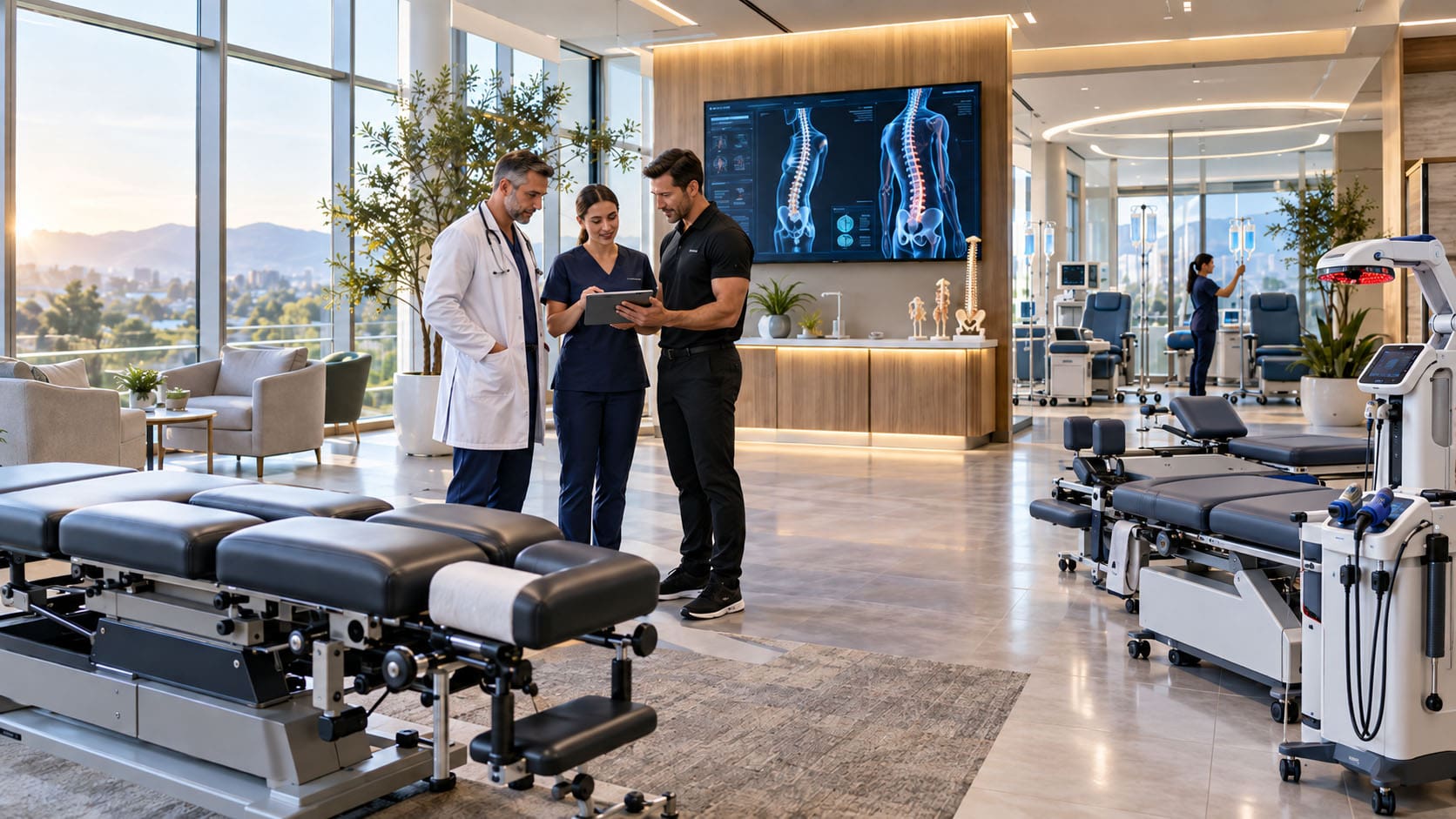
Injury Medical Clinic PA in El Paso pairs chiropractic structural care with internal medicine oversight. Dr. Alex Jimenez, DC, APRN, FNP-BC, CFMP, IFMCP, holds dual licensure as a Doctor of Chiropractic and a Board-Certified Family Practice Nurse Practitioner (Texas APRN License #1191402, Prescriptive Authority #59628, NPI 1205907805). He leads alignment, mechanical rehabilitation, and, when indicated under collaborative oversight, non-surgical supportive diagnostics and therapies.
Dr. Maria Guadalupe Cardenas, MD, is a board-certified internist with more than 40 years of experience. She serves as Medical Director and Collaborative Physician (Texas Medical License #J2933, NPI 1164426748). She directs laboratory review, comorbidity risk, and medical coordination so chiropractic care stays within a safe medical framework.
For a remote analyst or help-desk worker, that structure can include a measured exam, imaging or labs only when justified, non-invasive care aimed at motion and endurance, medical review of sleep and medication risk, activity notes that match job tasks, and communication with other physicians when requested. The clinic does not replace an attorney, an employer, or an independent examiner. It builds a chronological clinical file. Patients stay in charge of sharing that file.
What Patients Can Do Now
Injured workers can strengthen their record without turning every day into a legal project.
- Write the job as timed tasks, not a job title.
- Log typing minutes, sitting minutes, and headache start times.
- Note sleep hours and next-day focus.
- Bring dual-monitor setup details to the visit.
- Ask clinicians to record function in minutes and degrees.
- Keep other treating providers informed.
These steps protect safety first and keep the story consistent.
A Clear Next Step
If you can log in but cannot type, sit, or think through a shift after a crash or workplace injury, a pain number is not enough. Contact Injury Medical Clinic PA in El Paso to schedule a baseline visit with Dr. Jimenez and the team led by Dr. Cardenas. Please bring your job description, symptom log, and providers. You remain the decision-maker. The clinic’s role is to examine, document, and treat with care aimed at restoring safe function without unnecessary harm.
References
Brakenridge, C. L., Smits, E. J., Gane, E. M., Andrews, N. E., & Williams, G. (2025). Effectiveness of interventions on work outcomes after road traffic crash-related musculoskeletal injuries: A systematic review and meta-analysis. Journal of Occupational Rehabilitation, 35(1), 30–47. https://doi.org/10.1007/s10926-024-10185-z
Hudak, P. L., Amadio, P. C., & Bombardier, C. (1996). Development of an upper extremity outcome measure: The DASH (disabilities of the arm, shoulder, and hand). American Journal of Industrial Medicine, 29(6), 602–608. https://doi.org/10.1002/(SICI)1097-0274(199606)29:6<602::AID-AJIM4>3.0.CO;2-L
Klees, J. E., Milek, D., & Hegmann, K. T. (2026). General approach to initial assessment and documentation. American College of Occupational and Environmental Medicine.
Turner, J. A., Franklin, G., Heagerty, P. J., Wu, R., Egan, K., Fulton-Kehoe, D., Gluck, J. V., & Wickizer, T. M. (2004). The association between pain and disability. Pain, 112(3), 307–314. https://doi.org/10.1016/j.pain.2004.09.010
Vernon, H., & Mior, S. (1991). The Neck Disability Index: A study of reliability and validity. Journal of Manipulative and Physiological Therapeutics, 14(7), 409–415.
World Health Organization. (2001). International Classification of Functioning, Disability and Health (ICF). World Health Organization.
Comments are closed.