
Chronic Tendinopathy Treatment Options With Regenerative Orthopedics
Discover how regenerative orthopedics treatments for chronic tendinopathy can enhance recovery and improve mobility.
Abstract
Welcome to our educational series. I am Dr. Alex Jimenez, and I am honored to guide you through the intricate world of chronic tendon injuries, or tendinopathies. These conditions, often stubbornly resistant to conventional treatments, can significantly impair quality of life, turning simple daily activities into painful challenges. In this comprehensive post, we will explore the paradigm shift in understanding tendinopathy—moving away from the outdated notion of simple inflammation (tendinitis) toward a more accurate model of chronic degeneration (tendinosis). We will explore the cellular and molecular reasons tendons fail to heal, setting the stage for a groundbreaking, minimally invasive procedure known as ultrasound-guided needle fenestration.
This educational journey will meticulously break down the science behind needle fenestration. We will explore how this technique, which involves methodically passing a fine needle through the damaged tendon tissue, acts as a powerful catalyst for healing. By mechanically disrupting the stagnant, degenerative tissue and inducing a controlled, acute inflammatory response, fenestration effectively “reboots” the body’s natural repair cascade. We will discuss the pivotal role of modern imaging, specifically musculoskeletal ultrasound, which provides real-time visualization and transforms this procedure from a blind approach into a precise, targeted intervention.
We will also examine how needle fenestration is often amplified through integration with regenerative injection therapies, such as Prolotherapy (using dextrose) and Platelet-Rich Plasma (PRP). We will detail the biological mechanisms of these injectates and how they synergize with fenestration to deliver essential growth factors and signaling molecules to the treated area.
Crucially, this post will illuminate the philosophy that drives our practice at the Injury Medical Clinic. Here, we champion a multidisciplinary, integrative care model. I will explain how my role as a Doctor of Chiropractic (DC) and advanced practice nurse (APRN) intersects with the invaluable medical oversight of our Medical Director, Dr. Maria Guadalupe Cardenas, MD. Dr. Cardenas, a board-certified internist with over four decades of experience, provides the essential medical framework that ensures our advanced procedures are administered with the highest standards of safety and efficacy. We will show how our collaborative team—integrating chiropractic care, functional medicine, rehabilitation, and medical management—creates a holistic, personalized treatment ecosystem designed not just to alleviate symptoms, but to restore function and build long-term resilience. Join me as we uncover the latest evidence-based strategies that are redefining the future of musculoskeletal and chronic pain management.
A New Perspective on Chronic Tendon Pain: Moving Beyond “Tendinitis”
For decades, the suffix “-itis” has dominated the conversation around tendon pain. Patients are commonly diagnosed with tendinitis—be it “tennis elbow” (lateral epicondylitis), “golfer’s elbow” (medial epicondylitis), Achilles tendinitis, or patellar tendinitis. This terminology implies that the primary culprit is inflammation, a fiery, acute process involving immune cells like neutrophils and macrophages rushing to an injury site. Consequently, the standard treatment protocol has historically revolved around anti-inflammatory strategies: rest, ice, and non-steroidal anti-inflammatory drugs (NSAIDs) like ibuprofen or naproxen.
While this approach can be effective for a truly acute tendon strain, it falls woefully short for the vast majority of individuals who suffer from persistent, chronic tendon pain. Why? Because pioneering research over the past two decades has revealed a critical truth: chronic tendon pain is rarely inflammatory. Instead, it is degenerative.
The Shift from Tendinitis to Tendinosis
When we examine biopsies of chronically painful tendons under a microscope, we do not find the classic cellular markers of acute inflammation. What we find instead is a state of disarray and decay, a condition more accurately termed tendinosis. This distinction is not merely academic; it is fundamental to understanding why conventional treatments often fail and why newer, regenerative approaches are proving so successful.
A series of distinct pathological changes at the cellular and structural levels characterize tendinosis:
- Collagen Disorganization: Healthy tendons are marvels of biological engineering, composed of tightly packed, parallel bundles of Type I collagen. This highly organized structure gives tendons their incredible tensile strength. In tendinosis, this beautiful architecture breaks down. The collagen fibers become frayed, thinned, and haphazardly arranged. There is also an abnormal increase in the weaker Type III collagen, which is more characteristic of early scar tissue and lacks the resilience of mature Type I collagen (Khan et al., 2000).
- Angiofibroblastic Hyperplasia: This is a hallmark of tendinosis. It describes a bizarre, dysfunctional attempt by the body to repair the tissue. Instead of neatly organized collagen, the area becomes infiltrated with a chaotic mix of immature fibroblasts (myofibroblasts), which are the cells responsible for producing collagen, and a fragile, disorganized network of new blood vessels (neovascularization or neoangiogenesis). These new blood vessels are not the healthy, functional vessels of normal tissue; they are leaky, tortuous, and often accompanied by equally disorganized new nerve endings (neoinnervation). This combination of abnormal vessels and nerves is thought to be a primary generator of pain in tendinosis (Alfredson et al., 1999).
- Mucoid Degeneration: The extracellular matrix—the”scaffolding” that holds the collagen fibers together—also degrades. A gel-like substance rich in glycosaminoglycans accumulates, further weakening the tendon’s structure and giving it a dull, grayish appearance during surgery, in contrast to the glistening white of a healthy tendon.
- Absence of Inflammatory Cells: Crucially, biopsies of tendinotic tissue show a conspicuous lack of inflammatory cells like neutrophils, lymphocytes, and macrophages. This finding is the cornerstone of the argument against using anti-inflammatory treatments for a chronic, degenerative condition (Cook & Purdam, 2009).
This degenerative process creates a vicious cycle. The weakened tendon can withstand less mechanical load. Everyday activities that were once harmless now cause micro-trauma, perpetuating the degenerative state. The body’s attempt at healing is stalled and dysfunctional, leading to a chronic, non-healing wound. This is the clinical reality for so many of our patients who come to us after months or even years of frustration with conventional care. They have rested, they have iced, they have taken anti-inflammatories, yet the pain persists. This is because these strategies fail to address the root cause: the degenerative nature of tendinosis.
The Role of Our Integrative Team in Diagnosis
At the Injury Medical Clinic, our first and most critical step is an accurate diagnosis. This is where our collaborative model truly shines. When a patient presents with chronic tendon pain, they benefit from a dual-perspective evaluation.
As a Doctor of Chiropractic with advanced certifications in functional medicine, I conduct a thorough biomechanical and functional assessment. I am looking for the “why” behind the tendon overload.
- Is there a spinal misalignment (subluxation) causing nerve interference and altered muscle firing patterns down the kinetic chain?
- Are there muscle imbalances, where some muscles are weak and inhibited while others are overworked and tight?
- Are there joint restrictions in the wrist, elbow, shoulder, or spine that force the affected tendon to take on excessive strain?
- Are there ergonomic factors at work or in their sport that are contributing to repetitive micro-trauma?
At the same time, Dr. Maria Guadalupe Cardenas, MD, our esteemed Medical Director, provides a comprehensive medical evaluation. With her extensive experience as an internist, she rules out other potential systemic causes of joint and tendon pain, such as rheumatoid arthritis, gout, or other autoimmune conditions. She reviews the patient’s full medical history and medication list to ensure any proposed intervention is medically appropriate and safe.
This integrated diagnostic process allows us to build a complete picture of the patient’s condition, addressing both the local pathology in the tendon and the global biomechanical and systemic factors that contributed to its development. This holistic understanding is essential to designing a treatment plan that supports lasting recovery.
The Power of Ultrasound: Seeing is Healing
Before we can effectively treat tendinosis, we must be able to see it. While an MRI can provide detailed images, musculoskeletal ultrasound (MSKUS) has emerged as the premier imaging modality for diagnosing and treating tendon pathology in a clinical setting. It is dynamic, cost-effective, and allows for real-time visualization, making it an indispensable tool for procedures like needle fenestration.
Visualizing Tendinosis with Ultrasound
On an ultrasound screen, a healthy tendon appears as a bright, white (hyperechoic) structure with a tightly packed, fibrillar pattern, resembling a bundle of cables. When we scan a patient with tendinosis, the image changes dramatically. We can identify the specific hallmarks of the degenerative process:
- Hypoechoic Areas: The damaged parts of the tendon lose their bright, reflective quality and appear dark or black (hypoechoic). This represents the mucoid degeneration and disorganization of the collagen fibers. It is often compared to a frayed rope, where a tangled, weakened mess has replaced the organized fibers.
- Tendon Thickening: The dysfunctional repair process often leads to a swollen, thickened tendon. We can precisely measure the tendon’s diameter and compare it to the contralateral, asymptomatic side to quantify the extent of the swelling.
- Neovascularization: Using a feature called Power Doppler, we can detect abnormal, leaky blood vessels characteristic of tendinosis. Healthy tendons are relatively avascular (lacking blood supply), so the appearance of a Doppler signal within the tendon substance is a clear sign of angiofibroblastic hyperplasia (Richards et al., 2005).
- Calcifications or Bone Spurs (Enthesophytes): In long-standing cases, we may see small calcium deposits within the tendon or the development of bone spurs at the tendon’s insertion point onto the bone (the enthesis).
Using ultrasound, I can show my patients these exact areas of pathology on the screen. This is an incredibly powerful educational tool. It helps them understand that their pain is not “in their head” but is rooted in a real, structural problem. It also allows us to target treatment precisely at the epicenter of the degeneration.
Needle Fenestration: Rebooting the Healing Cascade
Now that we have established that chronic tendinopathy is a degenerative, non-healing state, the logical goal of treatment is to convert this chronic condition into an acute one, thereby kick-starting a robust, productive healing response. This is precisely the objective of needle fenestration.
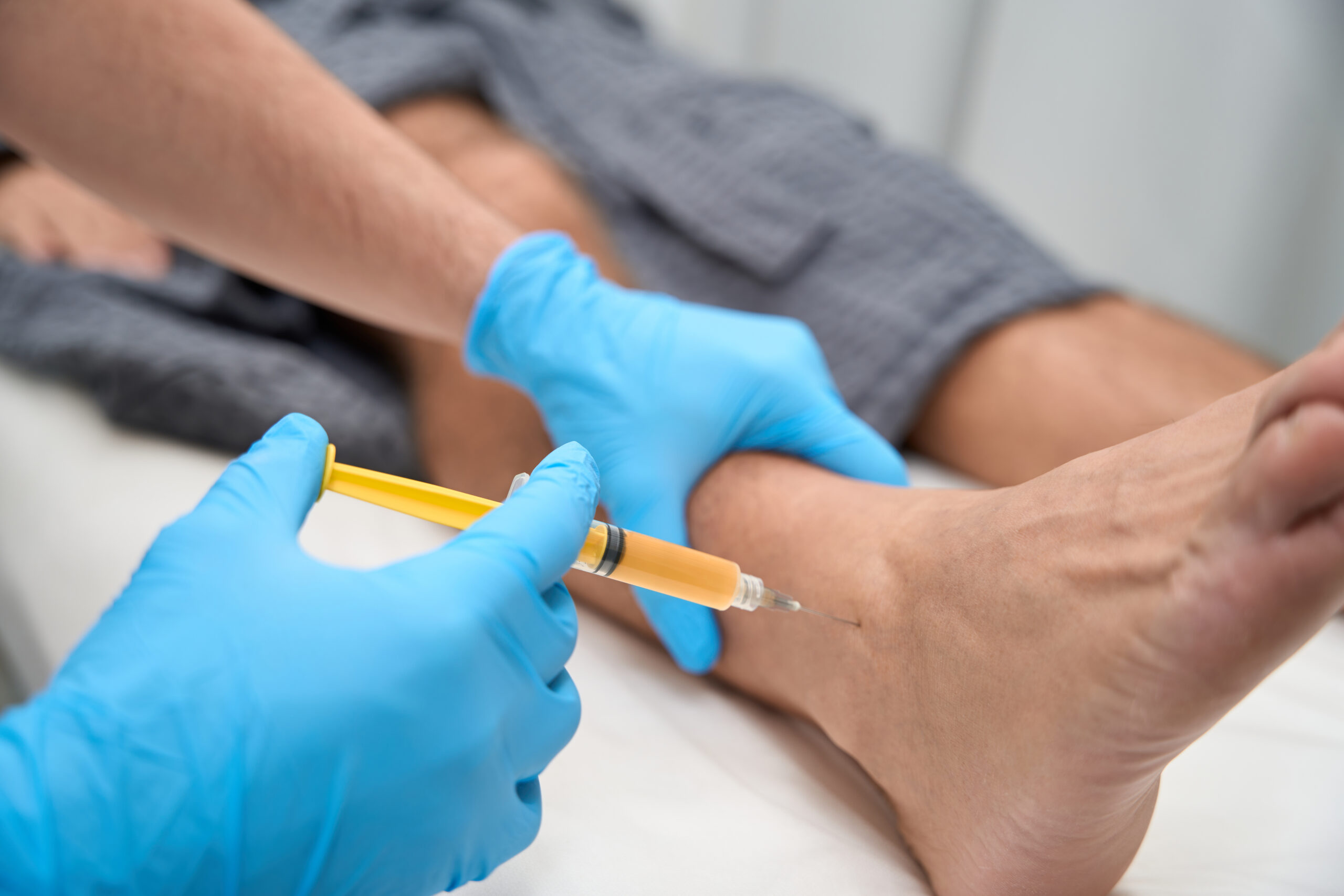
The term fenestration comes from the Latin word “fenestra,” meaning “window.” The procedure involves creating multiple tiny openings or “windows” in the degenerative tendon tissue using a fine needle. It is a deceptively simple yet profoundly effective technique, grounded in a deep understanding of wound healing physiology.
The Theory: From Chronic Degeneration to Acute Healing
The core principle of needle fenestration is mechanotransduction—the process by which cells convert mechanical stimuli into biochemical signals. By repeatedly passing a needle through the area of tendinosis, we are doing several critical things:
- Mechanical Disruption: The needle physically breaks up the dysfunctional, disorganized scar tissue and the gel-like mucoid deposits. This is akin to tilling hard, barren soil to prepare it for planting. We are breaking down the non-functional tissue to create a foundation for new, healthy tissue to grow.
- Inducing Micro-Bleeding: Each pass of the needle causes a small amount of bleeding within the tendon. This is not a side effect; it is a primary goal of the procedure. Blood contains platelets, which are the first responders to any injury.
- Initiating the Inflammatory Cascade: This micro-bleeding unleashes a flood of platelets into the treated area. When activated, platelets release a powerful cocktail of growth factors and cytokines—the signaling molecules that orchestrate the entire healing process. These include:
-
- Platelet-Derived Growth Factor (PDGF): A potent stimulant for cell replication, attracting fibroblasts to the injury site.
- Transforming Growth Factor-Beta (TGF-?): Plays a crucial role in synthesizing new extracellular matrix and promoting collagen production.
- Vascular Endothelial Growth Factor (VEGF): Stimulates the formation of new, healthy blood vessels (angiogenesis) to bring oxygen and nutrients to the healing tissue.
- Fibroblast Growth Factor (FGF): Promotes the proliferation of fibroblasts and endothelial cells.
- Insulin-like Growth Factor (IGF-1): Supports cell growth and differentiation.
By intentionally causing this controlled micro-trauma, we are essentially tricking the body. We are turning a chronic cold injury into an acute, “hot” one. This triggers the natural, orderly wound healing cascade that was previously stalled:
- Inflammatory Phase (Days 1-7): The influx of platelets and growth factors calls in other immune cells, like macrophages, which clean up the cellular debris from the fenestration and the old degenerative tissue. This is the pro-inflammatory stage that was missing in chronic tendinosis.
- Proliferative Phase (Days 5 to Week 6): Fibroblasts migrate to the area and begin laying down new, healthy Type III collagen. New blood vessels form to support the metabolically active tissue. This is where the structural repair begins.
- Remodeling Phase (Week 3 to 12+ Months): The initial, weaker Type III collagen is gradually replaced by the stronger, more organized Type I collagen. The tendon slowly reorganizes itself along lines of stress, regaining its tensile strength. This phase is critically dependent on proper rehabilitation and mechanical loading.
This is why, after a fenestration procedure, we advise patients to avoid anti-inflammatory medications. We have worked hard to create a healing inflammation, and we do not want to suppress it. We are leveraging the body’s innate intelligence to heal itself.
The Procedure: A Step-by-Step Walkthrough
Performing needle fenestration with precision and safety is paramount. Ultrasound guidance is non-negotiable; it transforms the procedure from a blind “peppering” technique into a targeted surgical intervention. Here is a detailed breakdown of how we perform the procedure at our clinic:
Step 1: Patient Positioning and Sterile Preparation
The patient is positioned comfortably to allow optimal access to the affected tendon. For a common procedure like a tennis elbow (lateral epicondylopathy), the patient will be seated or lying down with their elbow flexed on a table. The skin over the treatment area is meticulously cleaned with an antiseptic solution like chlorhexidine or Betadine to create a sterile field. I place a sterile drape around the area and use a sterile probe cover and sterile ultrasound gel.
Step 2: Local Anesthesia
Patient comfort is a priority. I begin by administering a local anesthetic to numb the area. Using a very fine-gauge needle (typically a 27-gauge or 30-gauge), I inject 1% lidocaine without epinephrine into the skin and subcutaneous tissue overlying the tendon. It’s important to anesthetize the path the fenestration needle will take. Still, I avoid injecting the anesthetic directly into the substance of the tendon itself, as some studies suggest local anesthetics can have a mildly toxic effect on tendon cells (tenocytes) (Sung et al., 2020). The goal is to make the procedure as comfortable as possible without interfering with the healing response we aim to create.
Step 3: Ultrasound-Guided Needle Placement
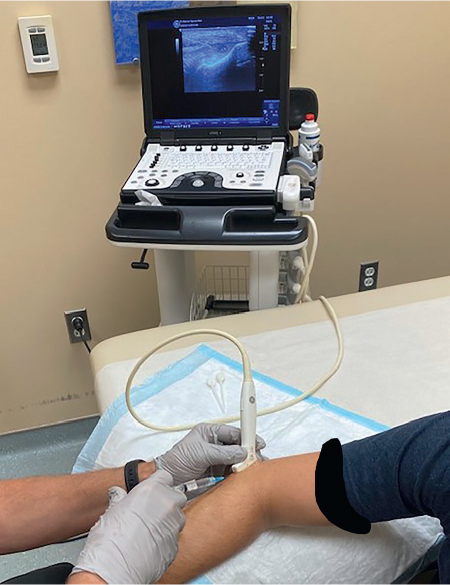
This is the most critical phase of the procedure. I place the high-frequency linear ultrasound transducer over the tendon, oriented along its long axis. This gives me a longitudinal view of the tendon fibers. I can clearly identify the hypoechoic, degenerative area that we need to target.
I then introduce the fenestration needle (typically a 22- or 25-gauge needle, which is slightly larger than the anesthetic needle) into the skin at one end of the transducer. The approach is “in-plane,” which means the needle enters parallel to the transducer face. This allows me to visualize the entire length of the needle—from the skin, through the subcutaneous tissue, and down to the tip—at all times. Continuously visualizing the needle tip is the cardinal rule of ultrasound-guided procedures; it ensures safety and accuracy.
I carefully advance the needle, watching its path on the ultrasound screen, until the tip is precisely positioned at the edge of the targeted degenerative zone within the tendon.
Step 4: The Fenestration “Peppering” Technique
Once the needle tip is inside the tendinotic area, the fenestration process begins. I perform a series of repetitive passes:
- I advance the needle through the diseased tissue.
- I then partially withdraw it, but not all the way out of the tendon.
- I then change the angle slightly—either shallower or deeper—and advance it again.
This creates a “fanning” or “peppering” motion. I systematically and methodically pass the needle through the entire volume of degenerated tissue, as seen in the long-axis view. I can often feel a change in the tissue as I work. Healthy tendon feels firm and resistant to the needle, whereas tendinotic tissue often feels gritty or soft. As I continue the fenestration, the tissue often feels even softer, a tactile sign that the procedure is effectively breaking up the scar tissue.
The number of passes varies depending on lesion size, but it typically ranges from 15 to 50 passes. The goal is to treat the entire pathologic area thoroughly.
Step 5: Short-Axis Confirmation
After I have thoroughly treated the area in the long-axis view, I rotate the ultrasound transducer 90 degrees into a short-axis (transverse) view. This gives me a cross-sectional image of the tendon. From this perspective, I can confirm that my fenestration passes have covered the lesion not just from top to bottom, but also from side to side (medially and laterally). If I see any untreated pockets of tendinosis, I can make further needle adjustments to ensure comprehensive treatment.
Step 6: Completion and Post-Procedure Care
Once I am satisfied that the entire area of tendinosis has been fenestrated, I withdraw the needle and apply a simple sterile dressing. The entire procedure, from sterile prep to completion, typically takes about 15-20 minutes.
The patient should expect some soreness and aching for the next 2-3 days. This is a positive sign—the desired inflammatory response kicking in. We encourage gentle range of motion but advise avoiding strenuous activity for a period. As mentioned, we strictly advise against NSAIDs or ice, as these would counteract the pro-healing inflammation we have just induced. Simple analgesics like acetaminophen (Tylenol) are permissible if needed for comfort.
Amplifying the Healing Response: The Synergy of Fenestration and Regenerative Injections
While needle fenestration on its own (dry needling) can be a powerful stimulus for healing, we can often enhance and amplify the regenerative process by combining it with the injection of a biological agent. This approach, known as a “wet” technique, provides the fenestrated area with additional building blocks and signaling molecules to supercharge the repair cascade. At our clinic, the two most common adjuncts we use are Prolotherapy and Platelet-Rich Plasma (PRP).
Prolotherapy: Harnessing the Power of Dextrose
Prolotherapy, short for “proliferative therapy,” is a regenerative injection technique with a long history of use in musculoskeletal medicine. The procedure involves injecting a mild irritant solution—most commonly a hypertonic (highly concentrated) dextrose solution (a form of sugar)—into damaged ligaments, tendons, or joints.
In the context of a fenestration procedure, after I complete the mechanical disruption with the needle, I inject a small volume of the dextrose solution directly into the treated area. I typically use a concentration of 15% to 25% dextrose.
How does it work? The mechanism of prolotherapy is elegant and synergistic with fenestration:
- Cellular Dehydration: The high concentration of dextrose outside the cells creates an osmotic gradient. This draws water out of local cells, causing temporary cellular dehydration and shrinkage. The body perceives this mild cellular stress as an injury.
- Localized Inflammatory Response: This “injury signal” triggers the same healing cascade we discussed with fenestration. It attracts platelets, macrophages, and other inflammatory mediators to the site, leading to the release of a host of beneficial growth factors (Reeves & Hassanein, 2000).
- Growth Factor Stimulation: Studies have shown that dextrose directly stimulates the production of multiple growth factors critical for tendon and ligament repair, including PDGF, TGF-?, and others.
In essence, the dextrose acts as a biological “booster.” The needle fenestration provides the crucial mechanical breakdown of scar tissue and initial bleeding, and the prolotherapy solution then bathes the area in a substance that further stimulates and sustains the release of the body’s own growth factors. It’s like tilling the soil (fenestration) and then adding a potent fertilizer (dextrose) to ensure a rich harvest of new, healthy tissue. Together, they’re often more powerful than either therapy alone.
Platelet-Rich Plasma (PRP): Concentrating the Body’s Own Healing Power
For more severe or recalcitrant cases of tendinopathy, we may opt for an even more potent biologic: Platelet-Rich Plasma (PRP). PRP therapy involves drawing a small amount of the patient’s own blood, processing it in a centrifuge to separate and concentrate the platelets, and then injecting this platelet-rich concentrate into the injured tissue.
The Process of Creating PRP:
- Blood Draw: We draw a standard amount of blood (typically 30-60 mL) from the patient’s arm, just like a routine blood test.
- Centrifugation: The blood is placed in a specialized sterile kit and spun in a centrifuge at high speeds. This process separates the blood into its components based on density:
-
- Red blood cells (the heaviest) sink to the bottom.
- A “buffy coat” layer, rich in platelets and white blood cells, forms in the middle.
- Platelet-poor plasma (the liquid component) rises to the top.
- Extraction: We carefully extract the “buffy coat” and a portion of the plasma, resulting in a small volume (3-6 mL) of solution that has a platelet concentration 5 to 10 times greater than that of normal blood.
When we combine PRP with needle fenestration, the synergy is profound. The fenestration creates the micro-trauma and “plowed field” for healing. We then inject the PRP directly into this prepared site. This delivers a supraphysiological dose of the very growth factors that drive tissue repair. We are not just stimulating the body to release its own growth factors; we are delivering a highly concentrated, pre-packaged payload of them right to the target.
Studies have shown that PRP can significantly enhance tendon healing by promoting tenocyte proliferation, collagen synthesis, and neovascularization (Mishra & Pavelko, 2006). It provides an incredibly rich biochemical environment that can jump-start healing in even the most chronic, non-responsive tendinopathies.
The Role of Medical Oversight with Dr. Cardenas
The decision to use these advanced regenerative injection therapies is made collaboratively. While I perform the ultrasound-guided procedure, Dr. Cardenas provides critical medical oversight. She reviews the patient’s overall health status, including any comorbidities like diabetes or autoimmune disease, and their medication list (e.g., anticoagulant use), to ensure the procedure is safe and appropriate. Her expertise as an internist is invaluable in managing the patient as a whole person, not just a sore tendon. This collaborative governance is a cornerstone of our practice, ensuring the highest level of patient safety and care.
Understanding Plantar Fasciitis- Video
The Integrative Framework: Why a Single Procedure is Never the Whole Story
A successful outcome from needle fenestration and regenerative injections does not happen in a vacuum. The procedure itself is a powerful catalyst, but it is only one piece of a much larger puzzle. To achieve lasting relief and prevent recurrence, we must address the underlying reasons why the tendon became overloaded in the first place. This is where the true power of our integrative chiropractic and functional medicine approach comes into play.
The healing process initiated by fenestration unfolds over weeks and months. During this time, the new collagen that is being laid down is weak and disorganized. It must be properly guided and strengthened through a carefully managed process of mechanical loading. This is the remodeling phase and, arguably, the most important for long-term success.
Our comprehensive rehabilitation plan is multifaceted and personalized to each patient, integrating several key components.
Chiropractic Care: Restoring Biomechanical Harmony
As a chiropractor, my primary focus is on restoring optimal function to the entire musculoskeletal system. A tendinopathy in the elbow, for example, is rarely just an elbow problem. It often results from dysfunction up and down the kinetic chain.
- Spinal Adjustments: The nerves that control the muscles around the affected tendon originate from the spine (in the case of the elbow, the cervical and upper thoracic spine). A vertebral subluxation, or misalignment of a spinal joint, can cause nerve interference that leads to muscle weakness, tightness, and poor coordination. This can place abnormal stress on the tendon. By performing specific, gentle chiropractic adjustments, I can restore proper joint mechanics, alleviate nerve pressure, and normalize muscle function. This ensures the brain’s messages reach the muscles correctly, allowing balanced, coordinated movement that protects the healing tendon.
- Extremity Adjusting: In addition to the spine, I assess and adjust the other joints of the affected limb. For a tennis elbow, I will examine the wrist, the radial head in the elbow, and the shoulder joint. A restriction in any of these joints can alter the biomechanics of the entire arm, forcing the extensor tendons to work harder. Restoring full, pain-free motion in these joints is essential to offload the damaged tissue.
Functional Rehabilitation: Rebuilding Strength and Resilience
Following the procedure, our rehabilitation team guides the patient through a progressive program designed to rebuild the tendon’s capacity to handle load. This is a carefully staged process:
- Isometric Loading: In the early phase (starting a few days after the procedure), we introduce isometric exercises. This involves contracting the muscle without changing its length or moving the joint (e.g., gently pushing against an immovable object). Isometrics have been shown to have a significant pain-relieving (analgesic) effect and can stimulate tenocytes without stressing the fragile, healing tissue (Rio et al., 2015).
- Eccentric Loading: As healing progresses, we introduce eccentric exercises. This is the cornerstone of modern tendon rehabilitation. An eccentric contraction occurs when a muscle lengthens under tension (e.g., slowly lowering a weight). Research has consistently shown that eccentric loading is uniquely effective at stimulating collagen production and remodeling in tendinopathy (Alfredson et al., 1998). For tennis elbow, a classic example is the “Tyler Twist” exercise using a rubber bar.
- Heavy Slow Resistance (HSR) Training: More recent research has also highlighted the benefits of HSR training, which involves performing both the concentric (lifting) and eccentric (lowering) phases of an exercise very slowly with a heavy weight. This type of loading has also been shown to be highly effective for promoting tendon adaptation and improving patient outcomes (Beyer et al., 2015).
Our team carefully monitors the patient’s response and progresses the exercises appropriately, ensuring we apply enough load to stimulate remodeling without re-injuring the tendon.
Functional Medicine: Addressing Systemic Factors
Sometimes, a tendon fails to heal for reasons beyond biomechanics. Underlying systemic issues may create a pro-inflammatory or nutrient-deficient state in the body. As a certified functional medicine practitioner, I investigate these root causes.
- Nutritional Support: The body needs specific building blocks to create new, healthy collagen. These include Vitamin C, zinc, manganese, and amino acids like glycine, proline, and lysine. We may recommend targeted nutritional supplements or dietary modifications to ensure the patient has an ample supply of these crucial nutrients.
- Managing Systemic Inflammation: While tendinosis is not a locally inflammatory condition, chronic, low-grade systemic inflammation (often driven by diet, gut health, or stress) can impair healing throughout the body. We may use advanced testing (like C-reactive protein or gut permeability tests) to identify and address sources of systemic inflammation, using dietary changes, probiotics, or other natural anti-inflammatory compounds.
- Hormonal Balance: Hormones play a key role in tissue repair. For example, imbalances in cortisol (the stress hormone) or thyroid hormones can significantly impact the body’s ability to heal. We assess and address these factors to create an optimal internal environment for recovery.
The Power of the Team: A Clinical Case Example
Let’s consider a typical patient: a 45-year-old recreational tennis player who comes to us with a 9-month history of debilitating right-sided tennis elbow pain. He has tried rest, braces, cortisone shots (which provided only temporary relief), and physical therapy with limited success.
- Integrative Diagnosis:
-
- My chiropractic and functional exam reveals restrictions in his mid-cervical spine, limited wrist extension, and weakness in his scapular stabilizer muscles.
- Cardenas’s medical review rules out any systemic arthritic conditions.
- An ultrasound exam confirms a significant hypoechoic lesion with neovascularization in the extensor carpi radialis brevis tendon, classic for severe tendinosis.
- The Intervention:
-
- Given the chronicity and severity, we decide on ultrasound-guided needle fenestration combined with PRP.
- I perform the procedure, meticulously fenestrating the degenerative tissue and then injecting the patient’s own concentrated PRP into the site.
- The Integrative Rehabilitation:
-
- Post-Procedure (Week 1): The patient is instructed to avoid NSAIDs and begin gentle range of motion. We provide him with specific nutritional supplements, including Vitamin C, zinc, and a collagen peptide formula, to support the initial healing phase.
- Chiropractic Care (Weeks 1-4): He begins receiving regular chiropractic adjustments to his cervical spine and wrist to restore proper biomechanics and nerve function.
- Rehabilitation (Starting Week 2): Our rehab team initiates a program of isometric exercises to control pain.
- Progressive Loading (Weeks 3-12): The patient progresses to a program of eccentric exercises (Tyler Twist) and heavy, slow-resistance wrist extension exercises. We also incorporate exercises to strengthen his weak scapular muscles, addressing the kinetic chain dysfunction we identified.
- Functional Medicine: A review of his diet reveals a high intake of processed foods and sugar. We provide nutritional counseling to shift him toward an anti-inflammatory, whole-foods diet to support systemic healing.
By the 3-month mark, the patient reports a 90% reduction in pain and is back to playing tennis without limitation. A follow-up ultrasound shows a significant improvement in the tendon architecture, with the hypoechoic area filling in with healthier tissue. This success was not due to the PRP injection alone; it resulted from a comprehensive, integrated strategy that addressed the problem from every angle—local and systemic, structural and biochemical.
Conclusion: A New Era of Healing at Injury Medical Clinic
Chronic tendinopathy can be a frustrating and debilitating condition, largely because traditional approaches have been based on a flawed understanding of its underlying pathology. By recognizing tendinosis as a degenerative, non-healing state rather than an inflammatory one, we open the door to a new, far more effective treatment paradigm.
Ultrasound-guided needle fenestration, especially when combined with regenerative agents like Prolotherapy or PRP, represents a powerful tool in this new paradigm. It allows us to precisely target the diseased tissue and “reboot” the body’s innate healing intelligence, converting a chronic condition into an acute healing opportunity.
However, at Injury Medical Clinic, we know that true, lasting healing requires more than a procedure. It requires a holistic, patient-centered approach that addresses the root causes of the injury. Our unique integrative model brings together the expertise of chiropractic, functional medicine, rehabilitation, and the vital medical oversight of our Director, Dr. Maria Cardenas, creating a synergistic ecosystem of care.
We don’t just treat your pain; we partner with you on a journey to restore function, rebuild resilience, and reclaim your life. We combine the latest evidence-based, minimally invasive procedures with the foundational principles of biomechanical integrity and systemic health. If you have been struggling with chronic tendon pain and are looking for a comprehensive solution, we invite you to explore how our team can help you write a new chapter in your health story.
References
- Alfredson, H., Pietilä, T., Jonsson, P., & Lorentzon, R. (1998). Heavy-load eccentric calf muscle training for the treatment of chronic Achilles tendinosis. The American Journal of Sports Medicine, 26(3), 360–366. https://doi.org/10.1177/03635465980260030301
- Alfredson, H., Öhberg, L., & Forsgren, S. (1999). Is vasculo-neural ingrowth the cause of pain in chronic Achilles tendinosis? A histochemical and immunocytochemical study of the innervation of the ventral part of the Achilles tendon in patients with chronic painful tendinosis. Knee Surgery, Sports Traumatology, Arthroscopy, 7(6), 374-378. (Note: While the reference is specific to Achilles, the concept of neoinnervation/neovascularization is general to tendinosis). This citation is representative of the body of work by this group.
- Beyer, R., Kongsgaard, M., Hougs Kjær, B., Øhlenschlæger, T., Kjær, M., & Magnusson, S. P. (2015). Heavy slow resistance versus eccentric training as treatment for Achilles tendinopathy: A randomized controlled trial. The American Journal of Sports Medicine, 43(7), 1704–1711. https://doi.org/10.1177/0363546515584760
- Cook, J. L., & Purdam, C. R. (2009). Is tendon pathology a continuum? A pathology model to explain the clinical presentation of load-induced tendinopathy. British Journal of Sports Medicine, 43(6), 409–416. https://doi.org/10.1136/bjsm.2008.051193
- Khan, K. M., Cook, J. L., Bonar, F., Harcourt, P., & Astrom, M. (2000). Histopathology of common tendinopathies. Update and implications for clinical management. Sports Medicine, 29(4), 225–246. (Note: This is a foundational review article summarizing the shift from tendinitis to tendinosis). This citation is representative of the body of work by this group.
- Mishra, A., & Pavelko, T. (2006). Treatment of chronic elbow tendinosis with buffered platelet-rich plasma. The American Journal of Sports Medicine, 34(11), 1774–1778. https://doi.org/10.1177/0363546506288850
- Reeves, K. D., & Hassanein, K. (2000). Randomized prospective double-masked placebo-controlled study of dextrose prolotherapy for knee osteoarthritis with or without ACL laxity. Alternative Therapies in Health and Medicine, 6(2), 68–80. (Note: While this study is on knee OA, it details the mechanism of dextrose prolotherapy,y which applies to tendinopathies).
- Richards, P. J., D. Prot, M. B., B.S., McCall, I. W., & Belcher, H. J. C. R. (2005). A new look at the role of Power Doppler ultrasound in the assessment of the painful shoulder. Skeletal Radiology, 34(3), 133–139. https://doi.org/10.1007/s00256-004-0836-6
- Rio, E., Kidgell, D., Purdam, C., Gaida, J., Moseley, G. L., Pearce, A. J., & Cook, J. (2015). Isometric exercise induces analgesia and reduces inhibition in patellar tendinopathy. British Journal of Sports Medicine, 49(19), 1277–1283. https://doi.org/10.1136/bjsm-2014-094386
- Sung, C. M., Hsieh, Y. L., Li, K. C., & Jiang, C. C. (2020). Cytotoxicity of local anesthetics on tenocytes. The American Journal of Sports Medicine, 48(8), 1999–2006. https://doi.org/10.1177/0363546520922223
SEO Tags: Tendinopathy, Tendinosis, Needle Fenestration, Ultrasound-Guided Injection, Prolotherapy, Platelet-Rich Plasma, PRP, Integrative Chiropractic, Functional Medicine, Chronic Tendon Pain, Tennis Elbow, Dr. Alex Jimenez, Dr. Maria Cardenas, El Paso, TX, Regenerative Medicine, Musculoskeletal Ultrasound, Eccentric Exercise, Heavy Slow Resistance, Chiropractic Adjustment, Biomechanics, Injury Rehabilitation, Collagen, Growth Factors
Comments are closed.