

PRP Therapy for Sciatica: A New Treatment Option

PRP Therapy for Sciatica in Personal Injury Care: A Regenerative Option for Lasting Relief
Sciatica can be one of the most frustrating problems after a personal injury. It often causes sharp or burning pain that starts in the lower back or buttocks and travels down the leg. Some people also feel tingling, numbness, weakness, or an electric-like sensation. After a car accident, slip-and-fall, work injury, or other trauma, sciatica may occur when a lumbar disc bulges or herniates, nearby tissues become inflamed, or a nerve root is compressed and irritated. While many treatments focus on reducing pain for a short time, Platelet-Rich Plasma (PRP) differs in that it is designed to support healing in the damaged area itself (Zhang et al., 2024; Khorami et al., 2021).
For a site like Personal Injury Doctor Group, this topic matters because injured patients often need more than temporary symptom control. They need a treatment plan that addresses the cause of the pain, supports tissue repair, improves mobility, and helps them return to daily life safely. PRP may fit into that kind of plan when used carefully and as part of a comprehensive, integrative recovery strategy.
What sciatica is and why it happens after an injury
Sciatica is a symptom pattern, not a disease by itself. It happens when the sciatic nerve, or more often one of the nerve roots that feed into it, becomes irritated. In personal injury cases, this condition can happen after:
- A rear-end collision that jars the spine
- A side-impact crash that twists the lower back and pelvis
- A fall that overloads the lumbar discs
- Repetitive lifting or sudden strain injuries at work
- Ligament, facet joint, or disc damage that creates inflammation around the nerve
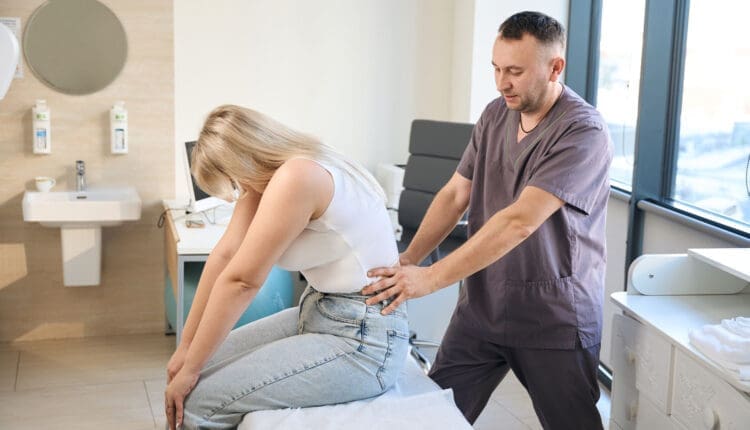
Common causes include lumbar disc herniation, disc bulging, spinal inflammation, facet joint irritation, and lower back instability. Because several structures can produce similar symptoms, a careful exam is important. A provider must determine whether the pain is coming from a disc, joint, ligament, nerve root, or a combination of these problems (Khorami et al., 2021).
That point is especially important in personal injury care. After trauma, patients may have overlapping issues such as muscle spasm, ligament strain, nerve irritation, and disc injury all at once. A complete treatment plan should not just ask, “How do we reduce pain?” It should also ask, “What tissue is injured, and how do we help it heal?”
What PRP therapy is
PRP stands for Platelet-Rich Plasma. It is made from a sample of the patient’s own blood. The blood is processed in a centrifuge to concentrate the platelets. These platelets contain growth factors and signaling molecules that help regulate tissue repair, inflammation, and healing responses.
In simple terms, PRP works by taking healing components from the patient’s own blood and placing them into an injured area where they may help the body repair damaged tissue more effectively. Research on PRP has shown that it can modulate inflammation, tissue remodeling, cellular activity, and healing, making it attractive for orthopedic, spinal, and nerve-related conditions (Chang et al., 2020; Wang et al., 2024).
This is why PRP is often called a regenerative treatment. Unlike treatments that only block pain for a short period, PRP is intended to support healing at the source of the problem.
How PRP may help sciatica
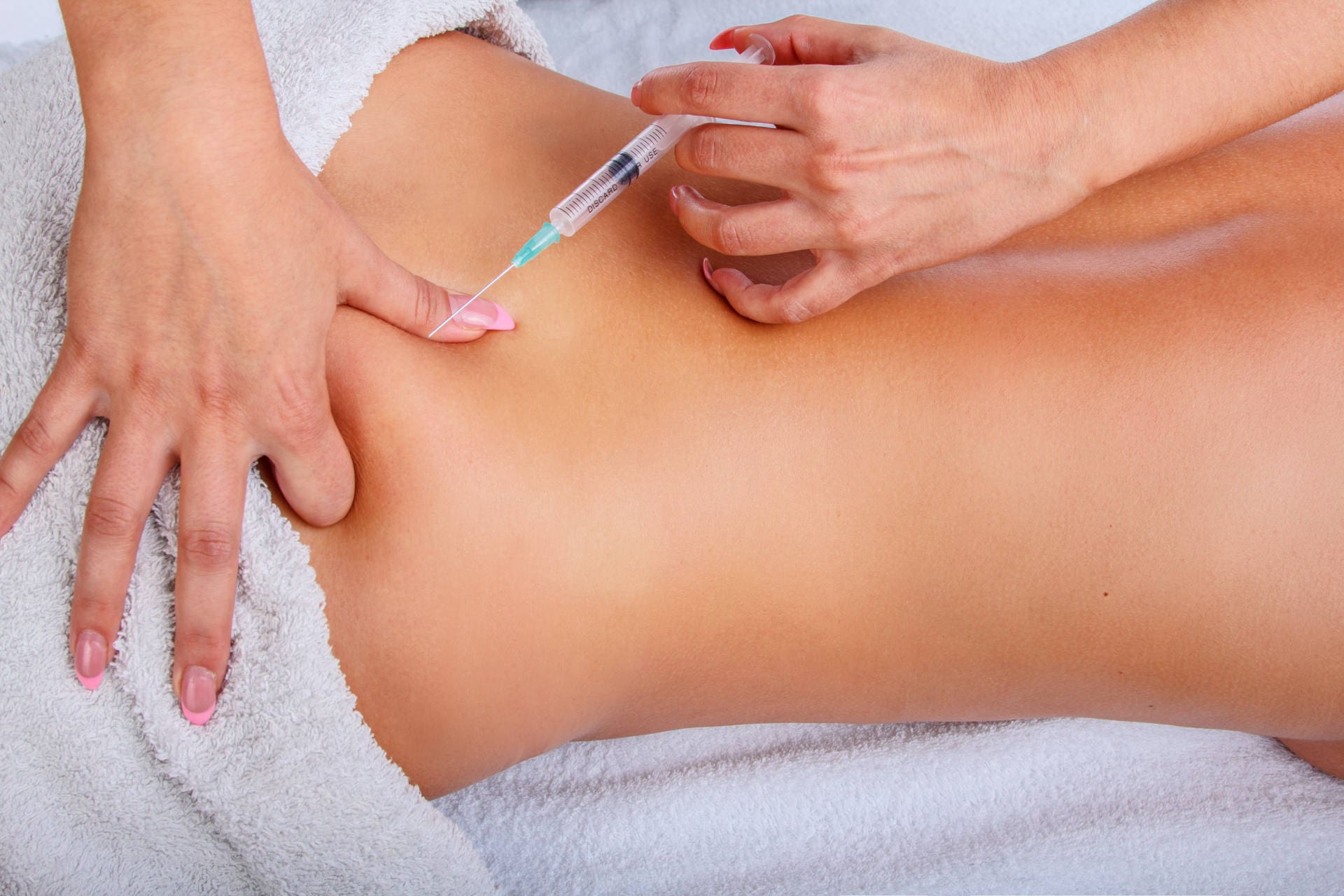
PRP may help sciatica by reducing inflammation and improving the local healing environment around injured spinal structures. In cases of disc-related sciatica, PRP may be injected into or near a damaged disc, around the irritated nerve root, or into related spinal tissues, such as ligaments or facet joints, depending on clinical findings and imaging.
The basic idea is that PRP may help:
- Calm inflammatory chemicals around the nerve
- Support tissue repair in damaged discs or soft tissues
- Improve the environment around irritated nerve roots
- Decrease pain signals coming from injured spinal structures
- Promote longer-term healing rather than short-term masking
This matters because many cases of sciatica are not only mechanical. The nerve is often both compressed and chemically irritated. That means inflammation plays a major role in the pain, numbness, and shooting sensations people experience. PRP may address that inflammatory component while also supporting tissue repair (Machado et al., 2023; Wang et al., 2024).
Some preclinical studies suggest PRP may also support nerve healing by improving the local environment for nerve repair, including effects on Schwann cells, inflammatory pathways, and axonal recovery. Even so, those findings should be interpreted carefully. They support the biologic potential of PRP, but they do not demonstrate that every patient with sciatica will achieve full nerve regeneration with a single injection (Wang et al., 2024).
Common PRP injection methods for sciatica
The two methods most often discussed for sciatica are epidural, PRP injection, and direct intradiscal PRP injection.
Epidural PRP injection
This method places PRP into the space around the irritated nerve root. This is often used when the main problem is radicular pain due to nerve root inflammation or compression from a disc problem. The goal is to reduce irritation around the nerve and support healing in the nearby tissues.
Intradiscal PRP injection
This method places PRP directly into a damaged disc. It may be considered if the disc itself appears to be a major source of pain. This is important because spinal discs have a poor blood supply, which slows healing. PRP may help improve the biologic environment inside the disc, although not every damaged disc is a suitable candidate for this approach (Naples Regenerative Institute, n.d.; Chang et al., 2020).
In personal injury settings, choosing the right target matters. A patient with a fresh disc herniation after a crash may need a different approach than someone with chronic degenerative disc disease that was worsened by trauma.
PRP compared with steroid injections
Steroid injections are commonly used for sciatica because they can reduce inflammation and decrease pain quickly. They may be helpful in the short term, especially during severe flare-ups. However, the evidence suggests that their benefit may fade over time.
A systematic review and meta-analysis found that epidural steroid injections can provide short-term and medium-term pain relief for sciatica caused by lumbar disc herniation, but long-term pain improvement is limited, and significant nerve function improvement was not clearly shown (Zhang et al., 2024). This is one reason many patients continue searching for options that may last longer.
PRP has drawn attention because some studies suggest it may offer more durable benefits in selected patients. In a randomized controlled trial, ultrasound-guided transforaminal PRP injection and steroid injection both improved pain and function in patients with lumbar disc herniation and radicular pain over one year, with no major difference between the groups and no reported complications. The authors suggested that PRP may be a useful alternative to steroids (Xu et al., 2021).
Another randomized study found that steroid injections were more effective at 1 month, but PRP showed continued clinical improvement through 6 months, whereas the steroid group’s benefit declined over time (Saraf et al., 2023). This pattern fits the way regenerative treatments are often described: slower at first but potentially more durable.
Why PRP can fit well in personal injury medicine
In personal injury care, patients and providers are often trying to do several things at once:
- Reduce pain
- Improve function
- Support tissue healing
- Avoid unnecessary surgery when possible
- Document the injury accurately
- Track progress over time
PRP may be well-suited to this setting because it is minimally invasive and targets the injured tissue. For some patients, it may offer a middle option between basic conservative care and surgery.
That said, PRP is not a stand-alone solution. A patient with sciatica after trauma usually benefits most when PRP is part of a larger plan that includes:
- A detailed history of the injury
- Physical examination
- Imaging when clinically indicated
- Chiropractic or manual care when appropriate
- Corrective exercise and rehabilitation
- Activity modification
- Functional medicine support for inflammation, sleep, and recovery
- Follow-up reassessment to track neurologic and functional changes
This full-picture approach is especially important in a personal injury practice, where the goal is not just to quiet pain but to support real recovery.
The value of an integrative clinic model
An integrative chiropractic clinic that includes APRNs and specialized certifications can offer broader support than a single-modality office. In the public clinical observations of Dr. Alexander Jimenez, DC, APRN, FNP-BC, the emphasis is on integrating chiropractic care, nurse practitioner oversight, rehabilitation, functional medicine, and individualized treatment planning to address both structural and whole-body healing (Jimenez, n.d.).
For sciatica, that kind of model can be valuable because each part of the team may address a different part of the problem:
- The injection-based provider may target the injured disc, facet, ligament, or nerve-related tissue
- The chiropractor may address spinal mechanics, joint movement, and posture-related stress
- The APRN may help coordinate diagnostics, medication review, imaging decisions, and whole-patient management
- Functional medicine principles may support recovery through better sleep, nutrition, inflammation control, and metabolic health
- Rehabilitation can help the patient restore strength, mobility, and safer movement patterns
This type of team-based care may be especially useful after motor vehicle accidents, where patients often have combined spinal, soft tissue, and nerve-related injuries.
Who may be a candidate for PRP for sciatica
PRP may be worth discussing for patients who have:
- Disc-related sciatica that has not improved enough with conservative treatment
- Recurrent nerve pain after an injury
- MRI or exam findings that suggest a clear injection target
- A desire to avoid surgery if possible
- Ongoing leg pain, numbness, or functional limits despite rest, therapy, or medications
However, not every patient is a candidate. PRP may not be the right choice for patients with severe neurologic compromise, major instability, or conditions that require urgent surgical evaluation.
Red flag symptoms that should be evaluated quickly include:
- Progressive leg weakness
- Loss of bowel or bladder control
- Saddle numbness
- Severe or rapidly worsening neurologic symptoms
Clinical practice guidelines support careful evaluation and timely referral when these issues appear (Khorami et al., 2021).
What patients should know about results
PRP is promising, but it should be discussed honestly. Not all patients respond the same way. Results often depend on:
- The true cause of the sciatica
- How long the injury has been present
- The condition of the disc or surrounding tissues
- Injection accuracy and technique
- Whether the patient follows through with rehabilitation
- The patient’s overall health and healing capacity
Studies on intradiscal PRP and spinal PRP treatments have generally reported improvements in pain and function with a favourable safety profile, but treatment protocols are not yet fully standardized across clinics and studies (Tuakli-Wosornu et al., 2016; Machado et al., 2023; Apostolakis & Kapsalaki, 2024). That means PRP should be presented as a promising option, not as a guaranteed cure.
Final thoughts
For many personal injury patients, sciatica is more than a pain problem. It is a tissue injury problem, a movement problem, and sometimes a nerve problem all at once. PRP therapy is appealing because it aims to support healing in the damaged area rather than merely masking symptoms for a short time.
When used in the right patient, PRP may help reduce inflammation, support tissue repair, and provide longer-lasting relief than more temporary options. In a personal injury setting, its value may be even greater when it is combined with accurate diagnosis, integrative chiropractic care, APRN-guided management, rehabilitation, and whole-body recovery support.
That is the real strength of a site like Personal Injury Doctor Group: the focus is not just on pain relief. It focuses on helping injured patients move toward meaningful healing, improved function, and a safer return to life after trauma.
References
- Apostolakis, E., & Kapsalaki, E. (2024). The current role of platelet rich plasma in the treatment of lumbar disc pathology.
- Chang, Y., Yang, M., Ke, S., Zhang, Y., Xu, G., & Li, Z. (2020). Effect of Platelet-Rich Plasma on Intervertebral Disc Degeneration In Vivo and In Vitro: A Critical Review.
- Jimenez, A. (n.d.). El Paso, TX Family Practice Nurse Practitioner and Chiropractor: Dr. Alex Jimenez, DC, APRN, FNP-BC, CCST, CFMP, IFMCP, ATN.
- Khorami, A. K., Oliveira, C. B., Maher, C. G., et al. (2021). Recommendations for Diagnosis and Treatment of Lumbosacral Radicular Pain: A Systematic Review of Clinical Practice Guidelines.
- Machado, E. S., de Souza, T. A. C., Meves, R., et al. (2023). Systematic Review of Platelet-Rich Plasma for Low Back Pain.
- Naples Regenerative Institute. (n.d.). How PRP Can Treat Your Sciatica.
- Saraf, A., Hussain, A., Sandhu, A. S., Bishnoi, S., & Arora, V. (2023). Transforaminal Injections of Platelet-Rich Plasma Compared with Steroid in Lumbar Radiculopathy: A Prospective, Double-Blind Randomized Study.
- Tuakli-Wosornu, Y. A., Terry, A., Boachie-Adjei, K., et al. (2016). Lumbar Intradiskal Platelet-Rich Plasma (PRP) Injections: A Prospective, Double-Blind, Randomized Controlled Study.
- Wang, J., Cheng, L., Hu, J., & Tang, J. (2024). Platelet-rich plasma (PRP) in nerve repair.
- Xu, Z., Liu, J., Wang, D., et al. (2021). Ultrasound-Guided Transforaminal Injections of Platelet-Rich Plasma Compared with Steroid in Lumbar Disc Herniation: A Prospective, Randomized, Controlled Study.
- Zhang, J., Zhang, R., Wang, Y., & Dang, X. (2024). Efficacy of Epidural Steroid Injection in the Treatment of Sciatica Secondary to Lumbar Disc Herniation: A Systematic Review and Meta-Analysis.

Comments are closed.