
Can Head Trauma Trigger Sciatica: What You Need to Know
Can Head Trauma Trigger Sciatica? How Brain–Spine Control, Upper Cervical Alignment, and Integrative Chiropractic Care Intersect
Summary: Head trauma can set off sciatica in several ways. After a traumatic brain injury (TBI), the brain’s motor control over trunk and hip muscles can falter. This may change posture and loading on the spine, irritate the sciatic nerve, and even contribute to abnormal bone growth (heterotopic ossification) that compresses the nerve over time. Severe head injuries may also misalign the upper cervical spine, starting a cascade that stresses the lower back and sciatic nerve. An integrative chiropractic plan—focused on gentle spinal realignment, neuromuscular retraining, inflammation control, and lifestyle support—can help alleviate pain, enhance function, and promote overall recovery.
Why a head injury can turn into sciatica pain
Brain–spine muscle control can break down
After a TBI, neural control of core and hip muscles can be disrupted. The result is poor timing of stabilizers, stiffness in some muscles and weakness in others, and compensations that change how you stand, walk, and bend. These changes increase shear and compression forces across the lumbar spine and sacroiliac region, making the sciatic nerve more vulnerable to irritation (Widerström-Noga et al., 2016; Scientific Reports, 2019). In TBI populations, pain is common and often linked with central sensitization—meaning the nervous system becomes more reactive to pain signals (Widerström-Noga et al., 2016). PMC+1
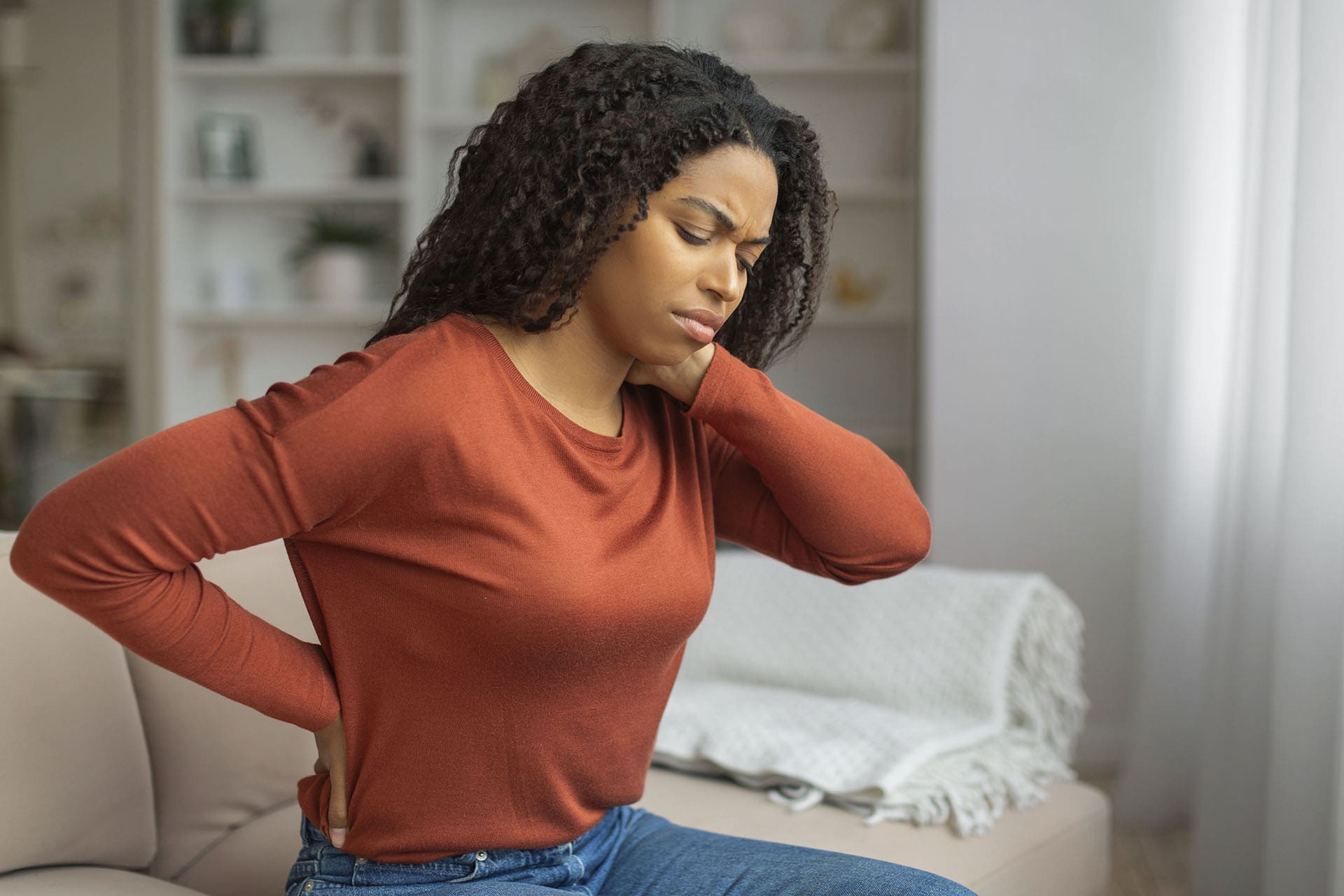
What that feels like: tight or achy low back; glute pain that shoots down the leg; hamstring “pulls” that don’t resolve; or numbness/tingling below the knee.
Upper cervical misalignment can cascade downward
Severe head injuries are frequently associated with cervical spinal injuries. Studies show TBI increases the risk of coexisting cervical trauma, especially at the upper cervical levels (Paiva et al., 2011; Riemann et al., 2022). When the head–neck segment is off, the body compensates from the rib cage down to the pelvis, often creating asymmetry at the sacrum and tension on the sciatic nerve pathway. PMC+1
Why that matters: even small upper cervical shifts can alter whole-spine posture, change gait mechanics, and increase lumbar disc and facet stress—prime conditions for sciatica to flare.
Heterotopic ossification (abnormal bone growth) can entrap the sciatic nerve
A less common but important TBI complication is neurogenic heterotopic ossification (HO)—the growth of bone within soft tissues after brain or spinal injury. HO around the hip can narrow spaces that the sciatic nerve travels through, leading to entrapment and chronic sciatica. Case reports and reviews document sciatic nerve compression from HO following TBI and other trauma (Safaz et al., 2008; Issack, 2008; Nóbrega et al., 2022). PubMed+2PMC+2
Clues to HO-related sciatica: deep buttock pain, restricted hip motion, and gradually worsening leg symptoms months after a major injury.
Neuroinflammation and pain sensitization amplify symptoms
Even “mild” TBI can drive pain through inflammatory signaling in the spinal cord. Preclinical work shows TBI upregulates spinal chemokine receptors (e.g., CXCR2), increasing nociceptive sensitization and pain behaviors (Li et al., 2019). Clinically, subacute pain after TBI is common and relates to multiple biopsychosocial predictors (Widerström-Noga et al., 2016). Nature+1
Head trauma and spine injuries often travel together
Epidemiologic research finds patients with serious head injuries have a notable risk of concomitant spine injury, including upper cervical trauma (Paiva et al., 2011; Iida et al., 1999; Marchesini et al., 2023). This overlap helps explain why sciatica and low-back pain sometimes follow a concussion or TBI. PMC+2Europe PMC+2
Head Injury/TBI Symptom Questionnaire:

How sciatica develops after a head injury: a simple chain reaction
-
Head impact ? brain control issues. Trunk/hip muscle timing and reflexes change.
-
Posture shifts. The body guards the neck and skull; ribs, pelvis, and lumbar segments compensate.
-
Load migrates downward. Abnormal forces stress lumbar discs, joints, and the piriformis/hip capsule.
-
Sciatic nerve gets irritated. Compression, shearing, or inflammatory spillover triggers leg pain.
-
Complications can add fuel. HO or capsular scarring near the hip may further entrap the nerve (Issack, 2008). PMC
Where CSF circulation fits in
Cerebrospinal fluid (CSF) cushions the brain and spinal cord, clears metabolic by-products (glymphatic function), and helps regulate central nervous system pressure. Disrupted CSF dynamics are implicated in several neurologic conditions, and body position and spinal motion can influence CSF flow (Brinker et al., 2014; Simon & Iliff, 2015; Chu et al., 2022). Though clinical research linking chiropractic adjustments to CSF normalization is still evolving, optimizing spinal mechanics and posture may support more efficient CSF movement and reduce secondary strain during recovery. BioMed Central+2PMC+2
What integrative chiropractic care can do
An integrative chiropractic approach combines precise spinal care with neuromuscular rehabilitation, nutrition, and lifestyle modifications to address both the mechanical and neuroinflammatory drivers of post-traumatic brain injury (TBI)- related sciatica.
1) Gentle spinal realignment (with attention to the upper cervical spine)
-
Goal: restore balanced head–neck–pelvis alignment to unload the lumbar spine and reduce sciatic nerve irritation.
-
Why upper cervical? It’s a frequent co-injury zone in TBI, and small corrections can improve global posture and gait symmetry (Paiva et al., 2011; Riemann et al., 2022). PMC+1
2) Neuromuscular retraining for brain–spine control
-
Core and hip timing drills include breathing-based bracing, glute-deep ab stabilization, and anti-rotation holds.
-
Gait and balance: eyes-open/closed stance tasks, tandem walking, and step-ups with trunk control.
-
Cervico-vestibular work: gentle neck proprioception and vestibular inputs if concussion symptoms persist.
These build consistent, reflexive stability that reduces abnormal loading on the sciatic pathway.
3) Inflammation and pain modulation
-
Manual therapies: soft-tissue mobilization of gluteals and deep rotators; nerve-glide techniques as tolerated.
-
Lifestyle: sleep, hydration, and anti-inflammatory nutrition (omega-3s, colorful produce) to support neural recovery.
-
Care coordination: prompt referral for imaging or physiatry if HO or progressive deficits are suspected.
4) CSF-supportive habits
-
Posture dosing: regular position changes (supine rest periods may alter CSF dynamics); gentle spinal mobility; walking.
-
Breath and pump: diaphragmatic breathing and rhythmic movement may assist fluid exchange (Brinker et al., 2014; Simon & Iliff, 2015). BioMed Central+1
Dr. Alexander Jimenez’s clinical observations
In integrative practice, Dr. Alexander Jimenez, DC, APRN, FNP-BC, emphasizes that patients with head injuries and sciatica often present with:
-
subtle upper cervical dysfunction plus pelvic asymmetry,
-
motor control gaps in the deep trunk and hip musculature,
-
and signs of centralized pain that outlast typical tissue healing.
In his clinic network, plans typically progress from gentle alignment and pain reduction to targeted neuromuscular retraining, followed by graded activity and return to function, while monitoring for red flags such as HO or new neurologic deficits (Jimenez, n.d.). View his educational content and case perspectives at dralexjimenez.com and on his LinkedIn profile. El Paso, TX Doctor Of Chiropractic
When to suspect heterotopic ossification (HO)
Consider HO if, weeks to months after TBI, you notice:
-
increasing buttock or hip pain,
-
progressive loss of hip motion, warmth, or a firm mass,
-
worsening sciatica despite correct lumbar mechanics.
Published cases show sciatic nerve entrapment from HO and myositis ossificans in the buttock—some requiring surgical decompression (Safaz et al., 2008; Guan et al., 2016; Nóbrega et al., 2022). If suspected, a prompt referral to an orthopedic specialist or PM&R specialist is essential. PubMed+2Deep Blue+2
A step-by-step, easy-to-follow care roadmap
-
Rule out emergencies. Any new bowel/bladder changes, saddle anesthesia, or rapidly progressive weakness demands urgent evaluation.
-
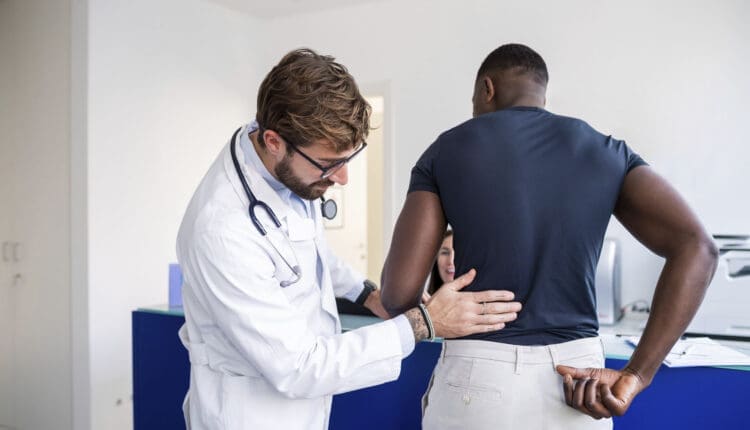
Baseline assessment. Neuro exam, upper cervical–pelvis alignment check, hip range of motion, neural tension tests, and movement screens.
-
Early relief (Weeks 1–3).
-
Gentle spinal and pelvic corrections; light soft-tissue work.
-
Pain-tolerant mobility (walking, hip swings, cat–cow).
-
Sleep and anti-inflammatory nutrition support.
-
-
Control & coordination (Weeks 2–6).
-
Core/hip timing drills; balance and gait work; graded nerve-glide exposure.
-
Cervico-vestibular drills if concussion symptoms linger.
-
-
Strength & resilience (Weeks 4–12).
-
Hinge and squat patterns; loaded carries; step-ups; hip extension work.
-
Activity-specific progressions (return to sport/work tasks).
-
-
Monitor for complications. If hip motion steadily declines or a firm mass appears, image for HO.
-
Integrate care. Coordinate with PM&R, neurology, or pain specialists for persistent central sensitization, suspected HO, or diagnostic uncertainty.
FAQs
Can a mild concussion really cause sciatica?
Yes—indirectly. Not every concussion does, but changes in muscle control, posture, and central pain processing can load the low back and irritate the sciatic nerve. Preclinical work also shows spinal pain sensitization after mild TBI (Li et al., 2019). Nature
What imaging might be needed?
If red flags or atypical progression are present, your clinician may consider lumbar MRI, hip imaging to evaluate HO, or targeted studies if nerve entrapment is suspected (Issack, 2008; Nóbrega et al., 2022). PMC+1
Does improving neck alignment really help the sciatic nerve?
It can. The neck sets the “top” of posture. Research has linked TBI with cervical co-injury; correcting upper cervical mechanics can reduce compensations throughout the thorax, pelvis, and lumbar spine, thereby easing stress on the sciatic pathway (Paiva et al., 2011; Riemann et al., 2022). PMC+1
What about CSF flow?
CSF dynamics are influenced by body position and may also be affected by spinal motion. While clinical trials are still in development, supporting healthy posture and movement is a reasonable and low-risk strategy during recovery (Brinker et al., 2014; Simon & Iliff, 2015; Chu et al., 2022). BioMed Central+2PMC+2
Practical home strategies that pair well with care
-
Posture should be broken up every 30–60 minutes. Sit tall, breathe low and slow, then stand and walk for 2–3 minutes.
-
Hip mobility + core timing: 1–2 sets/day of hip flexor stretch, glute bridges, dead bug breathing, and side planks.
-
Nerve-friendly walking: smooth, rhythmic steps; avoid long strides and hard heel strikes early on.
-
Sleep routine: a fixed schedule, a cool, dark room, and magnesium-rich foods (such as leafy greens and nuts/seeds).
-
Anti-inflammatory plate: fish or legumes, olive oil, berries/greens, whole grains; hydrate.
Bottom line
-
Head trauma can create downstream sciatica by disrupting neuromuscular control, altering posture, and magnifying pain signaling.
-
Severe TBIs can be associated with upper cervical injury, which can cascade into lower-back load and sciatic irritation.
-
Heterotopic ossification after TBI can compress the sciatic nerve and must be recognized early.
-
An integrative chiropractic plan—spinal realignment (especially upper cervical), neuromuscular retraining, inflammation management, and CSF-supportive habits—can help reduce pain, restore function, and support recovery.
References
-
Brinker, T., Stopa, E., Morrison, J., & Klinge, P. (2014). A new look at cerebrospinal fluid circulation. Fluids and Barriers of the CNS, 11(10). https://doi.org/10.1186/2045-8118-11-10 BioMed Central
-
Chu, D., Johnson, C. L., & van Donkelaar, P. (2022). The influence of body position on cerebrospinal fluid circulation. Veins and Lymphatics. https://www.pagepressjournals.org/index.php/vl/article/view/10947 PAGEPress Journals
-
Issack, P. S. (2008). Sciatic nerve injury associated with acetabular fractures. HSS Journal, 4(2), 12–18. https://pmc.ncbi.nlm.nih.gov/articles/PMC2642541/ PMC
-
Li, W., Ma, Z., Tian, X., et al. (2019). Mild traumatic brain injury causes nociceptive sensitization through spinal chemokine upregulation. Scientific Reports, 9, 18878. https://www.nature.com/articles/s41598-019-55739-x Nature
-
Marchesini, N., Paiva, W. S., et al. (2023). Concomitant trauma of brain and upper cervical spine. World Neurosurgery X, 20, 100177. https://pmc.ncbi.nlm.nih.gov/articles/PMC11599623/ PMC
-
Nóbrega, J. P. G., et al. (2022). Bilateral hip heterotopic ossification with sciatic nerve entrapment in a traumatic brain injury patient. BMC Neurology, 22, 279. https://pmc.ncbi.nlm.nih.gov/articles/PMC9453277/ PMC
-
Paiva, W. S., et al. (2011). Spinal cord injury and its association with blunt head trauma. World Neurosurgery, 75(2), 304–308. https://pmc.ncbi.nlm.nih.gov/articles/PMC3177586/ PMC
-
Safaz, I., Alaca, R., Bozlar, U., & Ya?ar, E. (2008). Bilateral sciatic nerve entrapment due to heterotopic ossification in a traumatic brain-injured patient. American Journal of Physical Medicine & Rehabilitation, 87(1), 65–67. https://pubmed.ncbi.nlm.nih.gov/18158431/ PubMed
-
Simon, M. J., & Iliff, J. J. (2015). Regulation of cerebrospinal fluid (CSF) flow in the brain. Cellular and Molecular Life Sciences, 72(4), 652–669. https://pmc.ncbi.nlm.nih.gov/articles/PMC4755861/ PMC
-
Widerström-Noga, E., et al. (2016). Subacute pain after traumatic brain injury is associated with multiple factors. The Clinical Journal of Pain, 32(12), 990–997. https://pmc.ncbi.nlm.nih.gov/articles/PMC4931745/ PMC
Additional resources:
-
Cleveland Clinic. Heterotopic ossification overview. https://my.clevelandclinic.org/health/diseases/22596-heterotopic-ossification Cleveland Clinic
-
El Paso Back Clinic. How head trauma can trigger sciatica and back issues. https://elpasobackclinic.com/how-head-trauma-can-trigger-sciatica-and-back-issues/amp/ elpasobackclinic.com
-
Dr. Alexander Jimenez: Can a head injury trigger sciatica? https://dralexjimenez.com/can-a-head-injury-trigger-sciatica-explained/ El Paso, TX Doctor Of Chiropractic
Comments are closed.