

Symptom Build-Up After Injury and Its Impact on Work


“I Can Work for an Hour—Then Everything Falls Apart”: Why Symptom Build-Up Matters After an Injury
Abstract: A person can look steady in a short exam and still lose the shift an hour later. This article explains why cumulative function matters after an auto or work injury: time until symptoms start, breaks, symptom climb, recovery time, productivity, and whether that window improves. It covers neck pain, headaches, leg symptoms, hand numbness, and fatigue in tech, fulfillment, and data center work, and how El Paso clinicians document tolerance without turning a flare into a character judgment.
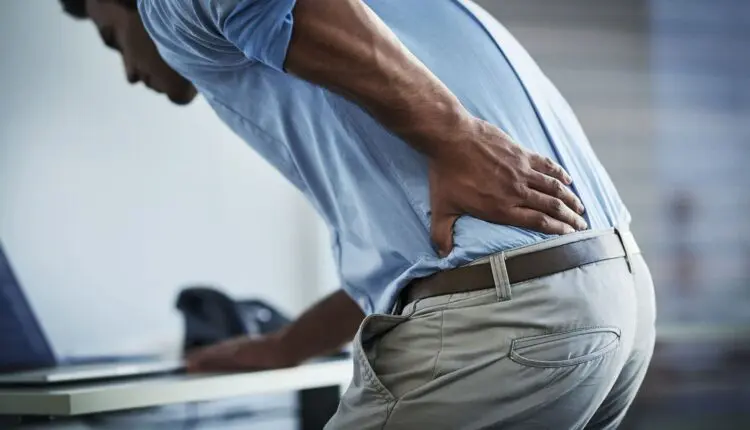
The ticket queue was quiet at 9:10 a.m. By 10:05 a.m., the same analyst had pushed the headset off and stopped typing. Nothing new had crashed. The neck had run out of time.
That pattern shows up on a fulfillment floor, in a data-center aisle, and at a home desk after a collision. Trouble arrives later: a headache, a tingling thumb, a heavy leg, or a scanner pass that slows. A brief visit can miss that curve. The workday does not.
Peak Ability Is Not the Same as Work Tolerance
Peak ability is the best a person can do once. Work tolerance is how long that effort holds before symptoms climb.
A clinician can watch a safe overhead reach or a brief typing sample and record that the motion is possible. That finding is real. It is not the whole job. A fulfillment associate may scan cleanly for 40 minutes and then miss labels as grip fades. An overnight monitor may pass a neck screen and still report that screen work falls apart after the first hour.
A valid functional capacity evaluation measures work-related ability and can support a return-to-work opinion, but it is not a diagnosis or a five-minute snapshot (Soo Hoo, 2019). Work-participation guidance also asks clinicians to document essential job demands and to repeat performance measures across care, not only at the first visit (Daley et al., 2021).
A clean record separates three ideas:
- What the person can do once, in a quiet room
- How long that task lasts before pain, numbness, headache, or fatigue rises
- How long it takes to settle after the task stops
Those lines protect the chart from guesswork.
Why the Hour Changes the Story
Sustained work is a different load from a single test. Desk and headset jobs hold the neck in a low-level static contraction. Warehouse and rack work involve bending and reaching tasks. Sedentary time of four hours or more is linked with higher neck-pain risk, and the link is stronger in employees than in students (Meng et al., 2025). Prolonged awkward posture and repetition have long been tied to neck and upper-limb pain (Walker-Bone & Cooper, 2005).
After an injury, that load can meet a weaker support system. Both whiplash-related and gradual neck pain show impaired deep neck-flexor endurance (Jull et al., 2004). Endurance-focused neck training can reduce flexor fatigue and pain in chronic neck pain (Falla et al., 2006). That does not prove a disc causes every 10 a.m. headache. It does explain a composed minute five and an unsteady minute fifty.
Build-up in this workforce often shows up as a one-sided headache after screen time, hand numbness after a long scanner block, leg heaviness after a long stand, shoulder fatigue after repeated reaches, or a fade that tracks with pain and short sleep.
A flare after testing is also common, including in healthy workers, and usually settles (Soer et al., 2008). A temporary increase is not automatically new damage. It is not a reason to ignore a pattern that returns at the same point in every shift.
What Belongs in the Record
Objective documentation describes what was observed and what the patient reported, tied to a task and a clock. It does not award a legal conclusion. The clinician’s job is to make the function clear.
Useful fields include:
- Time until symptoms begin. “Keyboard work tolerated 18 minutes before right neck pain rose from 2/10 to 5/10.”
- Frequency of breaks. “Needed a standing break every 15 to 20 minutes to keep the headache from climbing.”
- Symptom escalation. Location, quality, and number at the start, at first change, and at stop.
- Recovery time. “Neck pain returned to baseline in 25 minutes. Hand tingling lingered 40 minutes.”
- Productivity changes. Tickets closed, scan errors, rework, or tasks handed off.
- Tolerance across visits. The same task, repeated. Eight minutes, then 16, then 30 is a trend.
Job demands belong beside those numbers. A data-center crouch, a headset shift, and a pick-path are not interchangeable tests (Daley et al., 2021).
A chart line that travels well: “Hybrid analyst, 10 weeks after a rear-impact collision. Dual-monitor work: symptoms began at 22 minutes with right neck ache and temple pressure. The patient stopped at 40 minutes, reporting pain at 6/10 and mild right-hand tingling. Recovery in 30 minutes. Onset had been 12 minutes at the prior visit.”
That sentence does not claim the collision caused every later symptom. It shows a measured limit and a change over time.
A Calm Early Check Is Not a Full Shift
Patients often fear that a calm exam will be read as “nothing is wrong.” Early motion and a short neurologic check answer a safety question. They don’t replace an hour of scanning, cabling, or ticket work.
Clinicians can close that gap without theatrics: match the test to the job, record the clock, describe guarding or slowed keystrokes, and repeat the same measure so progress is visible.
Many El Paso technology, data center, and fulfillment employees use group health plans that include evaluation and conservative-care benefits. A benefits check is separate from the finding. Coverage varies, and verification comes before any promise.
Care That Respects the Curve
Beneficence means treating the limit the person actually lives with. The goal is more quiet hours, safer breaks, and a plan that doesn’t trade one injured tissue for a medication burden.
At Injury Medical Clinic PA, Dr. Alex Jimenez, DC, APRN, FNP-BC, CFMP, IFMCP, and Dr. Maria Guadalupe Cardenas, MD, share that record. Dr. Jimenez is a doctor of chiropractic and a board-certified family nurse practitioner (Texas APRN license #1191402, prescriptive authority #59628, NPI 1205907805). Dr. Cardenas, board-certified in internal medicine (Texas license #J2933, NPI 1164426748), directs review for comorbid illness, labs, and risk. The patient remains the decision-maker, and the existing medical team continues to coordinate care.
A typical ladder includes a safety screen, chiropractic care when the exam supports it, and graded endurance for the neck, grip, hips, and trunk. Electroacupuncture is an adjunct when pain blocks sleep or practice. Reserve image-guided injection for nerve pain that still blocks function. Shockwave, laser, or regenerative options fit a diagnosed tendon or joint problem, not a missing tolerance log. Drug-free structural care follows non-maleficence: it can reduce the pull toward long opioid use or an early operation the exam does not support. Autonomy is practical: the patient should read the clock times and help decide on modified duty, a paced return, or further testing.
What This Finding Does Not Prove
Symptom build-up is not proof of exaggeration, and it is not proof of permanent total disability. Healthy workers can hurt after a strenuous functional test, and that response often fades within days (Soer et al., 2008). A rising score does not, by itself, name the tissue.
Seek urgent care for new bowel or bladder loss, saddle numbness, rapidly worsening weakness, chest pain, a sudden severe headache unlike prior headaches, fever with a stiff neck, or symptoms after a new high-energy crash.
This article is clinical education. It is not a legal opinion, a workers’ compensation ruling, or a promise of payment.
The Question to Ask at the Next Visit
Do not ask only, “Can you do it?” Ask how long the task lasts before the symptom starts and whether that window is getting longer.
If the answer is about an hour, that hour should be in the local chart for the care team and any reviewing attorney. Please bring the shift pattern and job description. A measured curve is sturdier than a waiting-room impression.
Call Injury Medical Clinic PA at 915-850-0900 or visit 11860 Vista del Sol Dr., Suite 128, El Paso, TX 79936. Ask for a function-timed injury visit with Dr. Alex Jimenez, DC, APRN, FNP-BC, and medical oversight from Dr. Maria Guadalupe Cardenas, MD. Bring the job demands. Leave with a record that follows the clock.
Beyond the Surface: Understanding the Effects of Personal Injury | El Paso, TX
References
Daley, D., Payne, L. P., Galper, J., Cheung, A., Deal, L., Despres, M., Garcia, J. D., Kistner, F., & McClure, S. (2021). Clinical guidance to optimize work participation after injury or illness: The role of physical therapists. Journal of Orthopaedic & Sports Physical Therapy, 51(8), CPG1–CPG102. https://doi.org/10.2519/jospt.2021.0303
Falla, D., Jull, G., Hodges, P., & Vicenzino, B. (2006). An endurance-strength training regime is effective in reducing myoelectric manifestations of cervical flexor muscle fatigue in females with chronic neck pain. Clinical Neurophysiology, 117(4), 828–837. https://doi.org/10.1016/j.clinph.2005.12.025
Jull, G., Kristjansson, E., & Dall’Alba, P. (2004). Impairment in the cervical flexors: A comparison of whiplash and insidious onset neck pain patients. Manual Therapy, 9(2), 89–94. https://doi.org/10.1016/S1356-689X(03)00086-9
Meng, Y., et al. (2025). The associations between sedentary behavior and neck pain: A systematic review and meta-analysis. BMC Public Health, 25, 453. https://doi.org/10.1186/s12889-025-21685-9
Soo Hoo, E. R. (2019). Evaluating return-to-work ability using functional capacity evaluation. Physical Medicine and Rehabilitation Clinics of North America, 30(3), 541–559. https://doi.org/10.1016/j.pmr.2019.04.002
Soer, R., Groothoff, J. W., Geertzen, J. H. B., van der Schans, C. P., Reesink, D. D., & Reneman, M. F. (2008). Pain response of healthy workers following a functional capacity evaluation and implications for clinical interpretation. Journal of Occupational Rehabilitation, 18(3), 290–298. https://doi.org/10.1007/s10926-008-9132-5
Walker-Bone, K., & Cooper, C. (2005). Hard work never hurt anyone—or did it? A review of occupational associations with soft tissue musculoskeletal disorders of the neck and upper limb. Annals of the Rheumatic Diseases, 64(8), 1112–1117. https://doi.org/10.1136/ard.2004.028605

Comments are closed.