

Standing Endurance After Injury and Return to Work

“I Can Stand, but I Can’t Stay Standing”: Why Endurance Matters After an Injury
Abstract: After an injury, standing for two minutes in an exam room does not prove that someone can remain on their feet through a work shift. Standing endurance depends on pain control, muscle capacity, balance, nerve function, and how symptoms change with time. This article explains how clinicians document standing tolerance, why duration matters, and how rehabilitation can support return to work.
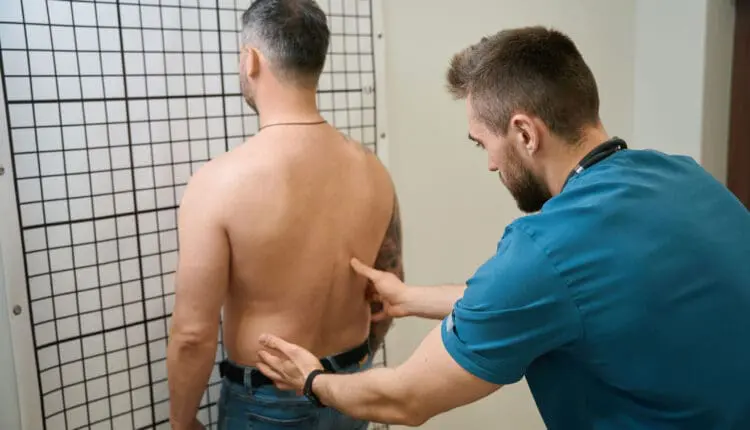
A patient may walk into an examination room, stand beside the table, and appear capable. Ten minutes later, the picture can change. Low-back pain may build. A leg may begin to burn or tingle. The person may shift weight constantly, reach for support, or need to sit down.
That difference matters after an auto collision or occupational injury. The question is not simply, “Can this person stand?” A more useful question is, “How long can this person stand before symptoms, fatigue, balance changes, or loss of function begin?”
For a software technician at a standing workstation, an Amazon associate at a pack station, or a data-center employee moving between racks, endurance can determine whether a return to work is realistic and safe.
Standing Ability Is Not Standing Tolerance
An office examination captures a moment. A work shift demands performance over time.
Functional capacity research supports evaluating what a worker can actually do in relation to job demands, rather than relying only on a diagnosis or a single strength measure (Soo Hoo, 2019). Work-rehabilitation guidance also emphasizes safe, productive participation in real work activities after injury or illness (Daley et al., 2021).
Standing tolerance may involve:
- How long the patient remains upright before symptoms increase
- Whether pain stays local or begins traveling into the buttock or leg
- Whether numbness, tingling, weakness, or heaviness develops
- How often the patient must shift, lean, walk, or sit
- Whether balance worsens as fatigue accumulates
- How quickly symptoms settle after a position change
- Whether tolerance improves from one visit to the next
These details provide a more complete record than simply stating that the patient can stand independently.
Why Symptoms May Build With Time
Standing is not automatically harmful. Research does not support treating standing itself as a universal cause of low-back pain. However, substantial occupational standing is associated with more low-back symptoms in some worker populations, and individual responses vary (Coenen et al., 2018).
After an injury, several factors may reduce endurance.
Back Pain and Mechanical Irritation
An injured or sensitized back may tolerate a short period of upright loading but become more symptomatic over time. Muscles may guard, movement may become limited, and the patient may begin compensating by leaning on one leg or bracing against a counter.
The change over time is clinically useful. It can show whether the person tolerates sustained loading, not merely whether they can assume the position.
Leg Symptoms and Nerve Irritation
Radiating pain, tingling, numbness, or weakness deserves careful assessment. Symptoms may reflect irritation involving a lumbar nerve root, a peripheral nerve, or another neurological process. Progressive neurological deficits require medical attention and may change decisions about imaging, referral, or work restrictions.
The clinician should document when symptoms begin, where they travel, whether they intensify with continued standing, and whether sitting or movement changes them.
Muscle Fatigue and Reduced Capacity
After time away from normal activity, strength and endurance can decline. A patient may have enough force to stand, yet insufficient trunk, hip, or leg endurance to maintain posture comfortably for a prolonged period.
This is why rehabilitation often progresses from basic movement to repeated and sustained tasks. Capacity must be rebuilt, not assumed.
Balance and Protective Movement
Pain can change how a person loads each leg. Fear of provoking symptoms can also create guarded movement. If a patient becomes less steady as fatigue develops, the finding may matter for jobs involving ladders, stairs, carts, equipment, uneven surfaces, or rapid position changes.
How Clinicians Document Standing Endurance
Effective injury documentation is specific, repeatable, and tied to function. It should describe what was observed rather than make broad conclusions unsupported by examination findings.
A standing-tolerance record may include:
- Baseline pain and neurological symptoms before standing
- Time standing begins
- Time symptoms first increase
- Maximum tolerated duration
- Pain location and intensity at that point
- New tingling, numbness, weakness, or heaviness
- Observable weight shifting, leaning, guarding, or loss of balance
- Need for sitting, walking, or external support
- Recovery time after the task ends
For example, “stood for 18 minutes before right leg tingling increased and the patient requested sitting” is more informative than “standing was painful.”
Serial measurements are especially valuable. If tolerance improves from 8 minutes to 20 minutes and then to 35 minutes, the record shows functional progress, even if the patient still reports some pain.
Endurance Can Matter as Much as Range of Motion
Range of motion and pain scores are useful, but they do not provide a complete picture. A patient may bend reasonably well during a brief examination and still be unable to remain upright long enough to complete job duties.
Likewise, a pain score of “4 out of 10” does not explain whether symptoms remain stable for an hour or rise rapidly after ten minutes.
Work capacity is task-specific. A data-center technician may need prolonged standing mixed with walking, crouching, lifting, and cable work. A warehouse employee may alternate standing with repeated reaches and package handling. A programmer using a sit-stand station may need frequent position changes rather than uninterrupted standing.
The goal is not to prove disability or prove readiness. The goal is to measure function accurately.
Building Standing Tolerance Through Coordinated Care
Treatment should follow the examination and diagnosed problem. For many patients, recovery may combine symptom control with progressive loading.
Chiropractic care may address mechanical joint restrictions and movement-related symptoms when clinically appropriate. Rehabilitation can then build trunk, hip, and leg capacity through graded standing, walking, strengthening, balance training, and job-specific tasks. Evidence-based low-back guidelines support exercise, education, manual approaches, and other nonpharmacologic strategies for appropriately selected patients (George et al., 2021).
Acupuncture or electroacupuncture may be considered as adjunctive options when persistent musculoskeletal pain or muscle guarding limits participation. They should not replace neurological evaluation, progressive exercise, or work-specific rehabilitation.
This approach reflects beneficence by aiming to restore useful capacity, not merely reduce a pain number. It also supports non-maleficence by prioritizing non-invasive options before higher-risk interventions when medically appropriate.
When Medical Oversight Changes the Plan
Some patients need more than musculoskeletal rehabilitation. Progressive weakness, worsening numbness, bowel or bladder changes, saddle-area sensory loss, unexplained systemic symptoms, or other concerning findings require prompt medical evaluation.
At Injury Medical Clinic PA in El Paso, Dr. Alex Jimenez, DC, APRN, FNP-BC, CFMP, IFMCP, combines chiropractic and advanced-practice medical training. Dr. Maria Guadalupe Cardenas, MD, a board-certified internal medicine physician, provides medical direction and collaboration for patients whose injuries intersect with neurological, metabolic, or other medical concerns.
That coordination allows us to consider examination findings, rehabilitation progress, medical risk, and work demands together. Advanced procedures are not automatic. They are selected only when the diagnosis, clinical findings, and expected benefit justify them.
A Safer Return to Work Is a Measured Process
Returning to work should not be based on one successful moment in the clinic. A safer decision considers whether the patient can perform required tasks repeatedly and for meaningful durations.
Recent evidence suggests that multidisciplinary rehabilitation combined with workplace-focused strategies may improve long-term disability in workers with low-back pain, although evidence for return-to-work outcomes remains limited and should be interpreted cautiously (Andersen et al., 2026).
That uncertainty makes careful measurement even more important.
Patients also retain autonomy throughout the process. They should understand what clinicians are testing, what findings mean, which options are available, and how recommendations fit with advice from their employer, primary physician, specialist, or existing medical team.
If you can stand but cannot stay standing, that distinction deserves documentation. Endurance is not a minor detail. It can reveal how an injury behaves under real-world demand, guide rehabilitation, support appropriate work modifications, and show meaningful improvement over time.
Multidisciplinary CTA
If standing tolerance has changed after an auto or workplace injury, a coordinated examination can help identify whether the limiting factor is mechanical pain, nerve irritation, weakness, balance, fatigue, or another medical issue. The Injury Medical Clinic PA team can integrate chiropractic evaluation, medical oversight, rehabilitation, and selected adjunctive therapies while coordinating with your existing healthcare team.
Personal Injury Rehabilitation | El Paso, TX
References
Andersen, K. S., Hansen, A. P., Pedersen, P., Langagergaard, V., Nielsen, C. V., Løvschall, C., & Pilegaard, M. S. (2026). Effectiveness of multidisciplinary biopsychosocial rehabilitation including workplace interventions for employees on sick leave due to low back pain: A systematic review. Work, 84(4), 929–945.
Coenen, P., Willenberg, L., Parry, S., Shi, J. W., Romero, L., Blackwood, D. M., Maher, C. G., Healy, G. N., Dunstan, D. W., & Straker, L. M. (2018). Associations of occupational standing with musculoskeletal symptoms: A systematic review with meta-analysis. British Journal of Sports Medicine, 52(3), 176–183.
Daley, D., Payne, L. P., Galper, J., Cheung, A., Deal, L., Despres, M., Garcia, J. D., Kistner, F., Mackenzie, N., Perry, T., Richards, C., & Escorpizo, R. (2021). Clinical guidance to optimize work participation after injury or illness: The role of physical therapists. Journal of Orthopaedic & Sports Physical Therapy, 51(8), CPG1–CPG102.
George, S. Z., Fritz, J. M., Silfies, S. P., Schneider, M. J., Beneciuk, J. M., Lentz, T. A., Gilliam, J. R., Hendren, S., & Norman, K. S. (2021). Interventions for the management of acute and chronic low back pain: Revision 2021. Journal of Orthopaedic & Sports Physical Therapy, 51(11), CPG1–CPG60.
Soo Hoo, E. R. (2019). Evaluating return-to-work ability using functional capacity evaluation. Physical Medicine and Rehabilitation Clinics of North America, 30(3), 541–559.
Comments are closed.