I hope you have enjoyed our blog posts on various health, nutritional and injury related topics. Please don't hesitate in calling us or myself if you have questions when the need to seek care arises. Call the office or myself. Office 915-850-0900 - Cell 915-540-8444 Great Regards. Dr. J
While bruising, soreness, and scrapes are common, whiplash and chronic whiplash injuries may not show for several days or weeks. While today’s vehicles are safer than ever, they can still only do so much when it comes to the body and musculoskeletal health. Being involved in an automobile accident, even a light tap can give a sudden jolt to the spine that although the individual might not have felt anything like discomfort or pain, it was enough to shift the disc/s out of place or set them up to shift out of place. No one wants to be involved in a car or motorcycle accident, but regardless of good driving habits, or how advanced the safety features on the vehicle might be, the average driver will be involved in three to four automobile accidents in their life.
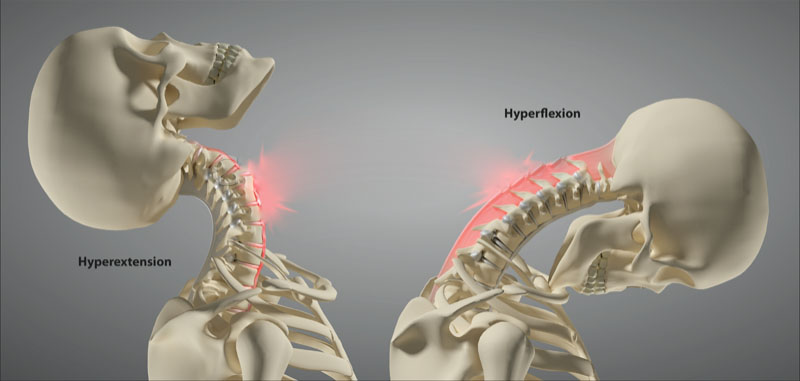
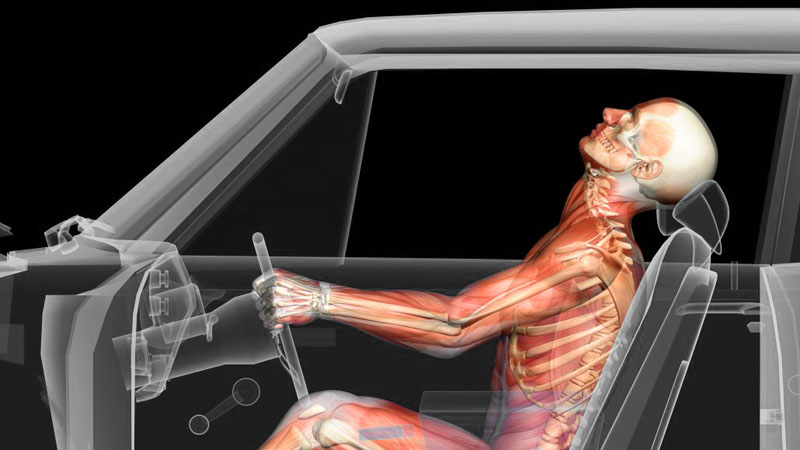
Whiplash and chronic whiplash injuries are common in motor vehicle accidents. More than 3 million Americans will see a doctor and a chiropractor for automobile accidents and whiplash effects. It only takes a 2.5 mph hit to cause an injury. And whiplash doesn’t only happen when hit from behind, there are several ways an individual can be subjected to whiplash, including being T-boned, amusement park rides, and falling off a bicycle or a horse.
Symptoms
Most whiplash symptoms develop in the first twenty-four hours, but this is not always the case. Common symptoms include:
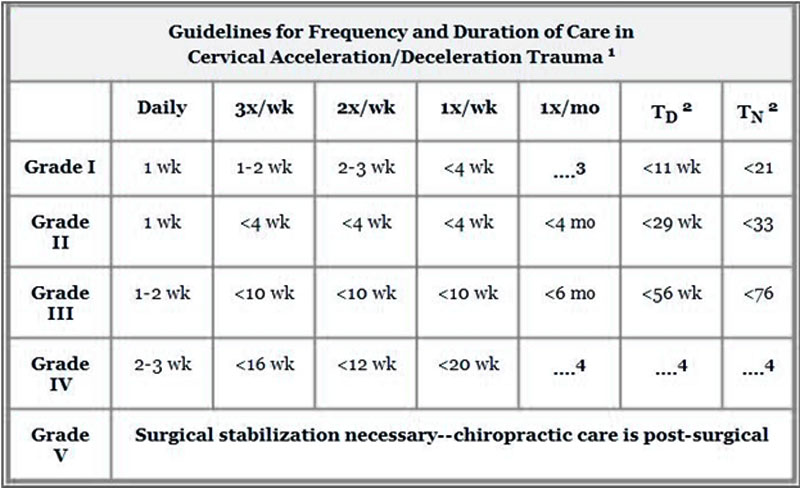
Most individuals realize they have whiplash a day or two after, but for others, it can take a few weeks or even months to present. Whiplash is classified by degree or grade:
Grade 0
The individual has no complaints and there are no symptoms/signs of physical injury.
Grade 1
There is neck pain but there are no physical signs of injury.
Grade 2
There are signs/symptoms of musculoskeletal damage and neck pain is presenting.
Grade 3
There are signs/symptoms of neurological damage and neck pain is presenting.
The average amount of time most individuals stay home from work is around 40 days. However, when whiplash pain lasts longer than a few weeks, it is deemed to be chronic whiplash.
Chronic Whiplash
Some individuals with whiplash experience painful symptoms for years. This is true of those that avoid or refuse medical attention and learn to live with it.
Treatment Options
There are very effective methods for treating whiplash and chronic whiplash injuries. Depending on the extent of the injury/s, developing the right treatment/rehabilitation plan requires individual consultation with a chiropractor to discuss options that can include:
The pain can be excruciating. Over-the-counter pain relievers like ibuprofen for temporary relief. However, the individual will need extended treatment to ensure it does not become chronic pain.
Neck Brace
Neck braces help limit the pain, but should not be worn for more than three or four days. If worn for too long the neck muscles are prevented from gaining the strength needed to support the head.
Don’t Sit For Too Long
Avoid keeping the head in any one position for too long. This includes sitting in bed, watching TV, or working at a desk. This places a large amount of pressure and stress on the neck, making the pain even more severe and longer-lasting.
Sleeping Properly and Comfortably
For many, it can be difficult to get into a comfortable position when sleeping. Sleeping on the back with the head turned to one side can worsen the pain. Try a high-quality ergonomic pillow that allows the individual to sleep on their side and takes the pressure off of the neck.
Spinal Alignment
Whiplash can cause the spine to shift out of alignment. This can lead to additional problems in the back or shoulders. It’s always a good idea to see a chiropractor that specializes in motor vehicle accident injuries to realign the spine and neck, as well as for rehabilitation to strengthen the muscles and prevent further injuries. See a chiropractor for an evaluation of the injuries and develop a customized treatment plan that works for the individual’s condition.
Everyone is different
Some individuals can be stiff and sore for a few days and then are okay with not much pain. Some individuals experience severe pain immediately after the wreck, while others have no pain for days or even weeks. Both scenarios are pretty common. Soft tissue injuries can be very deceiving. Some don’t experience any pain for months after the accident. Many don’t think they need to see a doctor or chiropractor because there is no pain or symptoms. However, underneath serious problems could be getting ready to present including:
Constant headaches
Numbness or pins and needles in the hands or arms
Pain between the shoulder blades
Poor posture
Chronic muscle tension
Painful spasms
Degeneration of the discs
Painful inflamed arthritis
The quick development of arthritis
Sore, tight, or inflexible muscles
Sleep disturbances
Fatigue
Dizziness
Body Composition
A decrease in physical activity
Physical inactivity is a primary factor in the progression of sarcopenia. Resistance exercise can help maintain muscle mass and help build muscular strength. Individuals that are more sedentary can exacerbate the effects of sarcopenia.
A decrease in motor neurons
Aging is accompanied by motor neuron loss resulting from cell death. This leads to a decrease in muscle fiber. This decrease in muscle fibers leads to:
Impaired performance
A reduction in functional capacity
A decreased ability to perform everyday tasks
Dr. Alex Jimenez’s Blog Post Disclaimer
The scope of our information is limited to chiropractic, musculoskeletal, physical medicines, wellness, and sensitive health issues and/or functional medicine articles, topics, and discussions. We use functional health & wellness protocols to treat and support care for injuries or disorders of the musculoskeletal system. Our posts, topics, subjects, and insights cover clinical matters, issues, and topics that relate and support directly or indirectly our clinical scope of practice.*
Our office has made a reasonable attempt to provide supportive citations and has identified the relevant research study or studies supporting our posts. We also make copies of supporting research studies available to the board and or the public upon request. We understand that we cover matters that require an additional explanation as to how it may assist in a particular care plan or treatment protocol; therefore, to further discuss the subject matter above, please feel free to ask Dr. Alex Jimenez or contact us at 915-850-0900. The provider(s) Licensed in Texas& New Mexico*
Specialties: Stopping the PAIN! We Specialize in Treating Severe Sciatica, Neck-Back Pain, Whiplash, Headaches, Knee Injuries, Sports Injuries, Dizziness, Poor Sleep, Arthritis. We use advanced proven therapies focused on optimal Mobility, Posture Control, Deep Health Instruction, Integrative & Functional Medicine, Functional Fitness, Chronic Degenerative Disorder Treatment Protocols, and Structural Conditioning. We also integrate Wellness Nutrition, Wellness Detoxification Protocols and Functional Medicine for chronic musculoskeletal disorders. We use effective "Patient Focused Diet Plans", Specialized Chiropractic Techniques, Mobility-Agility Training, Cross-Fit Protocols, and the Premier "PUSH Functional Fitness System" to treat patients suffering from various injuries and health problems.
Ultimately, I am here to serve my patients and community as a Chiropractor passionately restoring functional life and facilitating living through increased mobility and true functional health.








Comments are closed.