
Shoulder Pain Diagnosis and Treatment for Healing
Shoulder Pain Diagnosis and Treatment After Injury: An Integrative Approach
Abstract
Shoulder pain is a complex and often debilitating condition that affects millions of people. Understanding the intricate anatomy of the shoulder and the precise nature of an injury is the first step toward effective healing. This educational post will take you on a detailed journey through the advanced diagnostic and therapeutic techniques we employ at our clinic. I will share insights from leading researchers and demonstrate how we use modern, evidence-based methods, such as ultrasound-guided diagnostics and regenerative injections.
We will explore the physiological basis of shoulder injuries, including supraspinatus and subscapularis tendon tears, and discuss the rationale for our multifaceted treatment protocols. A key focus will be our integrative model of care, which combines my expertise in chiropractic and functional medicine with the vital medical oversight of our Medical Director, Dr. Maria Guadalupe Cardenas, MD. This collaborative approach ensures that our patients receive a comprehensive, safe, and personalized treatment plan designed to restore function and promote long-term wellness.
Our Collaborative Care Model: The Power of Integration
At Injury Medical Clinic PA, we believe that the most effective path to healing lies in a multidisciplinary, integrated approach. Our practice is built on a collaborative foundation where different medical disciplines work in synergy. I, Dr. Alex Jimenez, bring my extensive background as a Doctor of Chiropractic (DC) and a Board-Certified Family Nurse Practitioner (FNP-BC), along with advanced certifications in functional and integrative medicine. This allows me to view health through a holistic lens, focusing on biomechanics, musculoskeletal integrity, and the underlying physiological factors that contribute to injury and disease.
This framework is strengthened by the invaluable partnership with our Medical Director and Collaborative Physician, Dr. Maria Guadalupe Cardenas, MD. Dr. Cardenas is Board Certified in Internal Medicine and brings over 40 years of profound clinical experience to our team. Her role is crucial; she provides essential medical direction, oversight, and collaborative consultation on patient cases. This multidisciplinary setup, where an MD works alongside a DC, is common in progressive injury and integrative care clinics. It ensures that every treatment plan, especially those involving medical procedures like injections, is medically sound, safe, and appropriate for the patient’s overall health profile.
Together, our team integrates:
- Chiropractic Care: Focusing on spinal alignment, joint mobility, and nervous system function to optimize the body’s innate healing capabilities.
- Medical Oversight (Internal Medicine): Dr. Cardenas provides diagnoses, manages underlying medical conditions, and ensures all treatments meet the highest standards of medical care.
- Functional Medicine: We investigate the root causes of dysfunction, examining factors such as nutrition, inflammation, and metabolic health.
- Regenerative Therapies: Utilizing advanced treatments like Platelet-Rich Plasma (PRP) to stimulate tissue repair.
- Rehabilitation and Personal Injury Care: Creating customized programs to restore strength, stability, and function after an injury.
This comprehensive model allows us to address not just the symptoms but the entire person, paving the way for more profound and lasting recovery.
Uncovering the Source: Advanced Ultrasound Diagnostics for Shoulder Pain
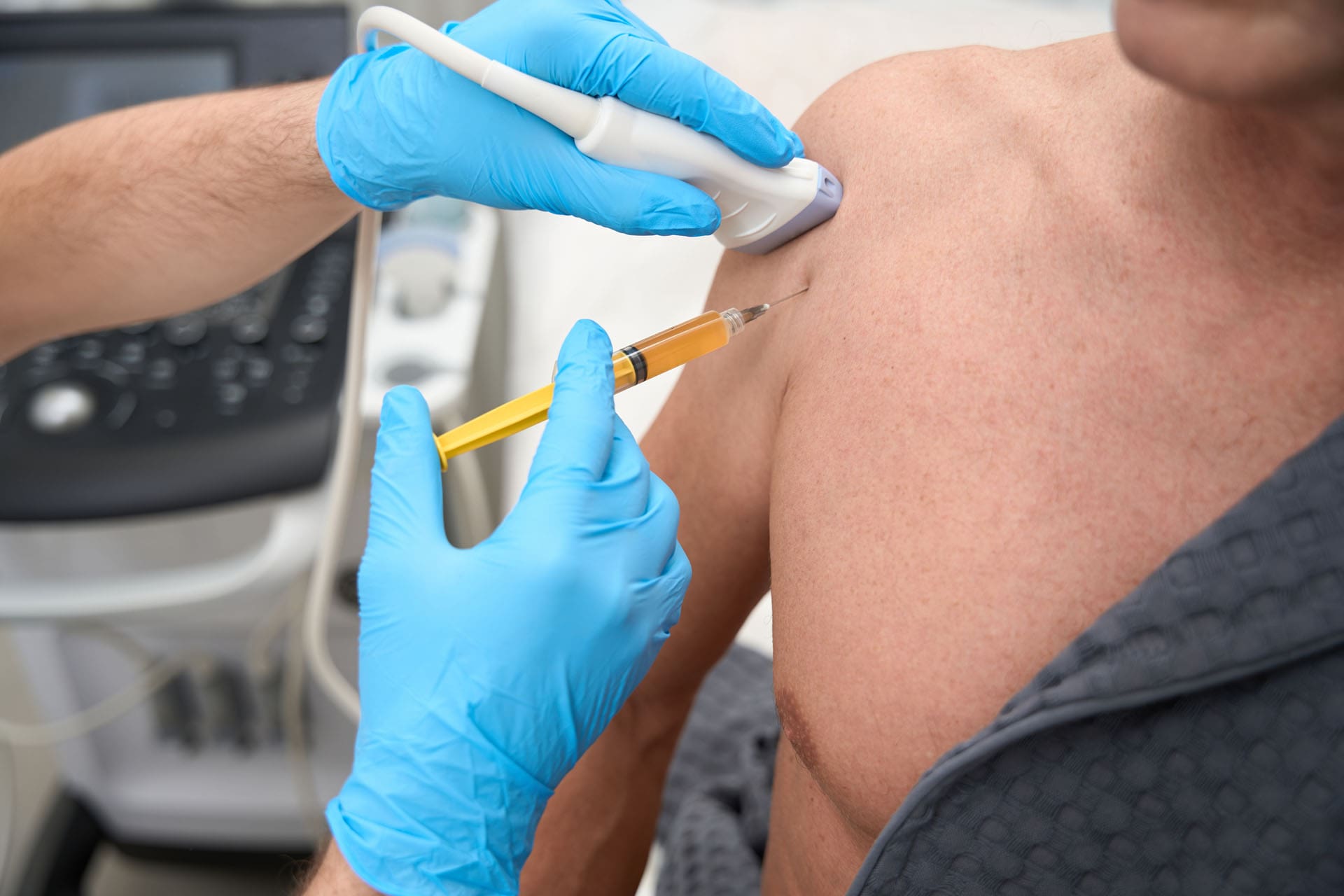
When a patient presents with shoulder pain, our first priority is to make a precise, accurate diagnosis. While physical exams are essential, we gain a much deeper understanding by examining the underlying structures directly. For this, we rely heavily on musculoskeletal ultrasound. This powerful, non-invasive imaging tool allows us to see the muscles, tendons, ligaments, and joints in real-time, providing a dynamic view of the shoulder’s function and pathology.
Let’s walk through an assessment of a patient’s shoulder
As I place the ultrasound transducer on the shoulder, the screen reveals a detailed cross-section of the anatomy.
- Identifying Key Structures: The bright, distinct white line we see on the screen is the surface of the humeral head (the “ball” of the shoulder joint). Just above it, the dark gray layer represents the articular cartilage, the smooth tissue that allows the joint to move without friction. The area where the tendon attaches to the bone is known as the “footprint.” This is a critical area we examine for signs of injury.
- Detecting Tendon Tears: As I move the transducer, I’m looking for disruptions in the tendon’s normal fibrillar pattern. A healthy tendon appears as a well-organized, bright, and fibrous structure. In this case, we can see a gap in the supraspinatus tendon, a key rotator cuff muscle. This gap indicates a tear. We also note that it appears to be a partial-thickness tear, meaning it doesn’t go all the way through the tendon. This is an important distinction, as the patient still retains significant strength because the tendon is not fully retracted or “jumped all the way back.”
- Mapping the Neurovascular Bundle: Precision is paramount, especially when planning for an injection. I use the ultrasound to locate the delicate neurovascular bundle—the collection of nerves and arteries. In the shoulder, I can identify the nerve and the adjacent artery. By marking their location, I can plan a safe trajectory for any needle-based procedure, ensuring these vital structures are avoided. This is a fundamental step in performing procedures like a suprascapular nerve block, which we use to manage pain effectively.
A Multi-Pronged Treatment Strategy
Once we have a clear diagnostic picture, we can formulate a comprehensive treatment plan. For a patient with multiple injuries—such as a supraspinatus tear, infraspinatus tendinopathy, and acromioclavicular (AC) joint arthritis—a multi-pronged approach is necessary. Our goal isn’t just to patch a single problem; it’s to create an environment that fosters holistic healing throughout the entire shoulder complex.
Here is how I map out the treatment sites, using the ultrasound for guidance:
- Supraspinatus and Infraspinatus Tendons: These are the primary sites of injury. We will target the tears directly with a regenerative solution to stimulate repair.
- Intra-articular Injection: I will perform an injection directly into the glenohumeral joint space. This is called an intra-articular injection. This technique helps reduce inflammation within the joint capsule and improve the overall health of the cartilage. I plan my needle trajectory at approximately a 45-degree angle to slip precisely into the space.
- Acromioclavicular (AC) Joint: This patient also exhibits arthritis in the AC joint, the small joint at the top of the shoulder. We can see it on the ultrasound as a bright white dot. If we have enough injectate, addressing this area will help alleviate pain from an additional source.
- Subscapularis and Biceps Tendon: We also examine the front of the shoulder, assessing the subscapularis and biceps tendons. If pathology is present, these areas will also be included in the treatment plan.
Planning the Intervention
By marking each of these locations beforehand, I create a clear and efficient roadmap for the procedure. This methodical preparation is part of our “sausage bar” approach—everything is prepped, organized, and laid out in advance, allowing me to focus entirely on the patient and the technical execution of the procedure. This efficiency also empowers my team—nurses and lab technicians—to handle other critical patient care tasks, like preparing biologics (e.g., PRP), performing laser or shockwave therapy, and making follow-up calls.
The Science of Healing: Regenerative Injections and Nerve Blocks
The cornerstone of our treatment for this patient will be regenerative medicine, specifically injections designed to promote tissue repair. The choice of injectate is critical and depends on the specific goals of the treatment.
- Platelet-Rich Plasma (PRP): For intratendinous injections targeting a tendon tear, PRP is an excellent choice. PRP is derived from the patient’s own blood. We draw a small amount of blood and process it in a centrifuge to concentrate the platelets. These platelets are rich in growth factors—powerful proteins that act as signaling molecules to orchestrate the body’s natural healing cascade. When injected into the damaged tendon, these growth factors stimulate cellular recruitment, proliferation, and differentiation, effectively kickstarting the repair of torn tissue.
- The Importance of Anesthesia and Nerve Blocks: Patient comfort is a top priority. Many of these injections, while therapeutic, can be uncomfortable. To manage this, we often perform a nerve block before the main procedure. By injecting a local anesthetic (like lidocaine) around the suprascapular nerve, we can numb a significant portion of the shoulder. This makes the subsequent regenerative injections far more tolerable. I always use ultrasound guidance for these blocks to ensure the anesthetic is delivered precisely to the target nerve without affecting nearby arteries. This technique is so effective that patients often feel minimal discomfort during the injections.
The Procedure: A Step-by-Step Walkthrough
With the plan set and the patient comfortable, the procedure begins. I work methodically from back to front, addressing the less sensitive areas first.
- Intra-articular Injection: I begin with the intra-articular injection into the main shoulder joint. Using an “in-plane” technique, I guide the needle directly into the joint space under ultrasound guidance. I can see the needle tip as a bright dot on the screen. I inject the fluid, which appears as a dark area, and watch it spread throughout the joint, bathing the cartilage. This is often a large-volume hydrodissection, in which the injected fluid gently breaks up adhesions and creates space within the tight joint capsule.
- Tendon Injections: Next, I move to the supraspinatus and infraspinatus tendons. I carefully guide the needle to the site of the tear. Here, I use a technique called fenestration, in which I make multiple small passes with the needle into the damaged tissue. This micro-trauma stimulates a localized inflammatory response, which signals the body to initiate healing. I then inject small amounts (aliquots) of PRP directly into the tear, ensuring it fills the defect. I am constantly watching the ultrasound screen to confirm the PRP is being delivered exactly where it is needed.
- AC Joint and Subscapularis: Finally, I address the AC joint and the subscapularis tendon at the front of the shoulder. The AC joint is a very small space, so it requires significant precision to enter. For the subscapularis, a large, multi-pennate muscle, I ensure the injection is delivered into the mid-belly of the muscle to address any tendinopathy.
Throughout the process, I am in constant communication with the patient, checking on their comfort level. The prior nerve block typically works wonders, and most patients are surprised by how little they feel.
The Role of Chiropractic Care in Recovery and Rehabilitation
The injections are a powerful tool to stimulate tissue repair, but they are only one part of the healing journey. True, lasting recovery requires restoring proper function, mobility, and stability to the shoulder. This is where integrative chiropractic care becomes indispensable.
Following the regenerative procedure, our focus shifts to rehabilitation. My role as a chiropractor is to ensure that the entire kinetic chain functions optimally. A shoulder injury does not exist in isolation; it is often linked to or exacerbated by dysfunction elsewhere, particularly in the cervical and thoracic spine.
Here’s how chiropractic care supports the recovery process:
- Restoring Spinal and Joint Biomechanics: I perform specific chiropractic adjustments to the neck (cervical spine) and upper back (thoracic spine). Misalignments in these areas can alter nerve function and change the biomechanics of the shoulder girdle, leading to muscle imbalances and abnormal stress on the rotator cuff. By restoring proper alignment, we ensure that the nerves supplying the shoulder muscles function without interference and that the scapula (shoulder blade) moves correctly.
- Improving Scapular Dyskinesis: Many shoulder problems stem from poor scapular movement patterns, a condition known as scapular dyskinesis. We use manual therapies and targeted exercises to retrain the muscles that control the scapula, such as the serratus anterior and lower trapezius. This ensures the shoulder joint remains centered and stable during arm movements.
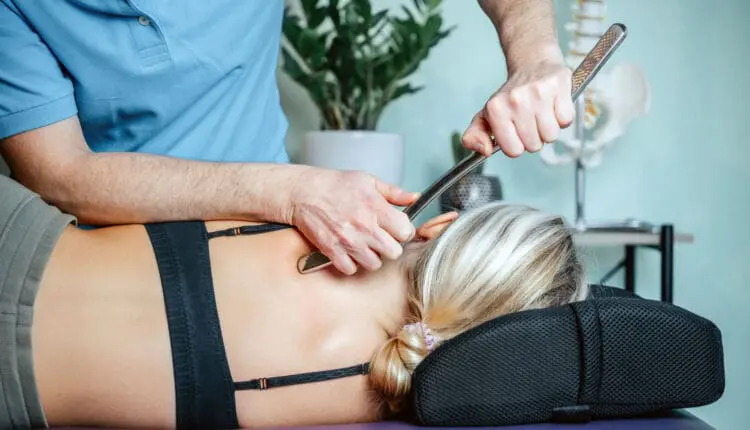
- Soft Tissue Mobilization: I use techniques such as the Active Release Technique (ART) or the Graston Technique to break down scar tissue and adhesions in the muscles and fascia surrounding the shoulder. This improves flexibility, reduces pain, and restores normal muscle function.
- Personalized Rehabilitation Program: The final piece is a customized exercise program. We start with gentle range-of-motion exercises to prevent stiffness. As the tissue heals, we progress to strengthening exercises, focusing first on the stabilizing muscles of the rotator cuff and scapula. The goal is to build a strong, resilient shoulder that is resistant to future injury. The “bird-dog” exercise, for example, is a fantastic movement for integrating core stability with shoulder and hip function.
This combination of advanced medical intervention, guided by Dr. Cardenas, and hands-on chiropractic and rehabilitative care creates a powerful synergy. We not only repair the damaged tissue but also correct the underlying functional problems that led to the injury in the first place. This is the essence of true integrative medicine—a patient-centered approach that leverages the best of multiple disciplines to achieve optimal health. Following the procedure, I advise patients to expect some soreness for 48 to 72 hours but to begin gentle movements as tolerated to facilitate a swift and successful recovery.
References
- Finnoff, J. T., Hall, M. M., & Silver, J. K. (2015). The role of ultrasound in the diagnosis and management of rotator cuff pathology. PM&R: The Journal of Injury, Function, and Rehabilitation, 7(5), 532–544.
- Foster, Z. J., Voss, T. T., & Hatch, J. (2015). The role of platelet-rich plasma in the treatment of rotator cuff pathology: a systematic review. Orthopaedic Journal of Sports Medicine, 3(7), 2325967115595267.
- Kuhn, J. E. (2009). The disabled throwing shoulder: spectrum of pathology. Instructional Course Lectures, 58, 423–438.
- Ludewig, P. M., & Reynolds, J. F. (2009). The association of scapular kinematics and glenohumeral joint pathologies. Journal of Orthopaedic & Sports Physical Therapy, 39(2), 90–104.
Comments are closed.