
Chiropractic and ESWT After Injury: A Guide
How Integrative Chiropractic Care and ESWT Support Flexibility After Injury
Flexibility is easy to take for granted until pain, stiffness, or an injury starts to limit how the body moves. After a car accident, workplace injury, sports injury, or repetitive strain problem, many people notice that simple movements become harder. Turning the neck, raising the shoulder, bending the back, or walking with a normal stride may suddenly feel tight, painful, or weak. That is where integrative chiropractic care and Extracorporeal Shockwave Therapy, or ESWT, can work together to help.
For a practice geared toward personal injury care, flexibility is not just about athletic performance. It is about function, recovery, and quality of life. When joints are not moving properly, and soft tissues become inflamed or scarred, the body often starts to compensate. One area tightens, another area overworks, and pain can spread through the neck, back, shoulders, hips, knees, or feet. Integrative chiropractic care aims to restore proper movement patterns, while ESWT targets damaged soft tissues that may be slowing recovery. Together, these approaches can help patients move more freely and heal more effectively (Cleveland Clinic, n.d.; Intouch Chiropractic, 2024).

Why Flexibility Matters in Personal Injury Recovery
After an injury, reduced flexibility is common. Swelling, inflammation, scar tissue, muscle guarding, tendon irritation, and joint dysfunction can all interfere with normal motion. A person may feel stiff in the morning, sore after sitting too long, or unable to perform usual tasks without discomfort.
In a personal injury setting, lost flexibility can affect:
-
Walking comfortably
-
Turning the head while driving
-
Lifting and carrying objects
-
Reaching overhead
-
Sitting or standing for long periods
-
Returning to work duties
-
Rebuilding strength and endurance
When flexibility is reduced, the body may begin using poor movement patterns to avoid pain. Over time, those compensation patterns can place extra stress on nearby muscles and joints. That is one reason why a complete recovery plan should address both pain and movement quality, not just symptoms alone (Gentle Chiropractic, 2025; Texas Medical Association Clinic, 2025).
What Integrative Chiropractic Care Means
Integrative chiropractic care goes beyond a simple adjustment. It focuses on improving how the entire musculoskeletal and nervous system works together. In many cases, treatment may include spinal or extremity adjustments, soft-tissue therapies, stretching, therapeutic exercise, and guidance on posture and recovery habits.
According to the Cleveland Clinic, chiropractic care may include joint adjustments, hands-on soft-tissue treatment, exercises, and stretches designed to support mobility, stability, and function. This broader approach is especially helpful in injury recovery because injured tissues often affect multiple parts of the body (Cleveland Clinic, n.d.).
For example, a whiplash injury may involve:
-
Restricted motion in the cervical spine
-
Muscle tension in the neck and shoulders
-
Mid-back stiffness
-
Headaches related to tension and posture
-
Guarded movement due to pain
An ankle or Achilles injury may involve:
-
Calf tightness
-
Foot mechanics changes
-
Balance problems
-
Compensations at the knee and hip
-
Reduced walking efficiency
This is why integrative chiropractic care is valuable in personal injury cases. It looks at how the whole body is responding, not only where the pain is felt.
How Chiropractic Care Helps Maintain and Restore Flexibility
Chiropractic care helps flexibility by improving joint mechanics, reducing muscle tension, and supporting better nervous system function. When joints move more normally, the surrounding muscles often do not have to tighten as much to protect the area. That can help reduce stiffness and improve range of motion.
Restoring joint mobility
Restricted joints can create stiffness, pain, and altered movement patterns. Chiropractic adjustments are used to improve motion in the spine and extremities. Several chiropractic sources cited in this article describe improved range of motion and reduced stiffness following care focused on restoring proper alignment and motion (Gentle Chiropractic, 2025; Rodgers Stein Chiropractic, 2025a).
Reducing muscle tension
After an injury, muscles often tighten to guard the body. While this may be protective at first, chronic tension can reduce flexibility and worsen pain. Integrative chiropractic care often includes soft-tissue work and stretching to help muscles relax and function more normally (Cleveland Clinic, n.d.).
Supporting nervous system function
Movement depends on good communication between the nervous system, muscles, and joints. When spinal or joint restrictions interfere with efficient movement, the body may become less coordinated and more guarded. Chiropractic care is often used to reduce these restrictions and improve more natural movement patterns (Think Vida, 2024).
Improving movement efficiency
Flexibility is not only about being loose. It is about moving in a controlled and efficient way. Better mechanics can help patients return to daily activities with less strain and a lower risk of re-injury. That is especially important in personal injury recovery, where the goal is often to restore real-world function, not just provide short-term relief (Texas Medical Association Clinic, 2025).
The Role of Therapeutic Exercise and Stretching
A strong flexibility program usually includes more than hands-on treatment. Stretching and therapeutic exercise help reinforce the gains made during chiropractic care. They can help retrain the body, improve posture, and build support around healing tissues.
Common goals of stretching and exercise in a personal injury plan include:
-
Improving range of motion
-
Reducing stiffness
-
Supporting stability
-
Restoring coordination
-
Preventing repeat strain
-
Helping patients return to work or activity safely
This combination of adjustment, movement training, and tissue support can make daily activities feel easier and less painful over time (Chiropractic Fitness, 2024; OAA Orthopaedic Specialists, 2025).
What ESWT Is and Why It Matters
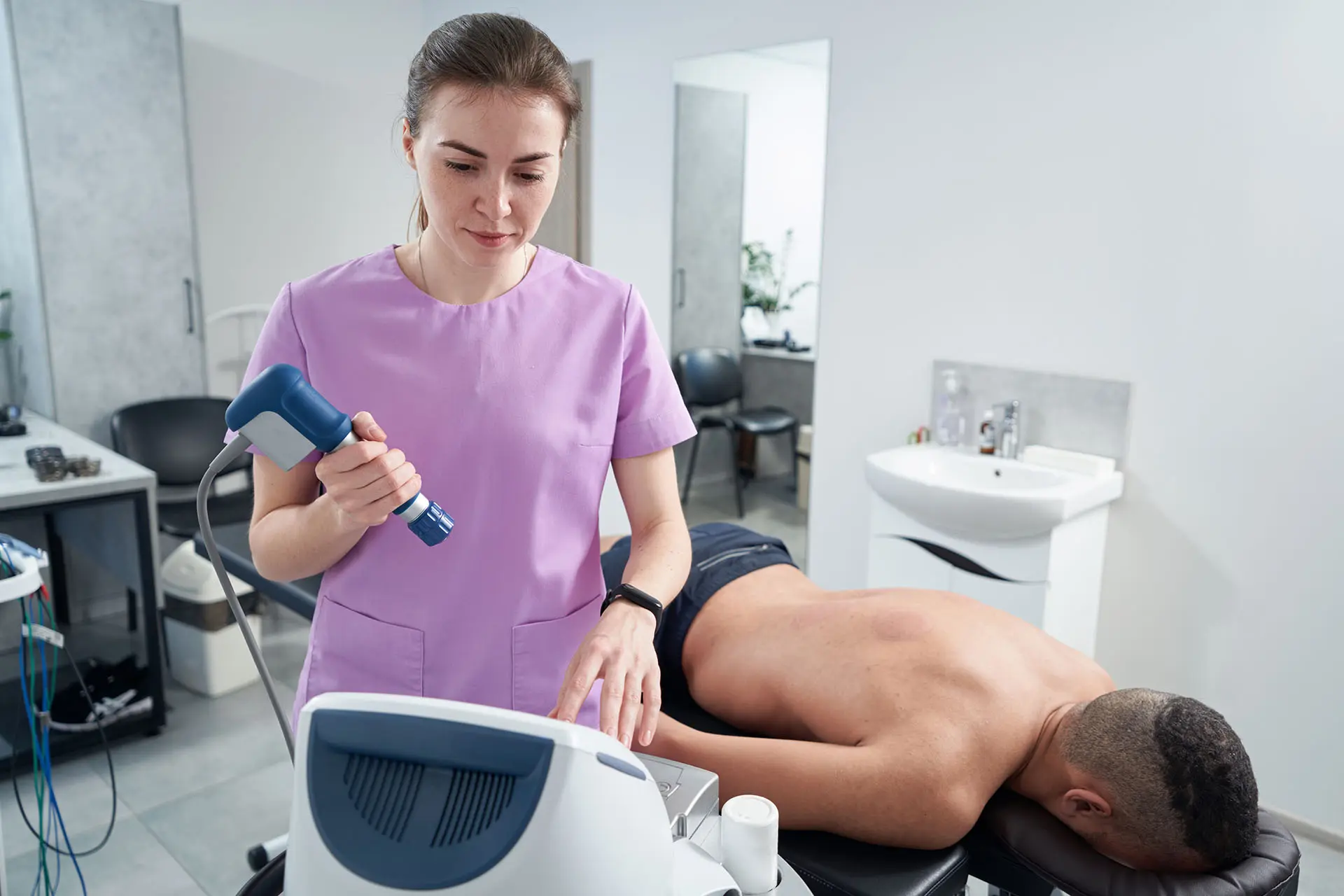
Extracorporeal Shockwave Therapy, or ESWT, is a noninvasive treatment that uses acoustic waves to stimulate healing in injured soft tissues. It is often used when flexibility is limited by tendon problems, scar tissue, chronic inflammation, or long-standing muscle tightness.
The sources provided for this article describe ESWT as a therapy that may help by:
-
Increasing blood flow
-
Stimulating tissue repair
-
Supporting collagen remodeling
-
Breaking down scar tissue or calcific buildup
-
Reducing pain
-
Improving function and mobility
These effects can be very important after an injury. Even if joint motion improves, soft tissues may remain tight or painful. That is where ESWT may add value by helping the tissue heal and remodel more effectively (Intouch Chiropractic, 2024; Chiropractic First, 2024).
Why ESWT and Chiropractic Care Work Well Together
Chiropractic care and ESWT address different parts of the same movement problem. Chiropractic adjustments help restore joint motion and improve movement mechanics. ESWT focuses more directly on soft-tissue restrictions, tendon irritation, chronic muscle tension, and scar tissue.
In personal injury recovery, that matters because many injured patients have both joint and tissue problems at the same time. A shoulder may be stiff because the joint is restricted, but also because surrounding tendons and soft tissues are inflamed. The Achilles may feel tight not only because of tendon overload but also because of altered gait and lower-body mechanics.
A combined plan may help by:
-
Restoring normal joint motion
-
Reducing tissue-related pain
-
Improving circulation to injured areas
-
Supporting soft-tissue remodeling
-
Lowering inflammation
-
Making stretching and exercise more effective
-
Improving the overall range of motion
Several of the provided shockwave therapy sources describe this combined approach as helpful for mobility, recovery, and function in patients with stubborn musculoskeletal problems (Intouch Chiropractic, 2024; San Diego NUCCA, 2024).
Conditions That May Limit Flexibility After Injury
A combined chiropractic and ESWT approach is often considered for conditions that involve both joint restriction and soft-tissue dysfunction. The user-provided sources commonly mention flexibility-related problems, including chronic muscle tension, frozen shoulder, Achilles tendinopathy, plantar fasciitis, and trigger points.
In a personal injury setting, flexibility limits may develop after:
-
Whiplash injuries
-
Shoulder injuries
-
Low back sprains and strains
-
Hip or pelvic dysfunction
-
Knee overcompensation
-
Achilles or calf strain
-
Chronic post-traumatic muscle tension
-
Scar tissue from repetitive strain or prior injury
When flexibility is reduced for weeks or months, the body can become trapped in a cycle of pain, guarding, and poor mechanics. A combined treatment approach may help break that cycle by addressing both structure and tissue quality (Bend Total Body Chiropractic, 2023; Chiro Oklahoma City, 2025).
Clinical Observations From Dr. Alexander Jimenez
Dr. Alexander Jimenez, DC, APRN, FNP-BC, has published educational content describing a dual-scope clinical model that combines chiropractic care with broader medical and rehabilitation thinking. His website materials emphasize mobility, healing, and function through personalized plans that address both structural problems and soft-tissue recovery. His published information on shockwave therapy also highlights how ESWT can support tissue healing, circulation, and recovery in patients dealing with pain and movement restrictions (Jimenez, 2026a).
These observations are especially relevant to a personal injury audience. Patients recovering from motor vehicle accidents or other trauma often have overlapping issues such as joint dysfunction, muscle guarding, inflammation, tendon stress, and reduced mobility. Dr. Jimenez’s published approach reflects the idea that these problems respond best when care addresses the full movement system rather than only one painful area (Jimenez, 2025; Jimenez, 2026b).
What Patients Can Expect From an Integrative Recovery Plan
A flexibility-focused personal injury treatment plan may include several layers of care, depending on the injury and the patient’s needs.
A plan may involve:
-
Chiropractic adjustments for spinal and extremity motion
-
Soft-tissue treatment to reduce tension
-
ESWT for scar tissue, tendon irritation, or chronic soft-tissue restriction
-
Guided stretching
-
Therapeutic exercise
-
Posture and movement education
-
Progress checks for mobility and function
This type of plan aims to improve a person’s movement in real life. That means helping them sit, stand, walk, lift, turn, and work with less discomfort and more control.
Why This Matters for Personal Injury Cases
For a personal injury practice, restoring flexibility is not a minor issue. It can play a major role in recovery, function, and daily independence. A patient may no longer have severe pain, but if they still cannot fully rotate the neck, lift the arm overhead, or walk without tightness, the recovery is not complete.
By combining integrative chiropractic care with ESWT when appropriate, providers may be able to address:
-
Joint misalignment and restricted motion
-
Muscle guarding
-
Tendon irritation
-
Scar tissue
-
Poor movement patterns
-
Ongoing stiffness after trauma
That kind of comprehensive care can support a more complete recovery and may help patients return to work, family responsibilities, and activity with greater confidence.
Final Thoughts
Integrative chiropractic care helps maintain and restore flexibility by improving joint alignment, easing muscle tension, and supporting better nervous system and movement function. ESWT strengthens that process by targeting soft-tissue barriers such as scar tissue, chronic tendon irritation, and persistent inflammation. When combined, these therapies can help reduce stiffness, improve range of motion, and support better movement after injury.
For a personal injury-focused practice, this combined approach is especially useful because many patients do not have a single problem. They often have a mix of joint restrictions, soft-tissue injuries, compensation patterns, and chronic tension that all affect flexibility. A treatment plan that addresses both joint mechanics and tissue healing may provide a stronger path toward lasting recovery and better function.
References
Bend Total Body Chiropractic. (2023, October 25). Uses, benefits, side effects of shockwave therapy
Chiropractic First. (2024, March 14). How shockwave therapy complements chiropractic treatments
Chiropractic Fitness. (2024). Boost mobility and flexibility with chiropractic care
Cleveland Clinic. (n.d.). Chiropractic adjustment: Care, treatment, and benefits
Gentle Chiropractic. (2025, March 14). Can chiropractic care improve joint flexibility and range of motion?
Jimenez, A. (2025). Why choose Dr. Jimenez and clinical team
Jimenez, A. (2026a). Shockwave therapy for healing: Understanding ESWT
Jimenez, A. (2026b). Shockwave therapy: Discover the benefits
LinkedIn. (n.d.). Dr. Alexander Jimenez, DC, APRN, FNP-BC, IFMCP, CFMP
OAA Orthopaedic Specialists. (2025, April 28). How regular chiropractic visits boost mobility
Rodgers Stein Chiropractic. (2025a). Transform your flexibility with chiropractic care
San Diego NUCCA. (2024). Shockwave therapy and chiropractic adjustments
Texas Medical Association Clinic. (2025). Why choose chiropractic for enhanced flexibility?
Think Vida. (2024). Chiropractic and flexibility
Post Disclaimers
General Disclaimer, Licenses and Board Certifications *
Professional Scope of Practice *
The information herein on "Chiropractic and ESWT After Injury: A Guide" is not intended to replace a one-on-one relationship with a qualified health care professional or licensed physician and is not medical advice. We encourage you to make healthcare decisions based on your research and partnership with a qualified healthcare professional.
Blog Information & Scope Discussions
Welcome to El Paso's Premier Wellness and Injury Care Clinic & Wellness Blog, where Dr. Alex Jimenez, DC, FNP-C, a Multi-State board-certified Family Practice Nurse Practitioner (FNP-BC) and Chiropractor (DC), presents insights on how our multidisciplinary team is dedicated to holistic healing and personalized care. Our practice aligns with evidence-based treatment protocols inspired by integrative medicine principles, similar to those on this site and on our family practice-based chiromed.com site, focusing on naturally restoring health for patients of all ages.
Our areas of multidisciplinary practice include Wellness & Nutrition, Chronic Pain, Personal Injury, Auto Accident Care, Work Injuries, Back Injury, Low Back Pain, Neck Pain, Migraine Headaches, Sports Injuries, Severe Sciatica, Scoliosis, Complex Herniated Discs, Fibromyalgia, Chronic Pain, Complex Injuries, Stress Management, Functional Medicine Treatments, and in-scope care protocols.
Our information scope is multidisciplinary, focusing on musculoskeletal and physical medicine, wellness, contributing etiological viscerosomatic disturbances within clinical presentations, associated somato-visceral reflex clinical dynamics, subluxation complexes, sensitive health issues, and functional medicine articles, topics, and discussions.
We provide and present clinical collaboration with specialists from various disciplines. Each specialist is governed by their professional scope of practice and their jurisdiction of licensure. We use functional health & wellness protocols to treat and support care for musculoskeletal injuries or disorders.
Our videos, posts, topics, and insights address clinical matters and issues that are directly or indirectly related to our clinical scope of practice.
Our office has made a reasonable effort to provide supportive citations and has identified relevant research studies that support our posts. We provide copies of supporting research studies upon request to regulatory boards and the public.
We understand that we cover matters that require an additional explanation of how they may assist in a particular care plan or treatment protocol; therefore, to discuss the subject matter above further, please feel free to ask Dr. Alex Jimenez, DC, APRN, FNP-BC, or contact us at 915-850-0900.
We are here to help you and your family.
Blessings
Dr. Alex Jimenez DC, MSACP, APRN, FNP-BC*, CCST, IFMCP, CFMP, ATN
email: [email protected]
Multidisciplinary Licensing & Board Certifications:
Licensed as a Doctor of Chiropractic (DC) in Texas & New Mexico*
Texas DC License #: TX5807, Verified: TX5807
New Mexico DC License #: NM-DC2182, Verified: NM-DC2182
Multi-State Advanced Practice Registered Nurse (APRN*) in Texas & Multi-States
Multi-state Compact APRN License by Endorsement (42 States)
Texas APRN License #: 1191402, Verified: 1191402 *
Florida APRN License #: 11043890, Verified: APRN11043890 *
Colorado License #: C-APN.0105610-C-NP, Verified: C-APN.0105610-C-NP
New York License #: N25929, Verified N25929
License Verification Link: Nursys License Verifier
* Prescriptive Authority Authorized
ANCC FNP-BC: Board Certified Nurse Practitioner*
Compact Status: Multi-State License: Authorized to Practice in 40 States*
Graduate with Honors: ICHS: MSN-FNP (Family Nurse Practitioner Program)
Degree Granted. Master's in Family Practice MSN Diploma (Cum Laude)
Dr. Alex Jimenez, DC, APRN, FNP-BC*, CFMP, IFMCP, ATN, CCST
My Digital Business Card
Licenses and Board Certifications:
DC: Doctor of Chiropractic
APRNP: Advanced Practice Registered Nurse
FNP-BC: Family Practice Specialization (Multi-State Board Certified)
RN: Registered Nurse (Multi-State Compact License)
CFMP: Certified Functional Medicine Provider
MSN-FNP: Master of Science in Family Practice Medicine
MSACP: Master of Science in Advanced Clinical Practice
IFMCP: Institute of Functional Medicine
CCST: Certified Chiropractic Spinal Trauma
ATN: Advanced Translational Neutrogenomics
Memberships & Associations:
TCA: Texas Chiropractic Association: Member ID: 104311
AANP: American Association of Nurse Practitioners: Member ID: 2198960
ANA: American Nurse Association: Member ID: 06458222 (District TX01)
TNA: Texas Nurse Association: Member ID: 06458222
NPI: 1205907805
| Primary Taxonomy | Selected Taxonomy | State | License Number |
|---|---|---|---|
| No | 111N00000X - Chiropractor | NM | DC2182 |
| Yes | 111N00000X - Chiropractor | TX | DC5807 |
| Yes | 363LF0000X - Nurse Practitioner - Family | TX | 1191402 |
| Yes | 363LF0000X - Nurse Practitioner - Family | FL | 11043890 |
| Yes | 363LF0000X - Nurse Practitioner - Family | CO | C-APN.0105610-C-NP |
| Yes | 363LF0000X - Nurse Practitioner - Family | NY | N25929 |
Dr. Alex Jimenez, DC, APRN, FNP-BC*, CFMP, IFMCP, ATN, CCST
My Digital Business Card





Comments are closed.