
Optimal Joint Movement After an Injury Recovery Process
Optimal Joint Movement After an Injury: Why Range of Motion, Mobility, and Stability Matter in Personal Injury Recovery
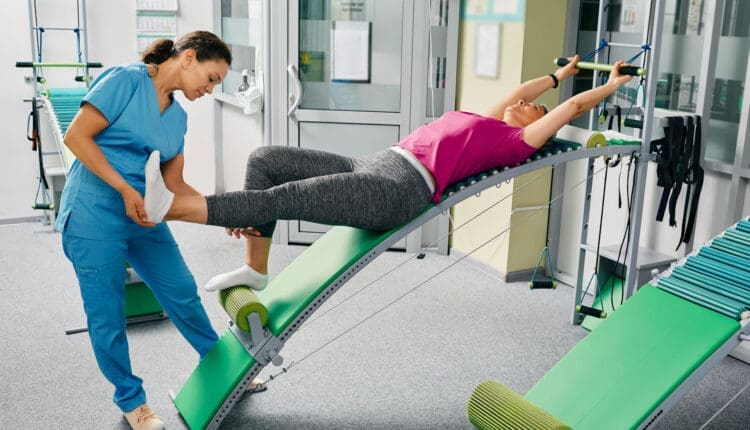
After a car crash, work injury, or sports accident, many people say the same thing: “I just don’t move as I used to.” That feeling is often real—and it usually has a measurable reason. One of the most important factors is joint movement quality, encompassing range of motion (ROM), mobility, stability, and coordination.
At Personal Injury Doctor Group, the goal is not only to reduce pain. The goal is to restore function—so you can walk, bend, reach, lift, and return to life with less fear and fewer flare-ups. This matters in personal injury cases because improved function can show up as:
-
Better walking and daily movement
-
Higher tolerance for sitting, standing, and work tasks
-
Fewer compensations that shift stress into other joints
-
More consistent progress in rehab
-
Clearer documentation of recovery and remaining limitations
Optimal joint movement is not “just stretching.” It’s the ability to move a joint through its full, natural ROM smoothly, efficiently, and with active control, without sharp pain or major restriction. It integrates mobility (controlled movement) and stability (control of joint position) so that muscles, ligaments, tendons, and the nervous system can perform their functions. (University of Colorado Anschutz Medical Campus, n.d.; ACE Fitness, 2019; NASM, n.d.)
What “optimal joint movement” really means
Optimal joint movement means your joint can move through its intended motion with:
-
Enough ROM (the joint can reach the needed angles)
-
Good control (you can move there actively, not just passively)
-
Smooth coordination (the right muscles fire at the right time)
-
Minimal pain and guarding (your body is not “bracing” constantly)
When these pieces work together, movement feels easy and efficient. When the balance is disrupted by injury or inactivity, the body often uses compensations—other joints move more to “make up” for what the injured or stiff joint cannot do. That can keep you functioning in the short term, but it may increase strain and the risk of injury in the long term. (University of Colorado Anschutz Medical Campus, n.d.; Motus Physiotherapy, n.d.)
ROM, flexibility, mobility, and stability: how they differ
People mix these words up, but they are not the same:
-
Flexibility = how far a muscle can lengthen
-
Range of motion (ROM) = how far a joint can move in a direction (often measured in degrees)
-
Mobility = ROM plus active control (you can move there safely)
-
Stability = your ability to control the joint and keep good alignment during movement and load
You can be flexible yet have poor mobility (e.g., loose hips with weak control). You can also be strong and still have limited ROM (for example, stiff ankles that change your squat and gait). Most real recovery requires both sufficient motion and sufficient control. (University of Colorado Anschutz Medical Campus, n.d.; ACE Fitness, 2019; NASM, n.d.)
Why ROM matters in personal injury cases
ROM testing is a basic part of many musculoskeletal evaluations because it can help show:
-
Which joints are restricted
-
Which movements reproduce symptoms
-
Where inflammation, guarding, or stiffness may be limiting function
-
Whether rehab is improving functional capacity over time
ROM is often described as:
-
Active ROM (AROM): you move it yourself
-
Passive ROM (PROM): a clinician moves it for you
In personal injury recovery, active ROM is especially important because that’s what you use to work, drive, lift, walk, and live. (Pietrangelo, 2024; Physiopedia, n.d.-a)
“Normal ROM” is a guide, not the final goal
Normative ROM charts can be helpful, but they are not a perfect “pass/fail” test. Your real-world goal is functional ROM—enough movement to do your activities safely, with good mechanics and minimal symptoms. (Physiopedia, n.d.-b; Trainerize, n.d.)
When mobility drops, compensations rise
After injury, the body is smart—it finds a way to get the job done. But that “solution” can create new problems.
Here are common compensation chains:
-
Stiff ankles ? knees collapse inward, or feet turn out during squats and stairs
-
Stiff hips ? low back moves too much during bending and lifting
-
Stiff upper back ? shoulders and neck overwork during reaching
-
Weak trunk/hip stability ? knees and low back absorb more load during walking and lifting
This is why many rehab teams use a whole-chain approach. A painful knee may not only be a knee issue. It can also reflect hip control, ankle mobility, or trunk stability problems that changed after injury. (Motus Physiotherapy, n.d.; Physiopedia, n.d.-c)
The shoulder example: lots of mobility, but it needs control
The shoulder is one of the most mobile joints in the body. That’s great for reaching, throwing, and lifting—but it also means the shoulder depends heavily on:
-
Shoulder blade control
-
Rotator cuff function
-
Trunk stability
-
Good timing between muscle groups
After an accident or repetitive strain, the shoulder can become painful and guarded. People may still “have ROM,” but the movement may be low quality—pinching, clicking, or compensations through the neck and low back. (Indy Spine, 2019)
“End-feel” and why movement quality matters
Clinicians often pay attention not only to the number of degrees, but also to how motion stops at the end range (sometimes described as “end-feel”). Different end-feels can suggest different limiting factors—like muscle tightness, capsular stiffness, swelling, or protective guarding.
In personal injury recovery, this matters because “tightness” is not always simple tightness. Sometimes it’s:
-
Inflammation or joint irritation
-
Muscle spasm from guarding
-
Scar tissue or tissue sensitivity
-
Fear of movement after trauma
A good plan restores motion in a safe, progressive manner rather than forcing it. (Physiopedia, n.d.-d; OneStep, n.d.)
ROM and gait: why walking changes after injury
Walking seems basic, but it’s a full-body event. Gait depends on coordinated movement through the:
-
Ankles
-
Knees
-
Hips
-
Pelvis and spine
If one region loses ROM or stability, gait often changes. People may shorten their steps, shift their weight to one side, or rotate their trunk more than usual. Over time, those changes can irritate other areas.
That’s why many injury-recovery plans assess ROM during gait and functional tasks (such as stairs, sit-to-stand, and lifting). (Physiopedia, n.d.-c; Shah et al., 2008)
What integrative chiropractic care aims to do in injury recovery
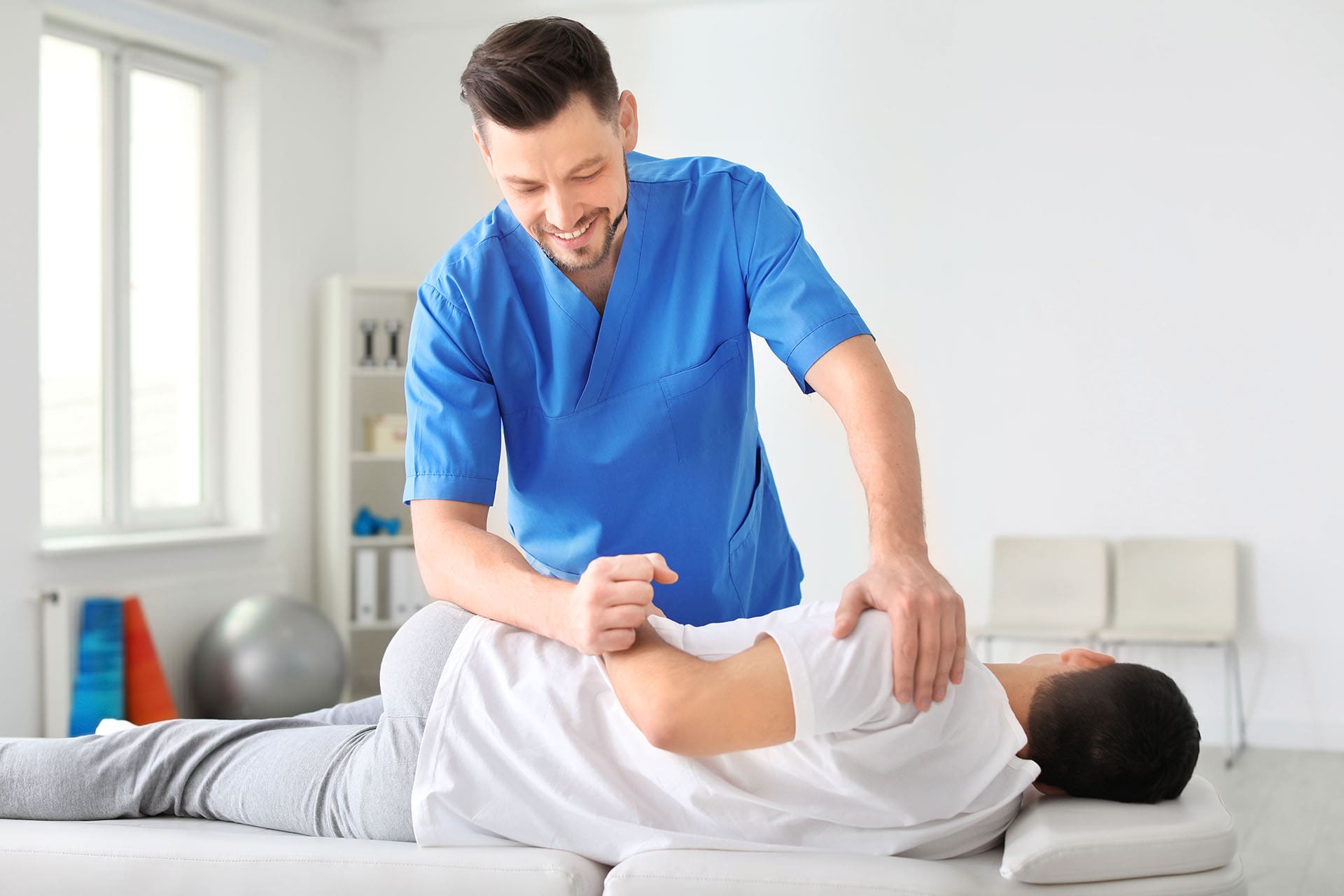
In an integrative model, chiropractic care is not only about “cracking” joints. It’s often part of a broader plan to restore function by addressing:
-
Joint mechanics and ROM limits
-
Soft tissue restrictions (muscles and fascia)
-
Neuromuscular coordination refers to the way your brain and body coordinate movement.
-
Movement patterns that changed after injury
Many personal injury rehab programs combine:
-
Spinal and extremity adjustments (when appropriate)
-
Soft tissue therapy
-
Mobility work
-
Stability and strengthening
-
Movement retraining
-
Functional progression toward work and sport demands
This supports the idea that mobility and stability interact to improve movement performance. (ACE Fitness, 2019; NASM, n.d.; Personal Injury Doctor Group, 2025)
Clinical observations from Dr. Alexander Jimenez on personal injury recovery
Across injury-focused educational content, Dr. Alexander Jimenez emphasizes a practical pattern seen in many personal injury cases: lasting mobility improves best when you combine three things:
-
Restore motion (reduce restrictions and protective guarding)
-
Improve tissue capacity (soft tissue work + progressive loading)
-
Retrain movement (teach the body to move well again under real-life demands)
In other words, care works best when it is not “one tool.” It’s a system: adjust, release, and retrain, with measurable functional goals. (Jimenez, n.d.-a; Personal Injury Doctor Group, 2025)
What adjustments may help with (and what they do not replace)
When appropriate, adjustments may help by:
-
Improving joint mechanics and motion
-
Reducing pain that blocks normal movement
-
Decreasing protective muscle guarding
-
Supporting smoother movement patterns
But adjustments alone do not replace the need for:
-
Strength and stability training
-
End-range control
-
Repeated practice of better movement patterns
That is why integrative care commonly includes home exercises and rehab progressions so gains “stick.” (Jimenez, n.d.-b; Personal Injury Doctor Group, 2025)
Soft tissue therapy: often the missing piece in ROM recovery
After injury, soft tissues can become sensitive, tight, and guarded. Soft-tissue approaches may support ROM by improving comfort and tissue glide, thereby reducing resistance to movement.
Examples include:
-
Manual therapy and myofascial work
-
Trigger point approaches (when appropriate)
-
Instrument-assisted soft tissue mobilization (IASTM)
When tissues move more effectively, active motion and exercise form usually improve more quickly. (Jimenez, n.d.-c)
Exercise as joint support: the “keep it” strategy
It’s common to gain ROM during a session but lose it later if the body does not learn to control it. That’s where exercise matters.
Regular, appropriate exercise can help joints by:
-
Reducing stiffness
-
Supporting surrounding muscle strength
-
Improving function and confidence
-
Helping people return to normal activity patterns
This is especially important for personal injury cases because function is often the end goal—return to work, return to training, return to daily life. (Arthritis Foundation, n.d.; Mayo Clinic, n.d.)
A practical “high-quality mobility” checklist
You can think of optimal joint movement as meeting these signs:
-
Smooth motion (no catching or sharp pinch)
-
Active control (you can move slowly and hold positions)
-
Reasonable left/right symmetry (not perfect, but not extreme)
-
Tolerable discomfort at most (not sharp or escalating pain)
-
Better function (walking, stairs, reaching, lifting feels easier)
If your movement is improving but pain is not, or pain is improving, but function is not, this indicates that the plan may need to be adjusted. (ACE Fitness, 2019; Physiopedia, n.d.-a)
Common ROM and mobility problems after accidents
After motor vehicle accidents and other injuries, common patterns include:
-
Neck stiffness and reduced rotation (turning the head)
-
Thoracic stiffness (upper back) leading to shoulder strain
-
Hip tightness and reduced hip extension affecting gait
-
Ankle stiffness affecting balance and knee mechanics
-
Knee ROM limits changing stairs and squatting tolerance
Many people also develop movement “avoidance” because pain teaches the body to brace. An effective rehabilitation plan helps you regain motion safely so the nervous system trusts movement again. (OneStep, n.d.; Physiopedia, n.d.-c)
A simple integrative recovery framework for personal injury mobility
A clear step-by-step model often looks like this:
1) Assess function and identify the true limiter
-
Which joint is restricted?
-
Which joints are compensating?
-
What movement triggers symptoms?
-
What does gait or lifting form show?
2) Restore motion in the right area
-
Joint mobilization/adjustments (when appropriate)
-
Soft tissue therapy
-
Gentle mobility drills
3) Build stability around the joint
-
Strength for supporting muscles
-
Control at end ranges
-
Balance and trunk control
4) Retrain real movement patterns
-
Squat/hinge mechanics
-
Overhead reaching mechanics
-
Gait, stairs, work tasks, sport drills
5) Maintain with a short home plan
-
Small daily mobility routine
-
Strength practice 2–4 days/week
-
Progression based on tolerance and function goals
This structure supports the notion that optimal movement is the synergy between mobility and stability along the kinetic chain. (NASM, n.d.; ACE Fitness, 2019; Motus Physiotherapy, n.d.)
When to get evaluated quickly
Do not try to “stretch through it” if you have:
-
New or worsening numbness, tingling, or weakness
-
New balance issues or coordination changes
-
Severe pain that is escalating, especially at night
-
Significant swelling, heat, redness, or inability to bear weight
-
Symptoms after major trauma (collision, fall, major impact)
Key takeaway
Optimal joint movement is not just ROM. It is ROM, control, and coordination, supported by the appropriate balance of mobility and stability. Following an injury, loss of mobility in one joint can lead to compensation in others, thereby prolonging pain.
An integrative personal injury approach—combining joint care, soft-tissue support, and movement retraining—aims to restore movement quality so you can return to life with greater ease, improved efficiency, and reduced risk of injury.
References
-
Flexibility, Mobility, Stability, and Injury Prevention (University of Colorado Anschutz Medical Campus, n.d.).
-
Mobility and Stability: Joint Functions When We Move (National Academy of Sports Medicine, n.d.).
-
Stability vs. Mobility: What’s the Difference? (ACE Fitness, 2019).
-
Range of Motion (Physiopedia, n.d.-a).
-
Range of Motion Normative Values (Physiopedia, n.d.-b).
-
End-Feel (Physiopedia, n.d.-d).
-
Joint Range of Motion During Gait (Physiopedia, n.d.-c).
-
The Joint-by-Joint Approach to Physiotherapy: Understanding Knee Pain (Motus Physiotherapy, n.d.).
-
The Shoulder: The Most Mobile, and Troublesome, Joint in the Body (Indy Spine, 2019).
-
The Importance of Range of Motion (OneStep, n.d.).
-
8 Ways Exercise Helps Joints (Arthritis Foundation, n.d.).
-
Exercise Helps Ease Arthritis Pain and Stiffness (Mayo Clinic, n.d.).
-
Mobility & Flexibility (Personal Injury Doctor Group, n.d.).
-
Integrative Injury Healing With Chiropractic Care (Personal Injury Doctor Group, 2025).
-
Mobility Problems in Mexican Americans After Injury: Solutions (Personal Injury Doctor Group, 2026).
-
Shah, M., et al. (2008). Increasing knee range of motion using a unique sustained stretching device (PubMed Central).
-
Jimenez, A. (n.d.-a). Flexibility and Range of Motion (DrAlexJimenez.com).
-
Jimenez, A. (n.d.-b). Back Adjustments Should Be Done By A Professional Chiropractor (DrAlexJimenez.com).
-
Jimenez, A. (n.d.-c). Understanding Instrument-Assisted Soft Tissue Mobilization (DrAlexJimenez.com).
Post Disclaimers
General Disclaimer, Licenses and Board Certifications *
Professional Scope of Practice *
The information herein on "Optimal Joint Movement After an Injury Recovery Process" is not intended to replace a one-on-one relationship with a qualified health care professional or licensed physician and is not medical advice. We encourage you to make healthcare decisions based on your research and partnership with a qualified healthcare professional.
Blog Information & Scope Discussions
Welcome to El Paso's Premier Wellness and Injury Care Clinic & Wellness Blog, where Dr. Alex Jimenez, DC, FNP-C, a Multi-State board-certified Family Practice Nurse Practitioner (FNP-BC) and Chiropractor (DC), presents insights on how our multidisciplinary team is dedicated to holistic healing and personalized care. Our practice aligns with evidence-based treatment protocols inspired by integrative medicine principles, similar to those on this site and on our family practice-based chiromed.com site, focusing on naturally restoring health for patients of all ages.
Our areas of multidisciplinary practice include Wellness & Nutrition, Chronic Pain, Personal Injury, Auto Accident Care, Work Injuries, Back Injury, Low Back Pain, Neck Pain, Migraine Headaches, Sports Injuries, Severe Sciatica, Scoliosis, Complex Herniated Discs, Fibromyalgia, Chronic Pain, Complex Injuries, Stress Management, Functional Medicine Treatments, and in-scope care protocols.
Our information scope is multidisciplinary, focusing on musculoskeletal and physical medicine, wellness, contributing etiological viscerosomatic disturbances within clinical presentations, associated somato-visceral reflex clinical dynamics, subluxation complexes, sensitive health issues, and functional medicine articles, topics, and discussions.
We provide and present clinical collaboration with specialists from various disciplines. Each specialist is governed by their professional scope of practice and their jurisdiction of licensure. We use functional health & wellness protocols to treat and support care for musculoskeletal injuries or disorders.
Our videos, posts, topics, and insights address clinical matters and issues that are directly or indirectly related to our clinical scope of practice.
Our office has made a reasonable effort to provide supportive citations and has identified relevant research studies that support our posts. We provide copies of supporting research studies upon request to regulatory boards and the public.
We understand that we cover matters that require an additional explanation of how they may assist in a particular care plan or treatment protocol; therefore, to discuss the subject matter above further, please feel free to ask Dr. Alex Jimenez, DC, APRN, FNP-BC, or contact us at 915-850-0900.
We are here to help you and your family.
Blessings
Dr. Alex Jimenez DC, MSACP, APRN, FNP-BC*, CCST, IFMCP, CFMP, ATN
email: [email protected]
Multidisciplinary Licensing & Board Certifications:
Licensed as a Doctor of Chiropractic (DC) in Texas & New Mexico*
Texas DC License #: TX5807, Verified: TX5807
New Mexico DC License #: NM-DC2182, Verified: NM-DC2182
Multi-State Advanced Practice Registered Nurse (APRN*) in Texas & Multi-States
Multi-state Compact APRN License by Endorsement (42 States)
Texas APRN License #: 1191402, Verified: 1191402 *
Florida APRN License #: 11043890, Verified: APRN11043890 *
Colorado License #: C-APN.0105610-C-NP, Verified: C-APN.0105610-C-NP
New York License #: N25929, Verified N25929
License Verification Link: Nursys License Verifier
* Prescriptive Authority Authorized
ANCC FNP-BC: Board Certified Nurse Practitioner*
Compact Status: Multi-State License: Authorized to Practice in 40 States*
Graduate with Honors: ICHS: MSN-FNP (Family Nurse Practitioner Program)
Degree Granted. Master's in Family Practice MSN Diploma (Cum Laude)
Dr. Alex Jimenez, DC, APRN, FNP-BC*, CFMP, IFMCP, ATN, CCST
My Digital Business Card
Licenses and Board Certifications:
DC: Doctor of Chiropractic
APRNP: Advanced Practice Registered Nurse
FNP-BC: Family Practice Specialization (Multi-State Board Certified)
RN: Registered Nurse (Multi-State Compact License)
CFMP: Certified Functional Medicine Provider
MSN-FNP: Master of Science in Family Practice Medicine
MSACP: Master of Science in Advanced Clinical Practice
IFMCP: Institute of Functional Medicine
CCST: Certified Chiropractic Spinal Trauma
ATN: Advanced Translational Neutrogenomics
Memberships & Associations:
TCA: Texas Chiropractic Association: Member ID: 104311
AANP: American Association of Nurse Practitioners: Member ID: 2198960
ANA: American Nurse Association: Member ID: 06458222 (District TX01)
TNA: Texas Nurse Association: Member ID: 06458222
NPI: 1205907805
| Primary Taxonomy | Selected Taxonomy | State | License Number |
|---|---|---|---|
| No | 111N00000X - Chiropractor | NM | DC2182 |
| Yes | 111N00000X - Chiropractor | TX | DC5807 |
| Yes | 363LF0000X - Nurse Practitioner - Family | TX | 1191402 |
| Yes | 363LF0000X - Nurse Practitioner - Family | FL | 11043890 |
| Yes | 363LF0000X - Nurse Practitioner - Family | CO | C-APN.0105610-C-NP |
| Yes | 363LF0000X - Nurse Practitioner - Family | NY | N25929 |
Dr. Alex Jimenez, DC, APRN, FNP-BC*, CFMP, IFMCP, ATN, CCST
My Digital Business Card




Comments are closed.